
- New transport data shows households pulling back on car purchases as freight volumes and rail revenues grow
TLOTLO KEBINAKGABO
While Botswana grapples with ongoing economic pressures, new official data suggests that household buying power is under strain, even as freight activity through the rail network strengthens.
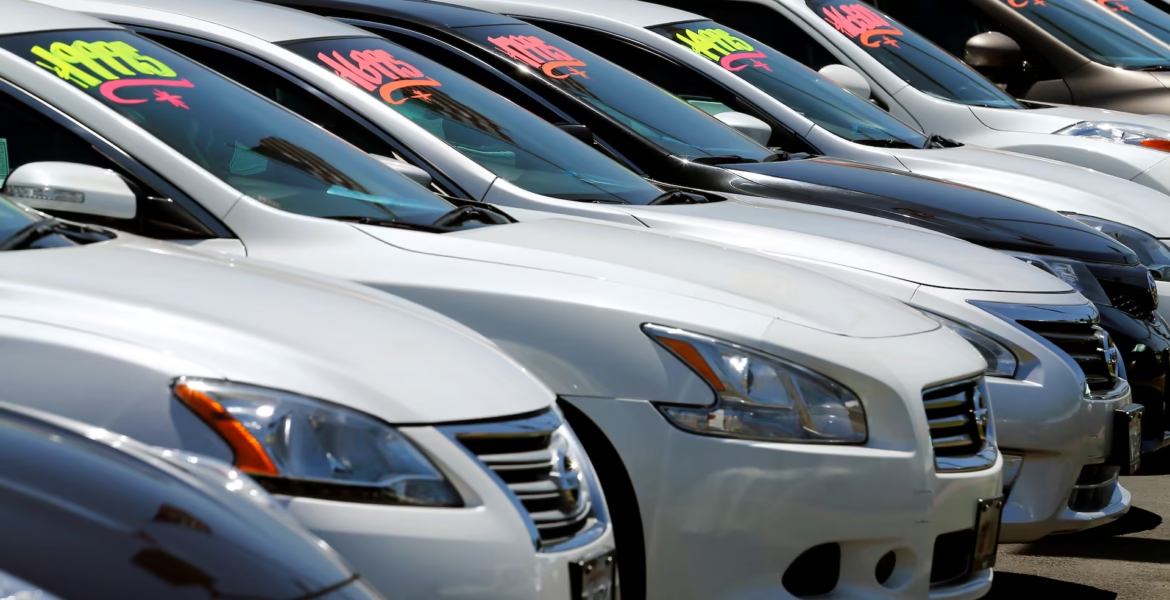
According to the Transport and Infrastructure Statistics Brief, Quarter 3 2025, first-time motor vehicle registrations declined notably during the period. In Q3 2025, a total of 10,324 motor vehicles were registered for the first time, representing an 8.6 percent decrease from the 11,296 vehicles recorded in the previous quarter — a trend pointing to reduced consumer spending capacity.
Vehicle Trends
Passenger cars dominated new registrations, accounting for 72.7 percent of the total, followed by vans at 9.1 percent. Japan remained the primary source of imported vehicles, contributing 66.8 percent of all first-time registrations, with 99.5 percent of these being used vehicles. South Africa ranked second at 22.4 percent, although the majority of vehicles from that market were brand new, at 73.3 percent. Vehicles originating from Botswana made up just 4.2 percent of total registrations.
The report shows that used vehicles continued to outweigh new ones, with passenger cars accounting for 83.7 percent of all used vehicle registrations. Trailers and trucks each represented 4.4 percent, while vans constituted 3.9 percent.
“At 34.3 percent, passenger cars made up most of the brand new first-time registered motor vehicles in the quarter,” the report states, adding that “vans followed at 27.2 percent.”
Brand Share
Honda led first-time vehicle registrations during the quarter, accounting for 20.6 percent of the total, nearly all of which were passenger cars. Toyota and Mazda followed closely, contributing 18.9 percent and 18.0 percent respectively. July recorded the highest number of registrations, at 35.1 percent of the quarterly total, with August and September accounting for 33.8 percent and 31.1 percent.
Rail Freight
In contrast to slowing vehicle purchases, rail freight activity expanded. A total of 242,067 net tonnes of goods were transported by rail during the quarter, a 12.7 percent increase from the previous quarter. Imports formed the largest share at 33.3 percent, followed by exports at 28.4 percent and local traffic goods at 27.1 percent.
Rail freight revenue rose by 13.8 percent to P60.5 million. “The largest amount of revenue generated this quarter came from the movement of local traffic goods accounting for 29.2 percent,” the report notes.