
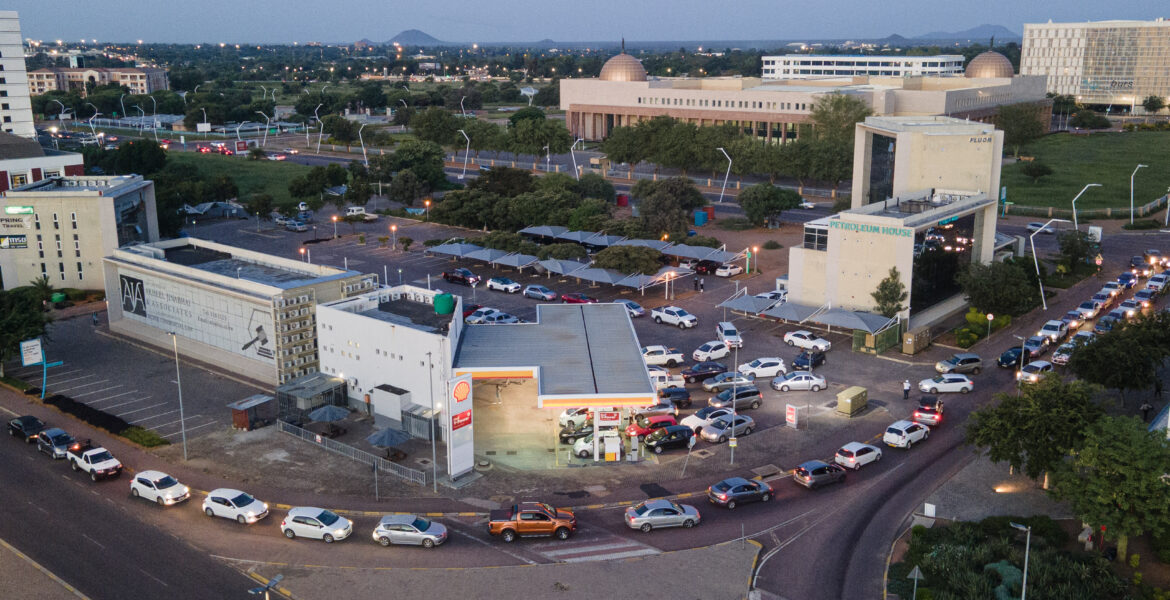
- Economists warn of mounting pressure on households, businesses and growth as fuel prices surge
GAZETTE REPORTER
Botswana faces mounting inflationary pressures as recent fuel price hikes feed through the economy. Unleaded Petrol 95 increased by P5.05 per litre, Diesel 50ppm rose by P8.77 per litre, and illuminating paraffin jumped by P10.55 per litre.
Gomolemo Basele, an experienced quantitative analyst with a banking background, explained the impact on the national inflation profile. “Higher fuel prices will feed through in terms of a higher inflation profile in Botswana. This year’s inflation peak will depend on where international oil prices peak, which depends heavily on the tension playing out in the Gulf,” Basele said.
He added that sustained fuel price hikes could keep inflation elevated for longer. “The longer it takes for oil prices to fall back, the larger the risk of second-round price pressure. If such pressures begin to show more clearly in core CPI and/or the Business Expectation Survey, the central bank might well hike interest rates. In which case the impact on real GDP growth would be significant and long-lasting.”
Despite this, Basele expects the shock to be temporary. “We expect inflation to trend lower in 3Q26, given our outlook for oil prices to moderate in 2H26,” he said, noting that the central bank’s policy rate is likely to remain on hold.
Household Strain
Rising fuel costs are also eroding household purchasing power, particularly for low-income earners. Economist Kago Ngwato highlighted that “Sustained fuel price increases erode household purchasing power primarily by raising the cost of essential goods and services.”
For many households, higher transport costs are compounded by rising food prices. Ngwato explained that urban households face more exposure to rising transport and rental costs, while rural households encounter higher prices for basic goods due to increased distribution costs. “Fuel price increases contribute to a broader rise in the cost of living but the channels and intensity differ,” Ngwato said.
Low-income families often respond by cutting consumption or switching to lower quality food. Others rely on informal borrowing or delay essential expenditures, strategies that can reinforce cycles of poverty and vulnerability.
Business Impact
Businesses, particularly SMEs, are feeling the pressure of higher operational costs. Logistics and transportation expenses are rising, with many small firms unable to pass the increases on to consumers. This forces businesses to absorb losses or reduce expenses.
Ngwato observed, “SMEs tend to delay expansion, reduce operational activity or scale back investment rather than immediately retrench workers. Over time, this leads to slower job creation and fewer income opportunities.”
Key sectors such as mining and trade are also affected. Mining firms, while electricity-intensive, face higher transport and operational costs that can compress profit margins. Trade sectors experience both higher import costs and reduced consumer demand, making them a significant channel for fuel-driven economic pressure.
Policy Measures
To cushion citizens and businesses, policymakers face a challenging balancing act. Ngwato suggested targeted interventions rather than broad subsidies, given limited fiscal space. “Policy responses should focus on lifeline utility tariffs and limited relief on essential goods. For businesses, emphasis should be on improving liquidity and market access rather than subsidised credit,” he said.
Longer-term strategies include reducing fuel dependence through renewable energy investment, regulatory reform, and fostering private sector participation. While these require time and institutional capacity, they represent a structural approach to mitigating future fuel shocks.
The impact of fuel prices extends beyond the pump. Rising costs ripple through transportation, imports, household budgets, and business operations, creating pressures that will shape Botswana’s economy over the coming months.