
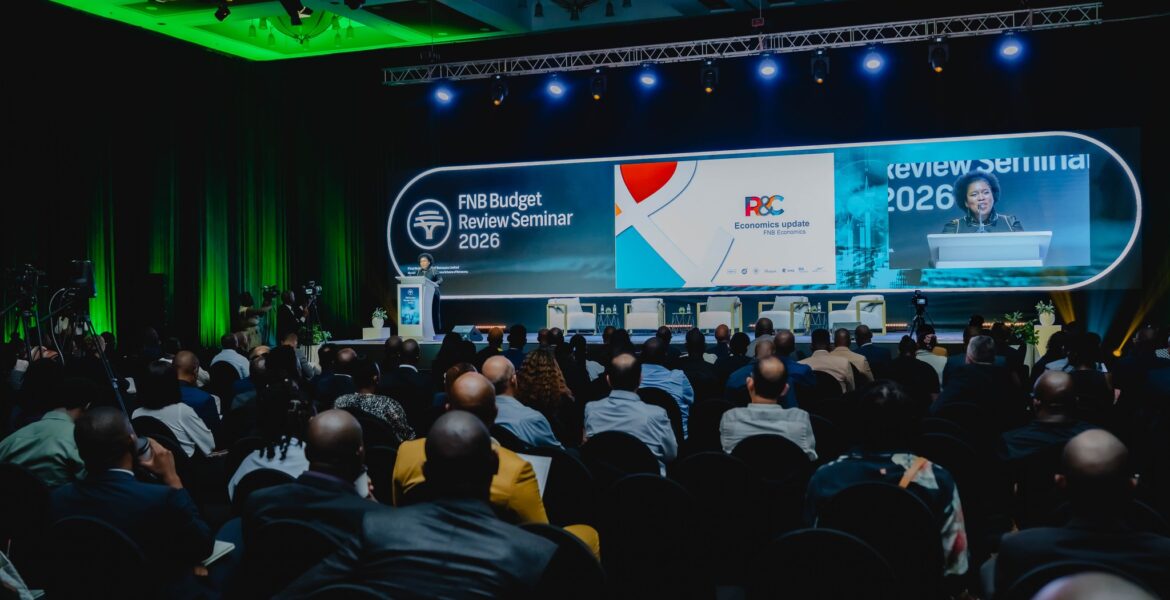
- At a recent budget speech review, Linda Cele outlined how technology, sustainability and resilience can help small businesses drive jobs, diversification and long-term economic growth
GAZETTE REPORTER
Small and medium-sized enterprises (SMEs) remain central to Botswana’s economy, accounting for over half of private sector jobs and contributing between 13 and 35 percent to GDP in recent years. Speaking at the FNB Budget Speech Review, Linda Cele, Sustainability Lead for FNB South Africa, said SMEs are no longer just survival mechanisms but “a strategic imperative” for economic growth.
“We always speak of SA Inc, and I guess the conversation today is about Botswana Inc,” Cele said, adding that SMEs have been key absorbers of youth, women and first-time job seekers, strengthening the longevity of the employment environment.
Resilience Amid Pressure
Cele acknowledged that many SMEs are operating in unfamiliar and strained economic conditions, marked by high interest rates, tight liquidity and global uncertainty. Despite this, she noted that simply surviving beyond the first two years already places many businesses among the most resilient.
“A status law is that up to 80 percent of SME companies don’t go past the one or two year mark,” she said. “So the fact that you’re here today means that you’re one of the more resilient SME companies.”
She pointed to swift responses from banks and government, including programmes designed to help SMEs participate more effectively in the economy.
Technology As Capacity
A central theme of Cele’s address was the role of technology and artificial intelligence in creating capacity rather than replacing people. She said automation can free business owners and staff to focus on what matters most: clients and growth.
“How do you allow capacity for yourself to focus on what’s most important?” Cele asked.
She highlighted tools such as cloud accounting software, integrated point-of-sale systems and AI-assisted cash-flow forecasting, which offer real-time visibility, better pricing decisions and stronger applications for finance.
Data Driven Decisions
Cele said AI can also turn raw data into actionable insights, shifting businesses away from manual analysis towards faster, informed decision-making.
“The opportunity is to move from intuition and experience to data-driven decision making,” she said, noting that dashboards and predictive tools can help businesses anticipate risks and opportunities rather than rely on past conditions that may no longer apply.
Sustainability As Growth
Beyond technology, Cele framed sustainability as a growth imperative rather than a soft, environmental add-on. She said sustainable solutions can lower costs, open new markets and improve long-term competitiveness.
Installing solar energy systems, adopting efficient equipment and recycling waste into secondary products were among the examples she cited. Such measures, she said, can stabilise cash flows, create additional revenue streams and support circular business models.
Financing The Transition
Cele acknowledged that sustainable solutions often require upfront investment, but said Botswana still offers funding mechanisms, green finance and concessional loans to ease adoption.
“The bigger the business gets when they try to transition, the higher the cost of transitioning,” she said, urging SMEs to adopt sustainable practices early to support long-term growth.