
By Douglas Rasbash
If the numbers are to be believed, Batswana are suddenly devouring beef at record levels. But scratch beneath the statistics and a far less meaty truth emerges — one about paperwork, not portions.
A startling spike
Acting Minister of Lands and Agriculture, Dr Edwin Dikoloti, recently told Parliament that domestic beef consumption has risen from 27,154 tonnes in 2022 to 39,577 tonnes in 2024 — a jump of more than 45% in just two years, equivalent to nearly 198,000 cattle slaughtered for the local market. The value of domestic beef consumption also climbed from P768.9 million in 2022 to P989.4 million this year. At face value, it appears as if Batswana are suddenly eating vastly more beef than before.
But a closer look — supported by the accompanying graph — reveals a different story. Over the last decade, Botswana’s average beef consumption has hovered around 24,000 tonnes per year. The chart shows relatively stable levels from 2014 to 2021, followed by a steep rise from 2022 onward. The surge looks dramatic because it sits far above the long-term average line, which highlights how unusual the 2022–2024 period has been. But this does not mean diets have changed radically.
The informal reality
Botswana has long struggled with large volumes of cattle slaughtered informally — including illegal bush slaughter, cattle theft, and unrecorded farm slaughter. As the Minister himself noted, “a lot of cattle are killed illegally in the bush and the meat is sold through the informal market.” These animals never appeared in official data.
What has changed recently is where the slaughter is happening, not how much beef people are eating.
From bush to abattoir
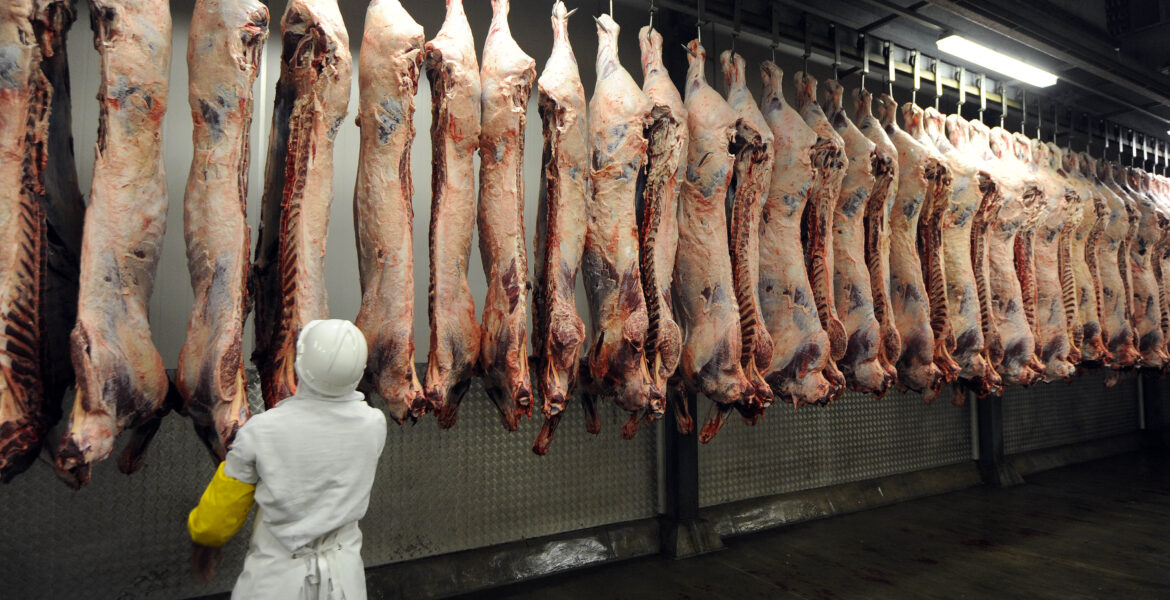
Several forces have pushed more cattle into formal abattoirs: drought-driven destocking, tougher enforcement on cattle theft and bush slaughter, and the rapid expansion of supermarkets with reliable cold-chain facilities. As more slaughter shifts from the informal to the formal economy, recorded consumption rises, even if actual consumption per person increases only modestly.
Measuring, not eating
So the chart does not show a nation suddenly doubling its appetite for beef. Instead, it reflects the formalisation of the beef economy — more cattle passing through inspected abattoirs, fewer slipping through unregulated channels. Seen this way, the spike tells a story not of a dietary revolution, but of an industry becoming more structured and visible.
Botswana is not eating twice as much beef — Botswana is measuring it more accurately.