
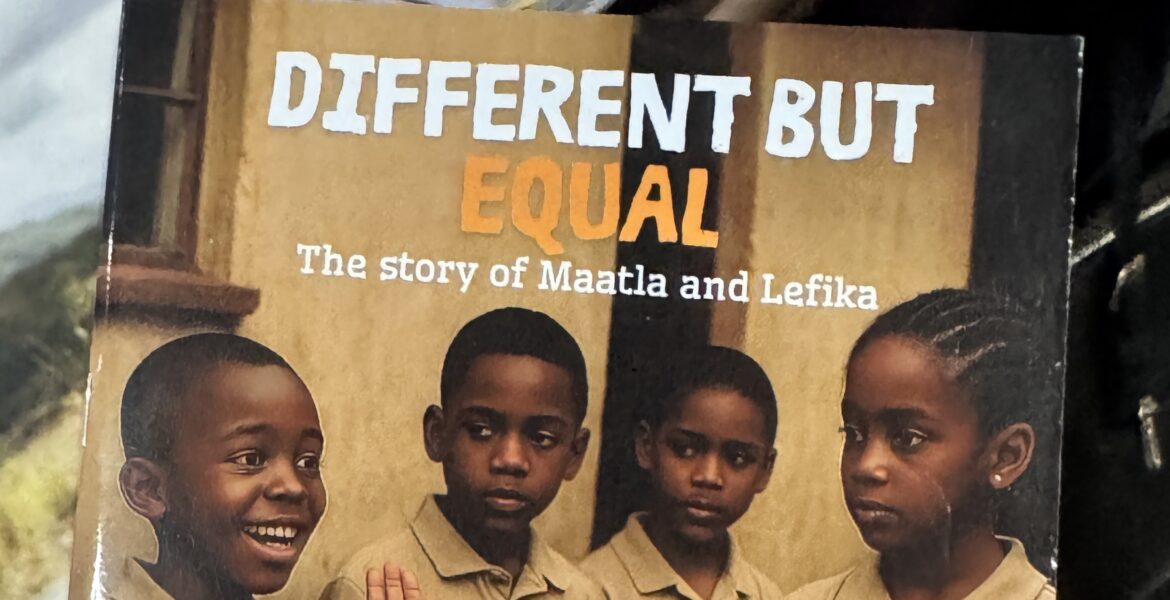
At Gabz FM’s Basadi Brunch Dialogue in Gaborone, GBV activist and survivor Kemmy Mpinang unveiled a powerful new children’s book, Different But Equal, a story born from pain, healing, and a radical idea: if we teach children early, we might finally break the cycle of gender-based violence
GOSEGO MOTSUMI
Some revolutions begin with protests. Others begin with a children’s book.
At the Basadi Brunch Dialogue hosted by Gabz FM during International Women’s Day celebrations at Avani Gaborone Resort & Casino, gender-based violence activist and survivor Kemmy Mpinang introduced her powerful new book Different But Equal: The Story of Maatla and Lefika.
The room leaned in as she spoke — not just about literature, but about life, pain, and the possibility of raising a generation that refuses to tolerate abuse.
The book tells the story of Maatla, a quiet orphan constantly bullied for her worn uniform and soft voice, and Lefika, a bold and curious child who refuses to stay silent. When the two become friends, their courage begins to ripple through their school and community.
WHEN PAIN BECOMES PURPOSE
For Mpinang, the story is painfully personal.
Her activism was born from survival. “I started experiencing abuse at the age of 14,” she said in an interview.
Then came another moment that changed everything. Her stepdaughter died by suicide at just 13 years old.
“Postmortem revealed that she was sexually abused and I know for a fact that if she had this book she would be alive today,” she said.
RAISING A BRAVER GENERATION
Through the Re A Bua Foundation, Mpinang has spent years advocating for survivors and opening difficult conversations in communities. But Different But Equal shifts the focus to prevention — teaching children about dignity, voice, and courage while they are still young.
Her call to action was simple but powerful: place the book in the hands of primary school children.
“Lets be the generation that fights GBV from the roots,” she said.
Because sometimes the biggest change doesn’t begin in parliament halls or courtrooms. Sometimes it begins in a classroom, with a story, and a child who finally finds their voice.