
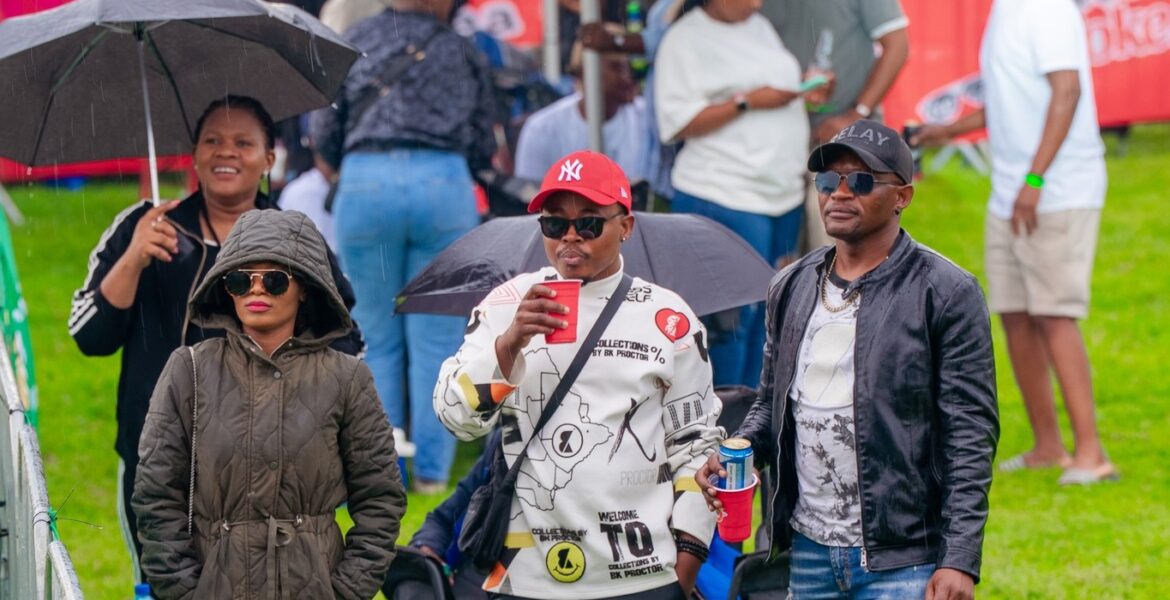
From sold-out festivals to polished production and a policy shake-up that changed nightlife behaviour, Botswana’s festive season signalled an entertainment industry stepping confidently into its next chapter
GOSEGO MOTSUMI
Looking back at the festive season, Botswana’s entertainment calendar did more than survive economic pressure, it thrived. According to Botswana Entertainment Promoters Association (BEPA) chairperson Goaba Mojakgomo, the December period showcased an industry comfortable with variety, scale and audience demand.
“We had a variety of events over the festive season,” Mojakgomo said in an interview. “Lifestyle events such as the Day Club and Piano Sunsets in Maun, your usual music festivals like Born and Raised, Gaabo Motho and Home Coming, and then new entrants in the market like Pacers and others that supported and sustained restaurants and venues.”
Hotels including Avani, Hilton and Hotel 430 also joined the festive economy with curated experiences, some deliberately designed as family-friendly alternatives to open-air music festivals. The result was a layered offering that appealed to different demographics, music tastes and spending habits.
SOLD-OUT SHOWS
What stood out most, Mojakgomo explained, was attendance. “From our general assessment overview, the majority of promoters that held events this festive season were able to pull impressive numbers as opposed to last year,” he said.
“The majority of promoters sold out, that is just how impressive this year’s events were, despite the economic hardships.”
Despite ongoing economic hardships, promoters reported sell-outs across multiple shows — a rare and encouraging shift. Even more telling was reliability. “For the very first time, 10 out of 12 international artists showed up,” Mojakgomo noted. “That says our promoters have stepped up in terms of delivering what is expected by the consumer.”
Competition, he said, was healthy and visible. “You saw stages built in about three shows which were for the very first time dealt with in a managed way. The product promoters put out was quite impressive, better than what we have been accustomed to.”
WHEN POLICY COLLIDED WITH PARTY CULTURE
Yet, not all the pressure came from ticket sales. The Liquor Amendment Regulations of 2025, which allowed liquor outlets to operate until 6am during the festive period, shifted consumer behaviour overnight.
“Some people who ordinarily would have gotten to our shows decided to go to pubs instead,” Mojakgomo said. “Everybody wanted not to miss this first experience.”
For promoters, the impact was immediate. “It hits on ticket sales, it hits on food stalls, it hits on liquor sales at events,” he explained. “People would rather buy two for the price of one at a bar than one at an event.”
THE ECONOMIC RIPPLE EFFECT
Still, the festive season delivered tangible benefits on the ground. In Serowe, Born and Raised Festival expanded vending opportunities dramatically. “The council demarcated land to host 80 food stalls outside the stadium, in addition to the 15 inside,” Mojakgomo said. “Almost 100 vendors had an opportunity to sell and each one of them made money.”
Medium-scale businesses also saw sales spike, boosted by extended trading hours and increased foot traffic.
WHAT COMES NEXT FOR FESTIVE EVENTS
As the industry looks ahead, Mojakgomo is clear: consultation is now essential. “We need to engage with the relevant ministry to amend this legislation so that it becomes healthy for all stakeholders,” he said.
He added that promoters, musicians and alcohol associations were not adequately consulted. “If there is need for us to help with capacity on the ground, we are happy to assist. Our membership is spread across the length and breadth of this republic.”
For an industry that proved its resilience and relevance this festive season, the next challenge is ensuring policy evolves in step with progress.