
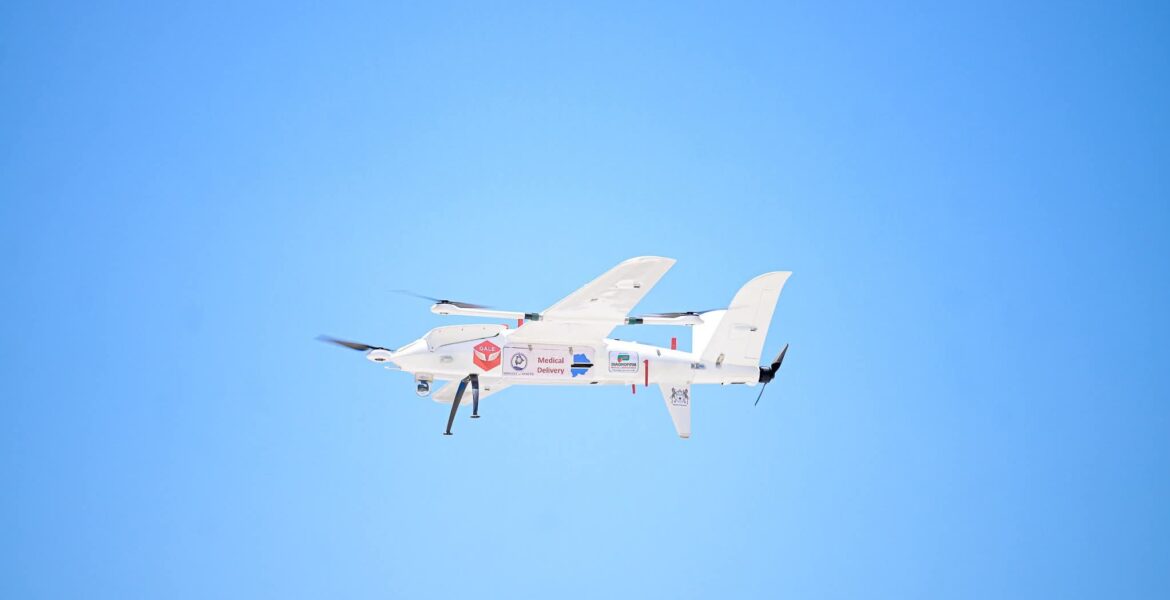
As floodwaters continue isolating communities in the North West, pressure is mounting on the Ministry of Health to find alternative solutions to ensure uninterrupted healthcare access
BONGANI MALUNGA
The Ministry of Health has revealed that funding constraints are slowing down the full rollout of medical drones, casting uncertainty over a project once hailed as a breakthrough for healthcare delivery in remote and hard to reach areas.
The admission comes amid growing concern from local leaders in the North West District, where flooding has cut off several communities and heightened the need for alternative medicine delivery systems. Dikgang Dikgang, a councillor from Sedie Ward raised the issue during a district council session last week, questioning the progress of the drone initiative launched in Chanoga by President Duma Boko in November last year.
IDEAL TEST CASE
The councillor argued that the current flooding crisis presents the ideal test case for the technology, which was introduced specifically to bridge healthcare access gaps in remote and disaster-prone areas. With roads submerged and transport routes disrupted, residents in some settlements are struggling to access essential medicines and health services.
Reached for comment, the Ministry’s Chief Public Relations Officer, Christopher Nyanga told The Botswana Gazette that budgetary limitations have temporarily halted the rollout. “The Ministry of Health successfully launched the ‘Drones for Health’ project in Maun, featuring test flights from Letsholathebe II Memorial Hospital to Chanoga Clinic. These demonstrations proved that drones can dramatically cut delivery times for medicines, laboratory samples, and vaccines, particularly to remote clinics,” Nyanga told this publication.
FUNDING CONSTRAINTS
“However, the full rollout faces hurdles such as funding constraints, supply chain integration, and service procurement, which have delayed expansion beyond the pilot phase. The Ministry remains committed to engaging partners and stakeholders to drive progress. Ultimately, drone technology offers a transformative solution to healthcare delivery challenges in Maun and surrounding areas,” he explained.
Medical drones were expected to revolutionise delivery by transporting critical medical supplies and emergency medication swiftly across difficult terrain.
PACE OF IMPLEMENTATION
The delay has raised questions about the pace of implementation and whether sufficient resources were secured to sustain the initiative beyond its launch phase. It also underscores broader challenges in financing innovation within the public health sector, particularly in a climate of competing budget priorities.
As floodwaters continue to isolate communities in the North West, pressure is mounting on the Ministry of Health to accelerate the deployment of the drones or provide alternative solutions to ensure uninterrupted access to healthcare.