
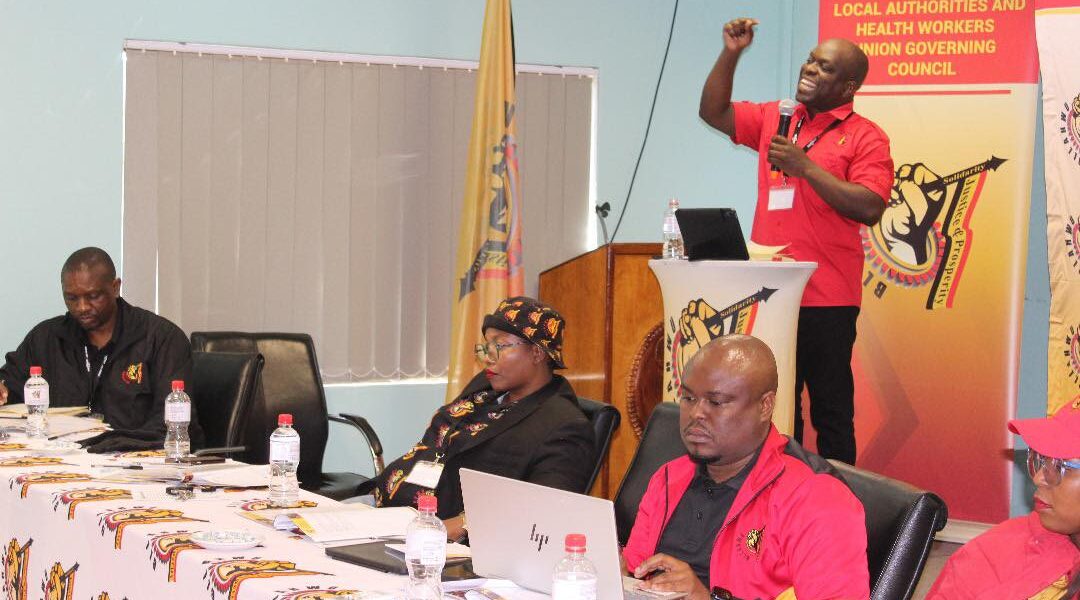
In the wake of perceptions they are akin to a political movement, trade unions are eager to meet with President Duma Boko in order “to clear the air” and reaffirm their commitment to constructive dialogue and improved working conditions for employees across the public service
BONGANI MALUNGA
Trade unions have asked for a meeting with President Duma Boko to clarify wrong perceptions about their decision to hold the government accountable on matters of staff welfare and other issues of national interest.
This came to light at the 7th Triennial Congress of the Botswana Land Boards, Local Authorities and Health Workers Union (BLLAHWU) that was held in Francistown recently.
Speakers emphasised how an engagement with the President should help set the record straight and ensure that their advocacy efforts are understood in their proper context.
DIRECT ENGAGEMENT WITH BOKO
They expressed concern that recent public commentary has distorted their intentions, thus prompting the need for a direct engagement with President Boko to reaffirm their commitment to constructive dialogue, transparency and improved working conditions for employees across the public service.
The president of the Botswana Doctors Union (BDU), Dr Kefilwe Selema, said unions are growing wary of public assertions that they are morphing into a movement akin to political opposition, adding that such insinuations misrepresent the role and mandate of labour unions.
“STANDOFFS BENEFIT NEITHER OF US”
Dr Selema appealed to the Minister for State President, Moeti Mohwasa, who attended the congress, to facilitate such a meeting.
“We would like to have an open discussion with the President, just to clear the air,” he said. “This meeting is vital to ensuring that there is peace between the unions and the government. Standoffs benefit neither of us.”
The BDU leader conceded that while the recent registration of the Public Service Bargaining Council (PSBC) is a welcome development, the reluctance of unions to openly acknowledge and praise the development has done little to dispel perceptions of tensions between unions and the government.
AMICABLE RESOLUTION
Dr Selema encouraged union leaders to review and reconsider cases that are before the courts and explore if amicable resolutions can be reached in order to prevent further legal costs. “We have to reconsider court cases that are not worth pursuing,” he urged.
“We should not allow ourselves as leaders to use our emotions to fight battles that end up affecting the general membership as we use subscription fees to finance legal costs. Legal bills have exceeded P1 million.”