
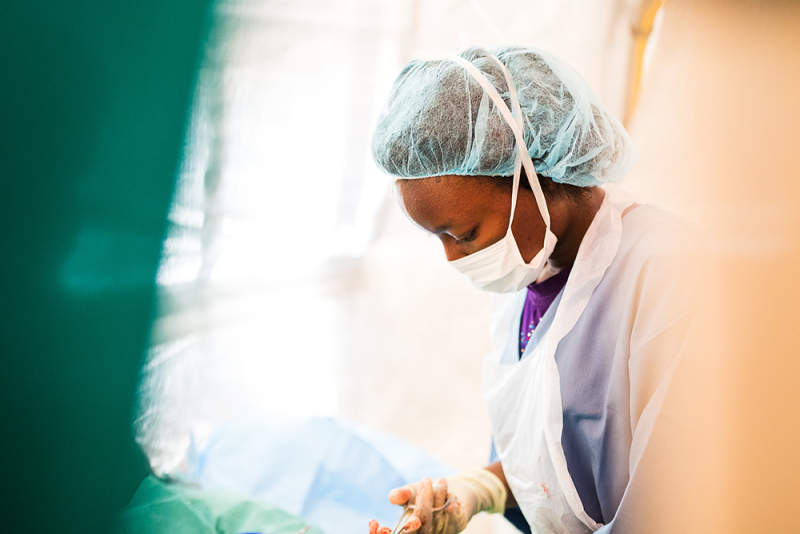
Botswana’s male circumcision programme faces collapse after US President Donald Trump cut foreign aid, dealing a major blow to the country’s HIV fight efforts
GAZETTE REPORTER
Botswana’s Voluntary Medical Male Circumcision (VMMC) programme has effectively collapsed following a decision by United States President Donald Trump to slash foreign aid, dealing a major blow to one of the country’s key HIV prevention interventions.
According to a recent UNAIDS report titled Overcoming Disruption: Transforming the AIDS Response, access to voluntary medical male circumcision—an intervention shown to reduce the risk of female-to-male HIV transmission by about 60%—has sharply declined due to funding cuts.
STEEPER DECLINE OF 88%
The report indicates that the number of voluntary medical male circumcisions fell by 65% in Uganda between December 2024 and June 2025. Botswana recorded an even steeper decline of 88% during the first five months of 2025.
Online publication Devex reports that Botswana is not attempting to fill the gap left by the withdrawal of US funding, resulting in the near-total disappearance of outreach services for male circumcision. VMMC is widely recognised as a proven HIV prevention strategy and has also been shown to offer comparable protection for men who have sex with men.
PROGRAMME WITHOUT FINANCIAL LIFELINE
According to Devex, Botswana’s programme had been sustained by a local organisation that supported men undergoing and recovering from circumcision. That support was fully funded by the United States, leaving the programme without a financial lifeline once the aid was withdrawn.
UNAIDS warns that access to proven HIV combination prevention tools is declining at a time when demand should be increasing, particularly as new prevention options—such as long-acting injectable pre-exposure prophylaxis (PrEP)—enter the market. The agency says the funding cuts have come at a critical juncture for the global HIV response.
“As recently as October 2025, Botswana was reportedly experiencing widespread shortages of HIV test kits, condoms and treatments for sexually transmitted infections,” the report states, noting that similar challenges are emerging across sub-Saharan Africa.
UNAIDS WORRIED
Commenting on the findings, UNAIDS Executive Director Winnie Byanyima said the global AIDS response remains fragile.
“AIDS is not over,” Byanyima said. “This year’s disruption to the global response has exposed how vulnerable the progress we have fought for truly is.”
She said accelerated cuts to international HIV financing, combined with a rollback of human rights protections, have had devastating consequences for countries heavily reliant on donor-funded programmes.