
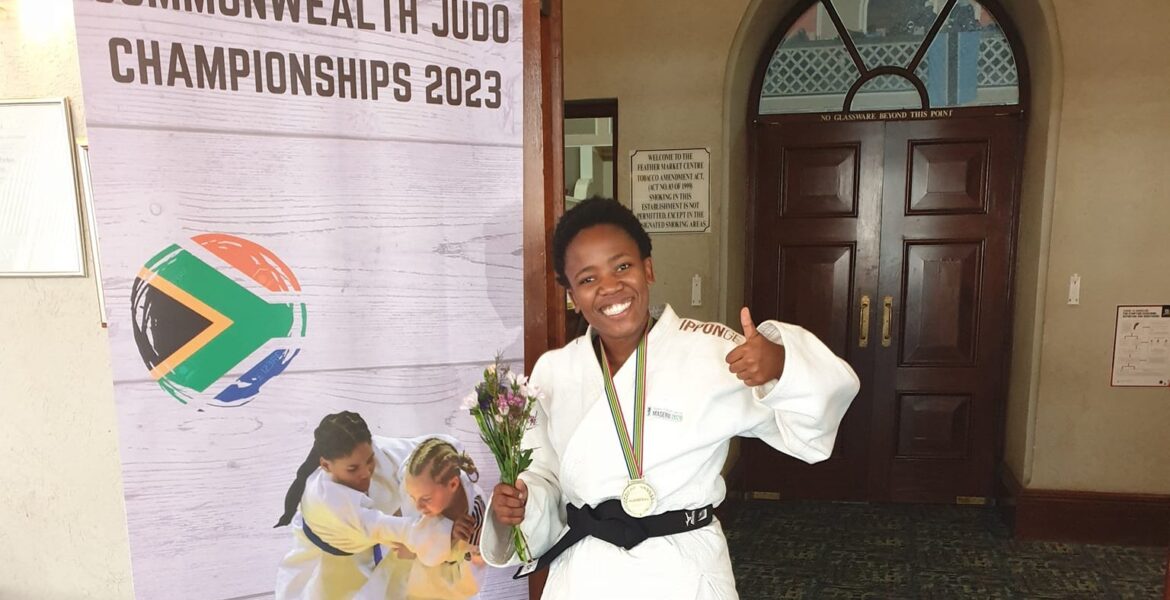
- Botswana’s elite judo milestone signals a broader shift — one where mats and classrooms align, and young women are increasingly stepping into spaces once denied to them
TLOTLO KEBINAKGABO
When Neo Nogampe boarded a flight to Australia this week, she carried more than luggage and ambition. She carried history. As the 2025/2026 Elite Scholarship recipient from the Botswana National Sport Commission, Nogampe has become the first female judoka to benefit from the programme — a landmark moment for the sport in Botswana.
“It reflects the growth of judo in Botswana,” said Linda Masingizane, general secretary of the Botswana Judo Federation in an interview. “The sport supports not only athletic progression but also academic excellence.”
Her departure to Australia to commence her studies is a quiet but powerful statement: elite sport and education need not exist in tension. In Nogampe’s case, they reinforce one another.
Role models rising
Progress, as Masingizane acknowledges, has been steady rather than swift. Female participation in judo has grown gradually, often against cultural and structural headwinds. Yet success has a way of accelerating belief.
“The success of our senior female judokas is playing a major role,” she said. “They serve as visible and inspiring role models.”
In a sport defined by physical confrontation and mental control, representation matters. Young girls watching Botswana’s female judokas succeed are not merely seeing medals; they are seeing permission — to belong, to compete, and to dream.
Beyond the mat
Nogampe’s journey also challenges a persistent myth: that academic excellence and high-performance sport are mutually exclusive. Her scholarship reinforces a broader truth that administrators have long argued but rarely been able to demonstrate so clearly.
“When parents support their children, especially girls, in participating in combat sports like judo, it builds confidence, discipline and resilience,” Masingizane said. “It opens doors when the right support structures are in place.”
The language is practical, not romantic. Judo becomes a vehicle — for education, for character, for life beyond competition.
Investment rewarded
From the federation’s offices, this moment feels like validation. Years of administrative effort, programme development and advocacy have converged in one athlete’s opportunity.
“Seeing one of our athletes receive such an opportunity is deeply rewarding,” Masingizane said. “It motivates us to continue strengthening programmes that help our athletes succeed both locally and internationally.”
The challenges remain stark. Limited access to high-performance environments and the high cost of international travel have long constrained Botswana’s judokas. Scholarships like Nogampe’s do not erase those barriers, but they narrow them.
And sometimes, narrowing the gap is enough to change the direction of a sport.