
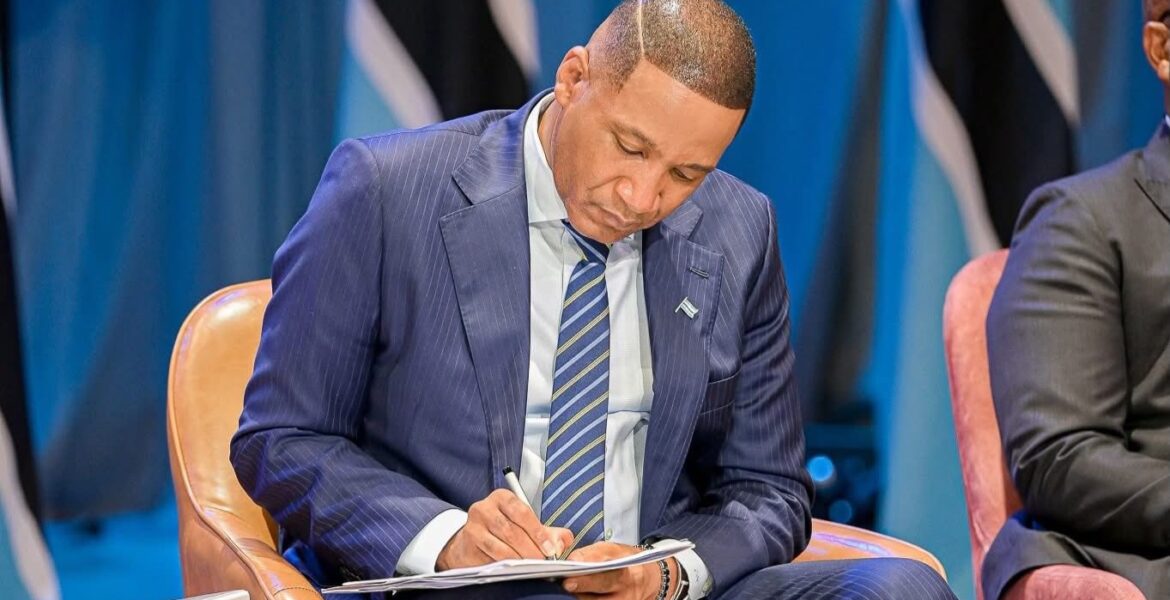
Four of the death-row inmates whose appeals were rejected by the Court of Appeal have formally petitioned President Duma Boko for mercy, the Prisons Department has confirmed
TEFO PHEAGE
About four of Botswana’s death-row inmates whose appeals were rejected by the
Court of Appeal have applied for presidential pardon.
The figure adds pressure on president Duma Boko, a known abolitionist, to decide the fate of those condemned by law to die by hanging. It is not yet known how many petitions have been reviewed or what outcomes, as efforts to trace applications were unsuccessful.
The Permanent Secretary to the President, Emma Peloetletse, referred this publication to the Attorney General’s Office, which in turn directed inquiries to the Ministry of Justice. Minister Nelson Ramaotwana did not respond to calls.
DEATH ROW NUMBERS
Records show that of the 19 people currently on death row, six have had their appeals dismissed and now await execution pending presidential action. The remaining inmates, sentenced by the High Court, are still pursuing relief at the Court of Appeal and will mostly likely appeal to Boko.
Boko is accused by critics of maintaining an undeclared moratorium by refusing to sign death warrants, effectively freezing executions even as sentences accumulate.
INMATES AWARE OF PUBLIC DISCUSSIONS
A source at Maximum Prisons, speaking on condition of anonymity, said that in addition to following their lawyers’ advice to petition the President, death-row inmates keep up with radio news and are acutely aware of public discussions about their fate.
BOTSWANA’S POSITION
Botswana remains the only country in Southern Africa that still actively executes prisoners. The death penalty is mandatory for murder and other capital offences unless mitigating circumstances are shown.
According to Afrobarometer, more than eight in ten Batswana support the death penalty for the most serious crimes, a stance that has long bolstered resistance to abolition. However, human rights advocates argue that the policy violates fundamental rights and ignores global and regional trends toward abolishing capital punishment.
PRESIDENTIAL DILEMMA
Under Section 53 of the Constitution, the President has the power to grant mercy, which places a heavy moral and legal burden on the office. Each death warrant requires his signature before the Botswana Prisons Service can act.
While Boko denies imposing a formal moratorium, his restraint has effectively halted executions since taking office, something which critics say causes severe emotional and psychological strain on prisoners and their families. Boko has stated that he will not allow his personal abolitionist views to interfere with the mandate of his office, underscoring his commitment to uphold the Constitution and the law.
Legal commentators warn that prolonged presidential inaction may create constitutional friction, as the judiciary continues to impose death sentences. Chief Justice Gaolapelwe Ketlogetswe recently emphasized at a press conference that the courts will continue to impose the death penalty to deserving offenders as stipulated by law.
PRESIDENTIAL OPTIONS
The President has two options regarding petitions for mercy according to legal experts: Grant mercy – commute the death sentence to life imprisonment or another sentence. Reject mercy – allow the execution to proceed, after which the Prisons sets an execution date.