
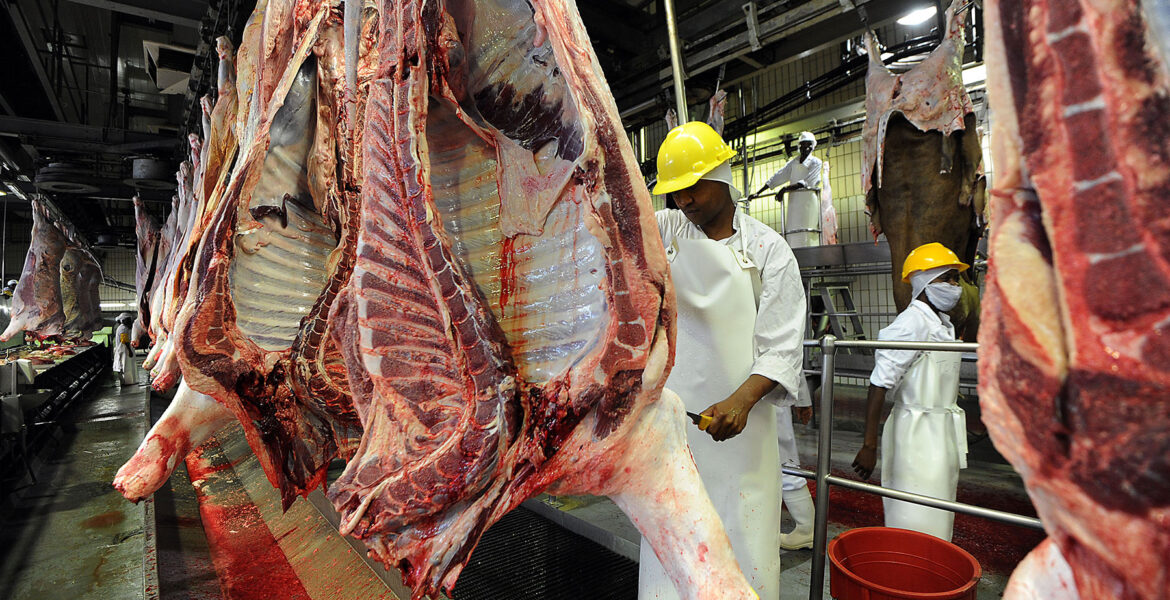
- As Foot and Mouth Disease nears Botswana’s border, the Meat Commission details measures to protect the nation’s beef industry and sustain export markets
TLOTLO KEBINAKGABO
Botswana’s livestock and beef industry faces heightened scrutiny as a Foot and Mouth Disease (FMD) outbreak spreads across South Africa, threatening to cross the border. The South African outbreak has already led to the culling of thousands of infected and at-risk animals, disrupting local meat supplies and driving up beef prices. Exports of beef and related products were heavily restricted, causing financial losses for farmers and the agricultural sector.
With the disease approaching Botswana, authorities have called for increased surveillance, strict quarantine measures, and enhanced biosecurity at border posts to prevent similar disruptions.
BMC Oversight
Botswana Meat Commission (BMC) CEO Mmabasotho Tibe spoke with this publication about how the organization is responding to the threat. “BMC, as a leading beef producer and contributor to our nation’s export economy, is closely monitoring the FMD situation reported near our border with South Africa. We recognize the seriousness of this threat and its potential impact on the national livestock industry,” she said.
Tibe explained that BMC’s operations are guided by three principles: Regulatory Mandate, Role of BMC, and Operational Impact.
Regulatory Mandate
“The control and management of FMD, including movement restrictions, border surveillance, and disease containment, is the exclusive mandate of the Department of Veterinary Services (DVS) under the Ministry of Lands and Agriculture,” she said. “DVS is responsible for the epidemiological safety of the country as well as all global export requirements, including the stringent protocols for the European Union (EU) market. DVS serves as the custodian of these agreements, ensuring that our livestock and processing facilities adhere to the highest international standards.”
BMC Role
Under national and international law, BMC operates as a Food Business Operator (FBO). “Our responsibility is to maintain the highest standards of food safety and hygiene within our facility, as regulated and audited by the DVS. We do not set national disease control policy but strictly adhere to the directives issued by the DVS to ensure our facility remains compliant and safe within the value chain,” Tibe said.
Operational Impact
Cattle procurement and slaughter schedules remain guided by current movement permits and health certifications issued by DVS. “Should the DVS implement new zoning or movement restrictions to protect our borders, we will adjust our operations immediately to remain in full compliance,” Tibe said.
Regarding exports, she noted, “The continuity of beef exports to the EU and other key markets is dependent on our national ‘FMD-Free without Vaccination’ status. As long as the DVS maintains the required sanitary guarantees and the country remains free of the disease, our exports continue as scheduled.” BMC has developed an internal contingency plan to address the current risk.
Market Continuity
Tibe emphasized BMC’s support for national efforts. “Protecting our national beef export markets is a collective effort led by the government, with industry players such as BMC providing the necessary support as required by DVS. Our preparedness is built on rigorous compliance with DVS protocols.”
In the event of an outbreak in Botswana, BMC is ready to implement emergency standstill orders or restricted procurement zones as dictated by DVS. Internal measures include enhanced bio-exclusion, robust cleaning and disinfection protocols, and regular consultative briefings with DVS to align contingency plans with national strategies.
Market Diversification
BMC has also pursued alternative markets, including the Middle East and regional Africa, to reduce reliance on the EU. “In collaboration with DVS, commodity-based trade could be considered to ensure exports at some level continue. Ultimately, the Norway and EU markets remain currently the highest paying markets for Botswana beef,” Tibe said.
Protecting Brand
“The ultimate protection for our export markets is the credibility of our regulatory system. By operating transparently under the shadow of DVS and ensuring that no product leaves our facility without explicit certification, we maintain the trust of our international trading partners,” she said.
Stakeholder Guidance
BMC actively supports DVS messaging to farmers, reminding suppliers that “no animal may be moved to our facility without valid, DVS-issued permits. Compliance with these legal requirements is the first line of defense for the entire industry,” Tibe said. Early reporting of clinical signs is encouraged, as it is “critical to preventing a localized incident from becoming a national crisis.”
Coordination with DVS is reinforced through direct briefings, real-time updates, and regulatory supervision within the abattoir. Tibe said, “By operating as a disciplined Food Business Operator under the guidance of the Competent Authority, we ensure that even in times of heightened risk, the integrity of our beef exports is never compromised.”