
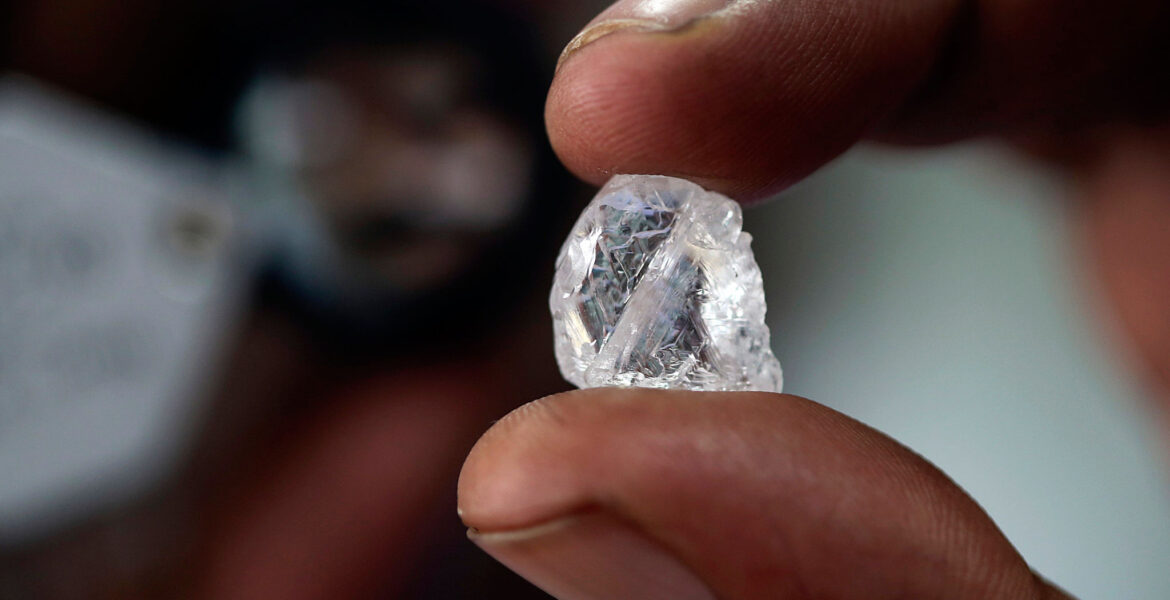
- Production rebounds, but the company says planned maintenance and weak trading conditions are expected to weigh on output later this year
GAZETTE REPORTER
De Beers’ rough diamond production rose 88 percent to 7.8 million carats in the second quarter of 2026, reflecting the impact of an extended maintenance shutdown at Orapa in Botswana during the comparative period, as well as the planned mining of higher-grade ore at Jwaneng in Botswana and Gahcho Kué in Canada.
According to parent company Anglo American’s Production Report for the second quarter ended June 30, 2026, production in Botswana increased to 5.5 million carats.
The report said the increase was driven by “the impact of the extended maintenance at Orapa in the comparative period as well as the planned mining of higher-grade ore at Jwaneng to optimise plant throughput.”
However, Anglo American said planned plant maintenance at Orapa and Jwaneng during the second half of the year is expected to substantially reduce production levels from current rates.
Regional Output
Production in Namibia remained broadly unchanged at 0.5 million carats.
“The retirement of the Coral Sea vessel in the comparative period and planned maintenance of the Mafuta vessel at Debmarine Namibia were largely offset by the planned mining of higher-grade areas at Namdeb,” the report said.
In South Africa, production at Venetia increased to 0.7 million carats, largely because of higher volumes of underground ore being processed.
The report also noted that, as announced by De Beers on July 13, 2026, “a pause in production at Venetia is proposed to start in the second half of the year.”
In Canada, production increased to 1.0 million carats as Gahcho Kué benefited from the planned processing of higher-grade ore from a new mining area.
Trading Pressure
Anglo American said rough diamond trading conditions remained challenging during the first half of 2026.
“The geopolitical and macroeconomic landscape remains uncertain, with the onset of the conflict in the Middle East adding to economic and consumer confidence risks,” the report said.
It added that “synthetic lab-grown diamonds also continued to affect demand for lower value natural diamonds, adding pressure in more price-sensitive categories. However, stronger pricing for higher value goods supported a stable overall average price index throughout the period.”
The consolidated average realised price for the first half of 2026 declined 32 percent to $105 per carat. The report attributed the decline to a sales mix containing a higher proportion of lower-value goods and a 16 percent decrease in the average rough price index.
Rough diamond sales in the second quarter totalled 7.1 million carats, or 6.0 million carats on a consolidated basis, generating consolidated revenue of $665 million.
That compared with 7.6 million carats, or 6.8 million carats on a consolidated basis, sold during the same period in 2025, when consolidated rough diamond sales revenue reached $1.2 billion.
Guidance
Production guidance for 2026 remains unchanged at 21 million to 26 million carats.
The company said planned maintenance at Orapa and Jwaneng, together with the proposed production pause at Venetia, is expected to reduce production during the second half of the year.
“De Beers continues to monitor rough diamond trading conditions in order to align output with prevailing demand,” the report said.