
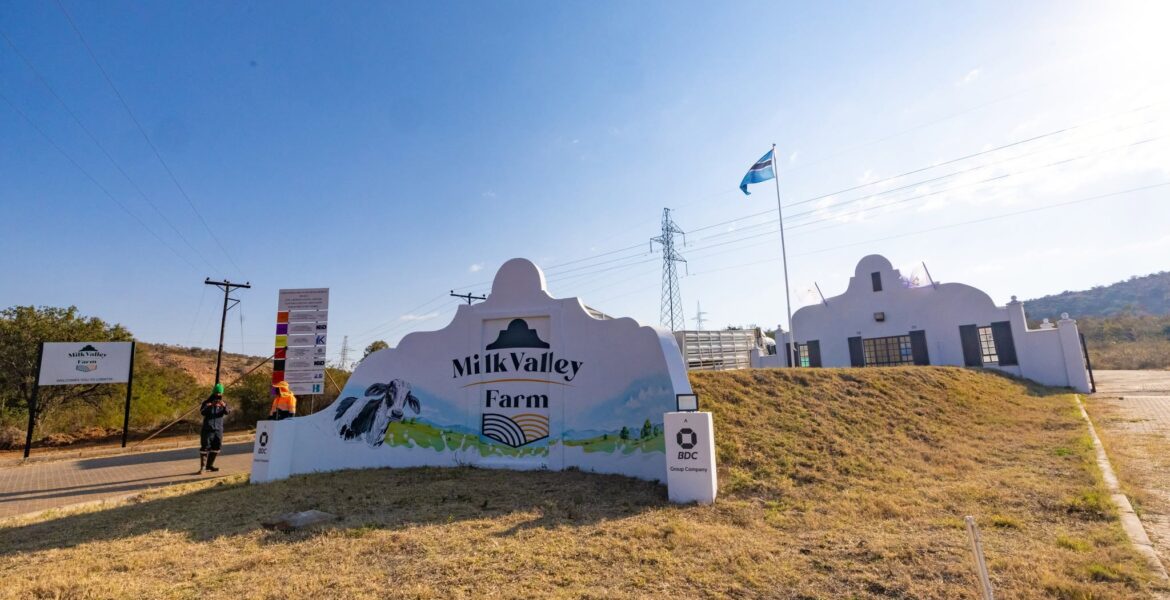
- Arrival of 200 Girolando cattle marks start of P1,000-herd expansion drive to increase local milk production
GAZETTE REPORTER
Botswana’s dairy industry has entered a new phase following the arrival (on Monday) of the first consignment of 200 high-yield pregnant Girolando dairy cattle from Brazil, marking the beginning of an ambitious programme aimed at expanding local milk production.
The cattle are the first batch of a planned 1,000 Girolando herd that will support Milk Valley Farm’s expansion into a modern dairy operation.
The initiative comes as Botswana continues efforts to strengthen domestic agricultural production and reduce reliance on imported dairy products.
Minister of Trade and Entrepreneurship Tiroeaone Ntsima said the arrival of the cattle represents an important milestone in efforts to build a stronger and more self-sufficient dairy sector.
“For many years, the country has relied significantly on imported dairy products to meet local demand,” Ntsima said in a interview
He said investments such as Milk Valley Farm are intended to increase domestic production capacity, improve productivity through superior genetics and create a more resilient dairy sector.
“This is an important step towards reducing our import bill while ensuring that more of the value created by the dairy industry remains within Botswana,” Ntsima said.
Production Goals
The introduction of the Girolando cattle is expected to increase milk production through improved genetics and modern farming practices.
Ntsima said the project supports Botswana’s food security and agricultural transformation objectives by strengthening the country’s ability to produce food locally.
“Food security is about ensuring that Botswana has a reliable and sustainable supply of nutritious food,” he said.
According to the minister, the project demonstrates a shift towards a more technology-driven agricultural sector through investments in biosecurity, improved animal husbandry and commercial farming systems.
He said the initiative reflects Botswana’s ambition to develop a more productive, competitive and climate-resilient agricultural sector.
Value Chain
The government expects the dairy expansion to create opportunities beyond milk production, including employment and skills development in specialised areas.
Ntsima said the project could support growth in areas such as dairy farming, animal health, breeding, farm management and agricultural technologies.
“We also anticipate increased opportunities for citizen-owned businesses across the dairy value chain, including fodder production, veterinary services, transport and logistics, engineering and equipment maintenance, milk processing, packaging, cold chain logistics and distribution,” he said.
The minister said the introduction of 1,000 Girolando cattle could significantly increase Botswana’s dairy production capacity, strengthen the national breeding herd and improve the availability of locally produced milk.
He added that Milk Valley Farm is expected to contribute to the development of modern dairy farming standards through investments in infrastructure, biosecurity, animal welfare and management systems.
“We expect Milk Valley Farm to serve as a catalyst for broader sector growth, encouraging further investment, fostering innovation, and strengthening Botswana’s long-term food security,” Ntsima said.