
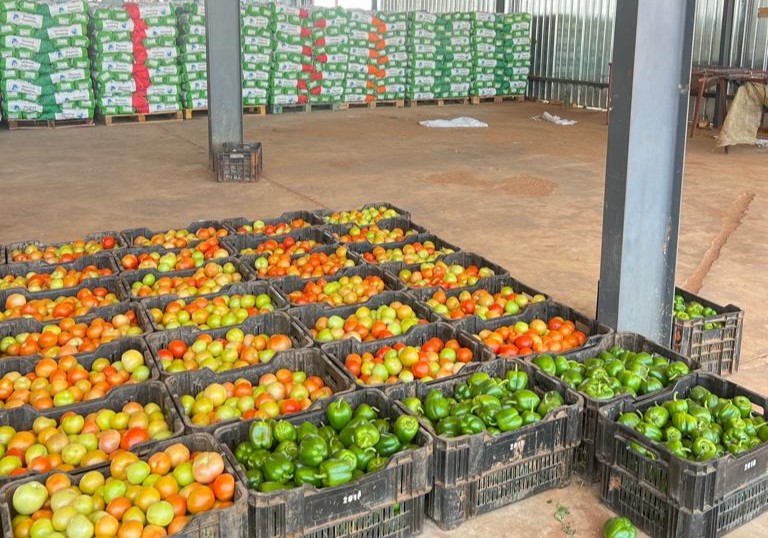
Commercial farmers say millions have been lost as vegetables rot unsold, citing poor implementation of an otherwise good policy, government inefficiencies in stakeholder engagement, and a declining local consumption pattern driven by economic challenges, despite acknowledging the importance of government import restrictions
GAZETTE REPORTER
Tuli Block farmers are facing heavy financial losses as large volumes of vegetables go unsold, leaving produce to rot in fields and pushing commercial growers into crisis. This publication understands that at least one farmer has suffered losses of roughly P10 million, underscoring the scale of the problem.
In a telephone interview, Tuli Block Farmers Association liaison officer Letty Masunga confirmed the severity of the situation.
“We are talking about commercial farmers here who are not helped by the government,” she said. “They do not get any aid.”
She noted that while farmers are selling what they can, much of the damage is already irreversible.
Demand Decline Worsens
Masunga added that the collapse in consumer demand has worsened the crisis. Economic pressures, she said, have reduced household spending and slowed vegetable purchases across the country.
“We planted for the local market, but there is not sufficient uptake,” she explained. Farmers are now racing to secure export markets to absorb the glut, noting that “the local uptake is not following normal purchasing patterns.”
The mismatch between production levels and shrinking domestic demand has left farmers with tonnes of produce that the market cannot absorb.
Policy Consultation Gaps
Masunga said that delayed or unclear decisions by the Ministry responsible for agriculture further compound the losses. She emphasized that decisions about applying or lifting horticultural import restrictions often occur without adequate consultation with farmers.
“They should be directed by supply to make such decisions, and sometimes we do not know what informs them,” she said.
Farmers argue that inconsistent policy timing creates uncertainty and makes it difficult to plan harvests, avoid excess supply, or prevent waste.
Value of Restrictions
Despite their frustrations, farmers remain appreciative of government efforts to regulate imports.
“We appreciate the government’s efforts in implementing import restrictions — it would not have been possible to grow local production without them,” she said. The restrictions help protect local farmers from South African producers who operate at far lower costs.
However, Masunga warned that delays in enforcing restrictions have had devastating consequences. Even when farmers report strong supply, implementation sometimes takes weeks — long enough for perishable crops to spoil.
“Who decides when restrictions are imposed or lifted?” she asked. “If the decisions come late, the crops perish.”
Smuggling Undermines Market
Masunga cited the smuggling of produce( potato and onion but not limited to that) into Botswana during restriction periods as another destabilizing factor. She said illegal imports undercut local farmers and weaken the effectiveness of policy measures intended to support them.