
Influence, Authenticity, and the Quiet Power of Being Real
By Douglas Rasbash
An Unscripted Digital Moment
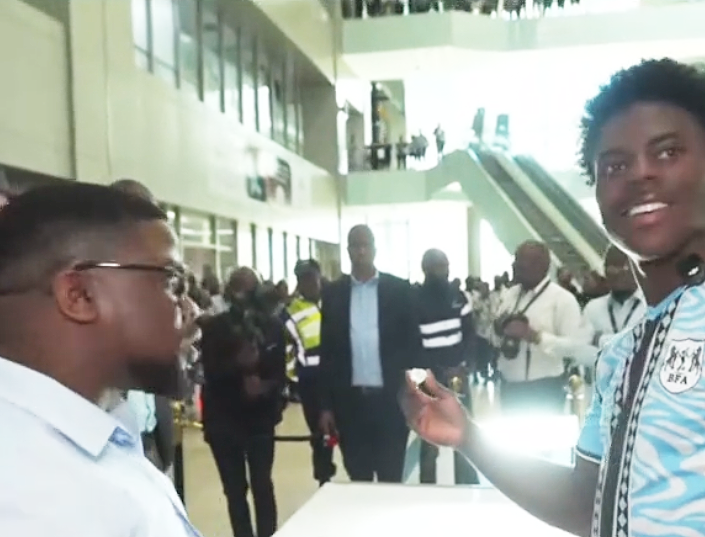
Botswana entered 2026 with an unexpected but welcome boost: a global digital spotlight shone not by a formal advertising campaign, a glossy tourism brochure, or a ministerial roadshow, but by one of the world’s most influential online creators, IShowSpeed. Known for his high-energy livestreams and an audience counted in the tens of millions across platforms, Speed’s visit to Botswana was refreshingly unscripted. No narration. No staging. No brand messaging. Just a young global influencer encountering Botswana’s landscapes, wildlife and other realities with calm confidence in real time — and sharing that experience instantly with the world.
Seeing Botswana Through Fresh Eyes
The result was something modern tourism marketing often struggles to manufacture genuine curiosity. Viewers did not simply see animals on safari. They saw Botswana through the eyes of someone encountering it for the first time — the vastness, the humour, the unexpected stillness, and the sense of space that defines the country. In a digital era dominated by filters, exaggeration, and performance, Botswana’s appeal came through precisely because it did not try to perform.
Influence in the Digital Age
This moment matters because the way the world discovers countries have changed. Influence today is no longer driven primarily by official campaigns, embassies, or carefully curated narratives. It is driven by individuals. Influencers — whether governments like it or not — have become the new intermediaries of perception. A single livestream can now reach more people in a day than a national tourism authority or diamond producer might reach in a year. More importantly, it reaches them emotionally, not administratively.
Authenticity Over Approval
The influencer phenomenon does not operate on the logic of policy papers or economic rationality. It operates on relatability, spontaneity, and trust. Younger audiences in particular place far more weight on what feels authentic than on what feels approved. They are not waiting to be “sold” a destination; they want to experience it vicariously. Speed’s livestreams and clips reached hundreds of thousands directly and millions indirectly through reposts, reaction videos, commentary, and algorithmic amplification. In doing so, they placed Botswana firmly into the everyday digital consciousness of a generation that may not yet be thinking about safaris or diamonds — but now knows exactly where Botswana is.
The Diamond Moment
One brief moment from the visit went especially viral. In a clip that circulated widely, Speed expressed surprise that he could not simply buy a rough diamond in Botswana and take it with him. Some online reactions framed this as irony or contradiction: how could a diamond-producing country restrict access to its most famous resource?
Why Rough Diamonds Are Restricted
In reality, the explanation is straightforward — and revealing. The sale of rough diamonds is strictly prohibited, not because of bureaucracy or secrecy, but because diamonds are strategic national resources. Their production, valuation, and movement are governed by tightly controlled systems involving the state and long-standing arrangements with De Beers, designed to prevent smuggling, protect national revenues, and ensure value is retained within the formal economy. Rough diamonds are not curiosities or souvenirs; they are industrial commodities.
How Messages Travel Online
Yet the moment itself is instructive because it highlights how influence actually works. No one expects to walk into a country and casually buy a kilogram of copper concentrate, 100 grams of uranium, or a ton of iron ore. These materials are governed by permits, contracts, export controls, and international regimes. Diamonds are no different. But when an influencer expresses surprise at such a restriction, the message travels — stripped of context — and becomes part of the public imagination.
Reaching a New Audience
Most vitally Speed’s following are probably not wealthy safari lovers or even those prepared to invest in forever diamonds, but they are young mostly African Americans that are touched deeply by the African connection. Our tourism and diamond marketing is focused almost exclusively on wealthy mostly white social segments. What Speed has done is to turn that on its head. Millions are more interested in the African connection. The wide-open unspoiled spaces of their ancestors and a mineral called diamond that simply embodies Africanness. It is not hard to imagine a marketing campaign – to wear a piece of African History that is as old as time itself.
The Power of Algorithms
That is the nature of modern influence. Messages are put out there, sometimes incomplete, sometimes naïve, sometimes accidental — but they still land. Algorithms do not reward nuance or accuracy; they reward engagement. Surprise travels faster than explanation. And once a message is out there, it shapes perception whether or not it is fully understood.
Risk and Opportunity for Botswana
For countries like Botswana, the rise of influencer-led promotion presents both risk and opportunity. The risk is obvious: complex national policies, particularly around resources, conservation, or regulation, can be misunderstood in seconds. A casual remark can outrun decades of careful stewardship. But the opportunity is far greater. Influence humanises countries. It bypasses officialdom. It reaches audiences that formal diplomacy, glamorous star-studded gatherings and conventional marketing simply cannot.
A New Era of Promotion
The broader lesson is that tourism promotion itself is changing and those for diamonds should take heed too. Carefully staged campaigns still have a role, but they no longer monopolise attention. Influence now comes from moments that feel real, unpolished, and human. In this context, Botswana’s and indeed Africa’s greatest advantage is precisely that it does not need to exaggerate. The environment, the people, and the experience carry the narrative naturally. As Botswana reflects on economic transition, digital exposure of this kind does not replace policy, infrastructure, or investment — but it complements them. It places Botswana and Africa into the everyday global conversation, not as a spectacle, but as a place of calm competence and quiet depth to which the World owes so much.