
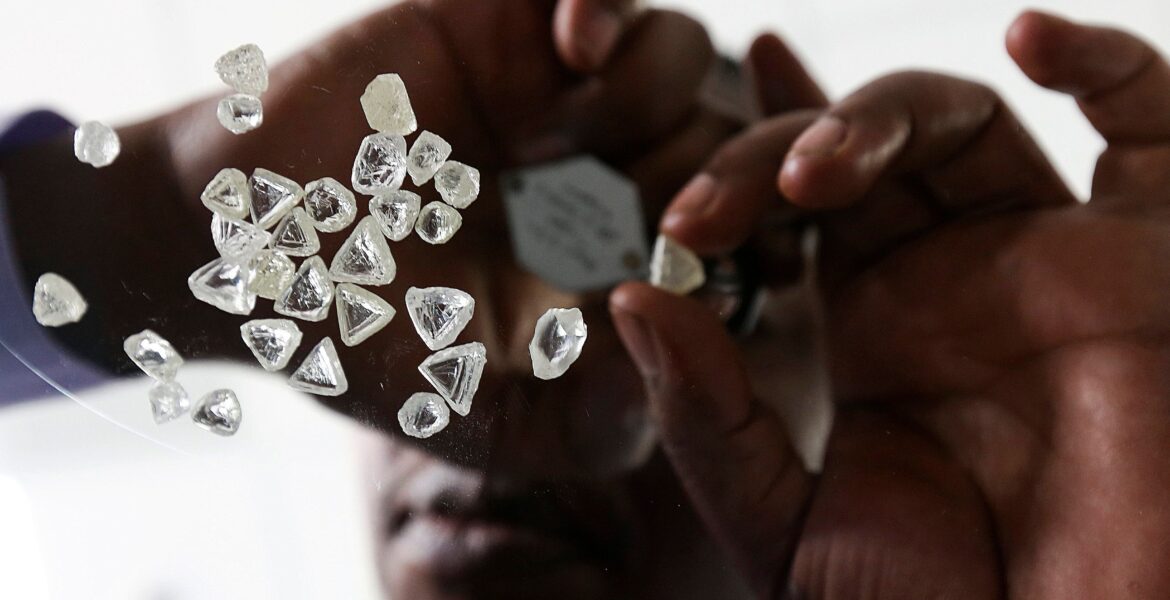
As Botswana considers doubling its De Beers stake, Dr Douglas Rasbash asks whether the additional shares will deliver measurable financial and economic returns, or primarily greater political influence.
DR DOUGLAS RASBASH
Botswana has been told that increasing its shareholding in De Beers from 15% to 30% represents an investment in its future. But the public explanation leaves a fundamental question unanswered: what additional economic and financial returns will Botswana receive?
Perhaps the transaction is principally about influence. If so, government should make that case openly. Purchasing influence in a multinational company is a different proposition from purchasing an asset expected to generate an adequate commercial return. Both may have a justification. They require different evidence.
The word “investment” makes the distinction easy to overlook. It carries the reassuring suggestion that money committed today will produce greater prosperity tomorrow. Without a demonstrated return, however, it risks becoming a euphemism for buying political influence.
WHAT IS BOUGHT?
De Beers is an international business with mining interests in several countries. An additional shareholding gives Botswana greater exposure to that wider business. It does not simply increase Botswana’s indirect stake in its domestic diamond industry; it also extends Botswana’s financial exposure to mines elsewhere.
Government must therefore explain whether it is buying income, future appreciation, domestic economic development or greater influence over an international diamond company. Listing all four as possibilities does not establish the value of any of them.
THE RETURN TEST
The appropriate test is incremental benefit: what Botswana gains by moving from 15% to 30%, compared with retaining its existing holding under the incoming ownership arrangement.
That distinction matters because Botswana already benefits from its diamond industry. Existing employment, royalties, taxes and its direct interest in Debswana cannot simply be presented as returns from purchasing more De Beers shares. Those benefits belong in the starting position.
Likewise, if new management restores De Beers’ profitability, Botswana’s existing 15% would already participate in that recovery. Buying more shares increases participation. The question is whether the additional participation is worth its additional cost.
DIVIDENDS AND VALUE
The most straightforward commercial return would be dividends. But the public needs a separate record of distributions received on Botswana’s existing De Beers shares, clearly distinguished from Debswana receipts. It also needs a credible forecast of future dividends. A right to receive distributions has little immediate financial value if distributions do not materialise.
Capital appreciation is another possible return. Government could buy during a downturn and benefit from a recovery. Yet a fallen price is not sufficient evidence of a bargain. It may indicate an undervalued business, deteriorating prospects or some combination of the two.
The historical decline is substantial. Anglo American’s 2011 agreement to purchase 40% for US$5.1 billion implied a whole-business transaction benchmark of approximately US$12.75 billion. Anglo subsequently reported a US$2.3 billion impairment for 2025. Neither past transaction prices nor accounting carrying values establish what the business will earn in future.
Reported negotiations involving approximately US$1 billion for Anglo’s 85% provide an indicative price of around US$176 million for an additional 15%. That is a simple proportional calculation, not an agreed Botswana purchase price, and excludes contingent payments and other obligations.
Nevertheless, it illustrates the hurdle. At an assumed annual required return of 8%, US$176 million would need to produce approximately US$14 million a year while preserving its investment value. With no dividends, it would need to become worth approximately US$380 million after ten years to achieve the same annual return. Where is the evidence that it will?
ECONOMIC BENEFITS
Domestic economic benefits could strengthen the case. Additional jobs, procurement, manufacturing, research and technical skills would have value. But purchasing existing shares generally pays the seller. It does not itself create productive capacity in Botswana. Nor are such benefits necessarily proportional to the shares owned.
Any accompanying development programme must therefore be specified separately: which activities, how many additional jobs, what domestic value added, at what cost and by when? Benefits already secured through existing agreements must not be counted again.
TECHNOLOGY PROMISES
The technology argument requires the same discipline. Government has highlighted Element Six and industrial synthetic diamonds. Botswana already has indirect exposure through its existing holding. More shares increase that exposure; they do not automatically establish laboratories, factories or technological capabilities within Botswana. Those outcomes require specific arrangements.
BUYING INFLUENCE
A larger holding could strengthen Botswana’s voice over production, marketing, investment and restructuring. Such decisions may affect its national interests. But the company also has operations, obligations and commercial interests elsewhere. Influence over that international portfolio is not synonymous with economic benefit at home.
Nor does 30% automatically confer control. The practical gain depends on the shareholder agreement: board seats, voting arrangements, vetoes and decisions requiring Botswana’s consent. Being the largest individual shareholder sounds powerful, but its meaning depends on how the remaining shareholders can act together.
Government should publish a comparison of the rights attached to 15% and 30%. Which additional decisions could Botswana shape or prevent? How would those powers protect national income or employment? Could similar protections be negotiated without purchasing the extra shares?
CONCENTRATED RISK
There is also a price to concentrating more public capital in an industry already central to Botswana’s fortunes. A diamond recovery could improve both government revenues and the investment. A prolonged downturn could weaken both simultaneously. That exposure belongs in the appraisal.
Share ownership does not automatically make Botswana liable for a corresponding percentage of company losses. Guarantees and binding funding commitments could create additional obligations, however, while any borrowing used to acquire the shares would remain repayable regardless of dividends.
THE PUBLIC CASE
Government says advisers have evaluated the proposals. It would therefore be inaccurate to claim that no assessment exists. The deficiency is that the public explanation reviewed has not disclosed enough to judge the incremental return.
Botswana may decide that greater influence is worth purchasing. But that is a policy choice whose purpose, powers and price should be explicit.
The leader of the opposition has responsibly raised similar questions in his response to the 2026 State of the Nation Address. He was not wrong to do so.
Until additional commercial and domestic economic returns are demonstrated, “investment” risks serving as a euphemism for the purchase of political influence. Botswana deserves to know what that influence will deliver, and why it is worth more than the other uses of its money.