
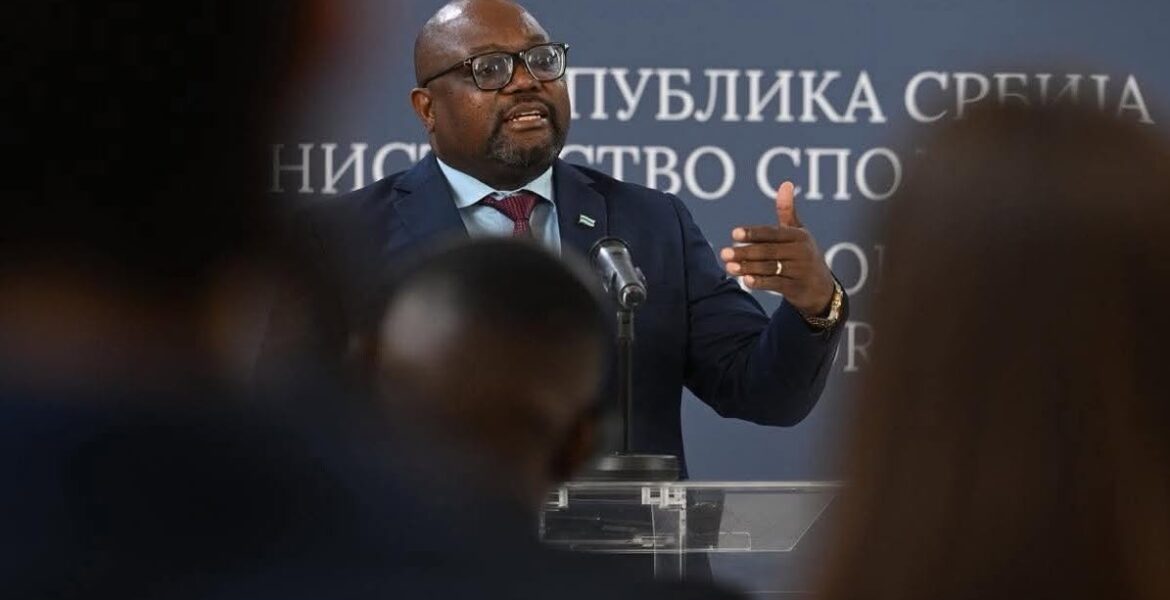
The UDC promised to put human rights at the centre of foreign policy, yet its words in Beijing and its votes on Ukraine show how readily that promise yields when powerful partners are involved.
DR DOUGLAS RASBASH AND PHENYO BABUSI
In Beijing on 13 October, Botswana declared that it opposed any form of Taiwanese independence and supported “all efforts by China to achieve national reunification”. Less than two weeks later, in Gaborone, Foreign Minister Phenyo Butale acknowledged that Batswana had been recruited to fight on Russia’s side in Ukraine. Asked about a formal protest to Moscow, he said the government preferred dialogue. In Beijing, Botswana spoke emphatically for a great power’s claim. At home, it chose restraint even when its own citizens were caught up in another great power’s war. [3, 8]
President Duma Boko and his minister have described their foreign policy as centred on human rights. Minister Butale also made economic diplomacy a priority. Botswana needs markets, jobs and investment, and its government has every reason to seek them. The test of a human-rights policy comes when defending a principle might make a trade or investment conversation uncomfortable. [8]
BEIJING’S ENDORSEMENT
Botswana’s longstanding recognition of the People’s Republic of China is one thing. The October communiqué did more. As the two governments announced a comprehensive strategic cooperative partnership, Botswana explicitly endorsed Beijing’s reunification efforts. Its endorsement contained no express condition that the outcome be peaceful or that the people of Taiwan consent to it. Taipei strongly rejected the statement the next day. [8]
The question of self-determination is about whose wishes count. Botswana can recognise Beijing as the government of China and still insist that Taiwan’s people have a say in their future. Instead, the communiqué gave Beijing the language it wanted and gave the people of Taiwan no voice in the outcome. For an African country that prizes the right to decide its own future, endorsing that imperial claim should require more explanation than the announcement of a strategic partnership. [8, 10]
UKRAINE ABSTENTIONS
On 2 March 2022, Botswana co-sponsored and voted for the first UN General Assembly resolution on the full-scale invasion. Titled Aggression against Ukraine, it deplored Russia’s aggression “in the strongest terms” and demanded an immediate, complete and unconditional withdrawal. On 24 February 2026, Botswana abstained on a resolution supporting a lasting peace in Ukraine. [1, 2, 3]
Botswana’s early UN record was mixed. In 2022 it backed the resolution rejecting Russia’s attempted annexations of Ukrainian territory and abstained on suspending Russia from the Human Rights Council and on a resolution concerning reparations. In February 2023 it again voted for a resolution calling for Russian troops to withdraw. The more recent pattern after the change in Government in November 2024 is clearer. Botswana abstained on both Ukraine peace resolutions in February 2025, on the return of Ukrainian children in December 2025, and on the February 2026 peace resolution. The texts differed. Across all four votes, Botswana withheld its support. [1, 2]
An abstention does not automatically amount to support for the opposing position. However, it raises questions about the government’s reasoning, particularly when the resolutions concern territorial sovereignty, the protection of children and the pursuit of peace. Botswana should be able to explain how these decisions align with its stated commitment to placing human rights at the centre of foreign policy. [1, 2, 9]
The vote on the children drew a challenge from Duma Saleshando in Parliament in March. Why, he asked, had a government that invoked human rights at home abstained on a resolution demanding that Russia return Ukrainian children? He also questioned plans for a diplomatic mission in Moscow. Butale had spoken of opening an embassy and inviting Russian investment in minerals. [4]
RECRUITMENT QUESTIONS
In December 2025, the Ministry of International Relations said two young men had reportedly gone to Russia expecting military training and ended up on the front lines of the conflict between Russia and Ukraine. Ukraine’s foreign minister, Andrii Sybiha, was more direct. In April he said he had briefed Minister Butale on Russia’s recruitment of Africans for its war against Ukraine. Russia’s embassy in Botswana told Mmegi that those who joined had done so voluntarily. [5]
By August, Minister Butale was warning Parliament that nearly 22 Batswana had been drawn into deceptive schemes. Then, on 26 October, Kgosi Ian Khama pressed Minister Butale in Ntlo ya Dikgosi on what Botswana had done to protect its citizens, whether it had protested to Moscow, and what principles of international law guided its position. Khama said that a country trying to lure Batswana into its wars “would be an act of hostility”. [3, 6]
Minister Butale acknowledged confirmed cases of Batswana participating on the Russian side. Some, he said, appeared to have signed up knowingly. Others had allegedly been deceived by offers of work. The distinction matters for anyone who may face prosecution under Botswana’s Foreign Enlistment Act. Of the 27 linked to recruitment, eight were intercepted before reaching Russia, four were repatriated and 15 remained unaccounted for, according to the Gazette’s reporting. Botswana had asked Russia to return three injured citizens and was negotiating with Ukraine for the release of one prisoner of war. On a formal protest, Butale’s answer was blunt. “We believe in dialogue than protests.” [3]
Two days later, Ukraine’s Defence Intelligence named 25-year-old Pako Namogang. It said he had been recruited through WhatsApp, signed a military contract in Moscow and was reportedly killed in Luhansk. An investigation by Journalists for Justice documented more than 3,066 Africans from 40 countries recruited into Russia’s armed forces since October 2022 and 502 deaths by the end of June 2026. The recruitment figure is cumulative. A continent that fought to end foreign rule should recognise the imperial impulse in Russia’s attempt to subordinate Ukraine. [7]
PRINCIPLES AT STAKE
Ukraine and Taiwan present different legal and diplomatic questions. In Ukraine, the UN General Assembly identified an invasion of a sovereign member state and demanded withdrawal. In Taiwan’s case, the question raised by Botswana’s communiqué is whether the people affected should have any say in their political future. What connects the two is Gaborone’s readiness to be explicit when a powerful partner wants its endorsement and cautious when the same standard would require challenging one. [1, 2, 8, 10]
Diplomatic restraint and diplomatic inaction are not necessarily the same thing. The government has practical reasons to keep channels open with Moscow. The families of 15 missing Batswana need answers, and consular work requires access and cooperation. But Botswana can seek the safe return of its citizens and publicly ask Russia to stop recruiting them. It can trade with China and insist on a peaceful outcome in which Taiwan’s people have a voice. In neither case has the government shown why pursuing investment requires giving up that diplomatic ground.
Calling this an unprincipled foreign policy is a judgement about the government’s choices. The voting record and the Beijing communiqué cannot establish a private bargain. When the government is ready to declare what Beijing wants to hear, yet abstains even on the return of Ukrainian children, what does it mean to say that human rights are at the centre of Botswana’s foreign policy?