
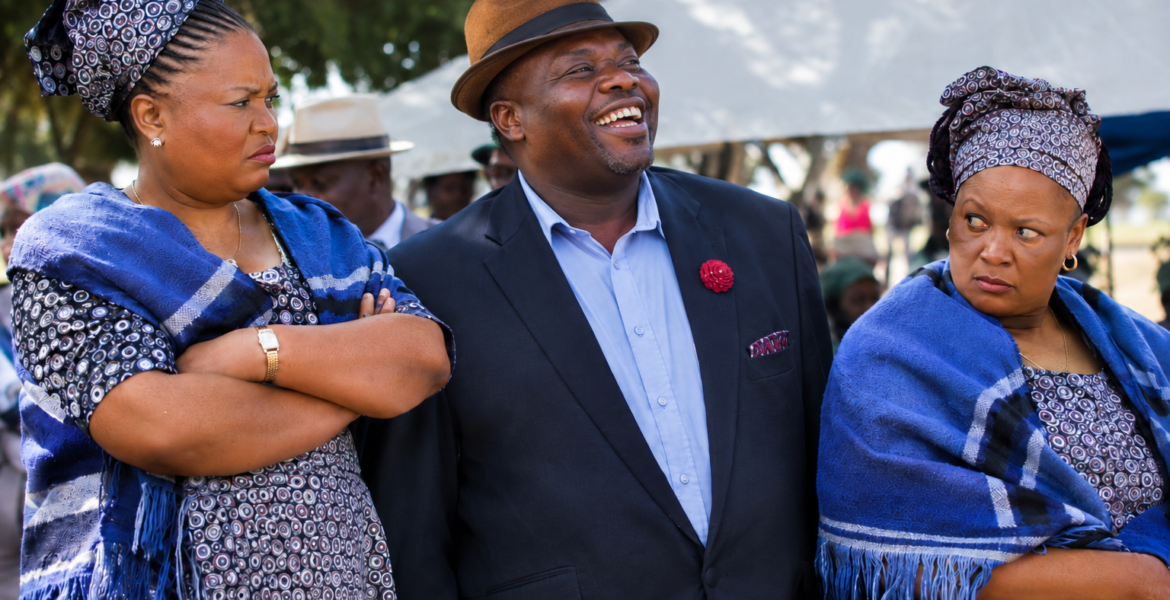
As Botswana considers recognising plural marriage, Dr Douglas Rasbash asks whether more spouses would bring greater security and care, or simply create new inequalities.
DR DOUGLAS RASBASH
Botswana is again discussing polygamy. A proposal raised in Ntlo ya Dikgosi has reopened a familiar question: should the law recognise a man having more than one wife? The debate deserves more than tradition versus modernity. It should ask what makes families work, whose interests recognition serves and how adults and children can be protected.
Marriage is not a requirement for people to live together or raise children. Relationships exist beyond its boundaries. Why, then, should the number of adults matter more than their responsibilities, the fairness of their arrangements and the wellbeing of their children?
THE MONOGAMY ASSUMPTION
Human societies have practised monogamy, polygyny and polyandry. Humans form enduring pair bonds, but their family arrangements are adaptable. Our primate ancestry offers no prescription for marriage law: neither monogamy nor polygamy becomes desirable merely because it occurs in nature.
Institutions should be judged by their consequences. A marriage certificate does not guarantee fidelity, competent parenting or security. A larger household does not automatically produce harmony. The useful comparison concerns how different arrangements distribute care, resources and power.
CHANGING FAMILIES
Later marriage, falling fertility and changing relationships are reshaping families across much of the world. Botswana’s households extend beyond two parents and their children. Grandparents, siblings, aunts and uncles often supply essential care and financial support.
The extended family is hardly an imported experiment. It is an established institution whose contribution can disappear when public debate treats the married couple as the complete family.
Meanwhile, the expectation that one adult earns while another manages the home fits many households poorly. Both may need employment; neither may find it. Perhaps the nuclear household has become too small for everything society expects it to carry.
PARENTING SKILLS
Families are more than arrangements between sexual partners. Raising children requires affection, patience, judgement, practical competence and time. Maternal and paternal feelings matter, but neither marriage nor biological parenthood guarantees the ability to nurture.
One adult may earn reliably but struggle with daily care. Another may be an excellent caregiver with limited earning opportunities. Others contribute teaching, organisation or emotional stability. Why assume that two people necessarily possess every attribute a growing family needs?
Several committed adults could combine these abilities and relieve exhausted parents. But additional adults help only when responsibilities are accepted and relationships are safe. More people can mean conflict or an unequal burden on one woman. Parenting performance matters more than household size.
HOUSEHOLD ECONOMICS
High unemployment makes family resilience an economic question. Housing, food, transport and childcare stretch limited incomes. Sharing accommodation and domestic tasks can reduce duplication, while reliable childcare enables adults to seek work, study or rest.
Several independent incomes may cushion a household against job loss. However, adding dependants without adding resources can deepen insecurity. A larger family is not inherently cheaper per person, and unpaid care must not be treated as an unlimited female contribution.
These arguments support cooperation between adults. They do not establish that those adults must marry one another. Extended families and shared households can offer similar advantages. The debate should distinguish the benefits of pooled resources from claims made specifically for plural marriage.
WHOSE FREEDOM
Historical polygyny generally privileged men: one husband could have several wives, without women enjoying equivalent freedom. Carrying that asymmetry into modern arrangements demands scrutiny.
Polyandry, one woman with several husbands, exposes the question. Is the purpose to preserve male privilege or recognise consenting adults’ choices? An argument based on freedom becomes difficult to sustain if the freedom belongs only to men.
Consent also requires more than agreement spoken under pressure. Economic dependence, family expectations and fear of abandonment can narrow a woman’s choices. Existing partners must have a meaningful voice, and everyone needs a practical route to leave.
LEGAL RECOGNITION
Marriage does more than acknowledge affection. It allocates rights and obligations concerning property, inheritance, maintenance and separation. Any proposal for plural marriage must explain how those responsibilities would operate, particularly when another partner enters or someone leaves.
Children’s security cannot depend on the popularity of their parents’ arrangements. Nor should recognition allow an established spouse’s financial position to be weakened without safeguards. These are substantive questions, not administrative details to resolve after a political announcement.
Public debate also needs stronger evidence from families themselves. Women, children and caregivers should help define the questions, so that recognition is assessed through lived experience rather than promises made by advocates on either side alone.
FALLING FERTILITY
In Botswana, the rate was 2.98 in 2022, compared with 6.6 in 1981. In South Korea, it is only 0.8. Replacement occurs when the fertility rate is 2.1. Declining fertility adds another dimension to the polygamy debate. It is too easy to describe fewer births as women becoming unwilling to bear children. Some freely choose not to become mothers; others may want children but hesitate over the conditions in which they would raise them. UNFPA’s 2025 research identifies financial insecurity, housing costs and the absence of a suitable partner among barriers preventing people from having the families they want.
For a woman contemplating motherhood, security means more than a marriage certificate. It means confidence that a partner will contribute money, time, affection and practical care over many years. Pregnancy, childbirth and the daily work of raising children involve substantial commitments. Why undertake them if support is uncertain, or if a partner can expand his commitments without her meaningful agreement?
Polygamy must therefore answer a difficult question: would it strengthen that security or further dilute it? A larger household might pool incomes, childcare and parenting skills. But additional spouses and children also create additional claims on finite resources and attention. More adults do not automatically produce more dependable care.
If falling fertility is a concern, the priority should be to make wanted parenthood more secure: affordable homes, reliable childcare, shared parental responsibility and effective protection against abandonment. Legal recognition of a family arrangement should be judged by whether it strengthens the rights and wellbeing of everyone within it. Women’s willingness to bear children cannot be assumed; it must remain a choice made with confidence in the future.
THE WELLBEING TEST
Polygamy will not cure unemployment, domestic violence, parental absence or relationship breakdown. Defending monogamy cannot make those problems disappear either. Botswana needs a broader discussion about how households obtain care, income and stability, including families that never seek marriage.
The debate could be useful even to people who would never choose plural marriage. It challenges the assumption that one household model answers every need. The state’s concern should be whether adults participate freely, responsibilities are enforceable and children receive dependable care. Family policy should start with those outcomes and judge every proposed arrangement against them.