
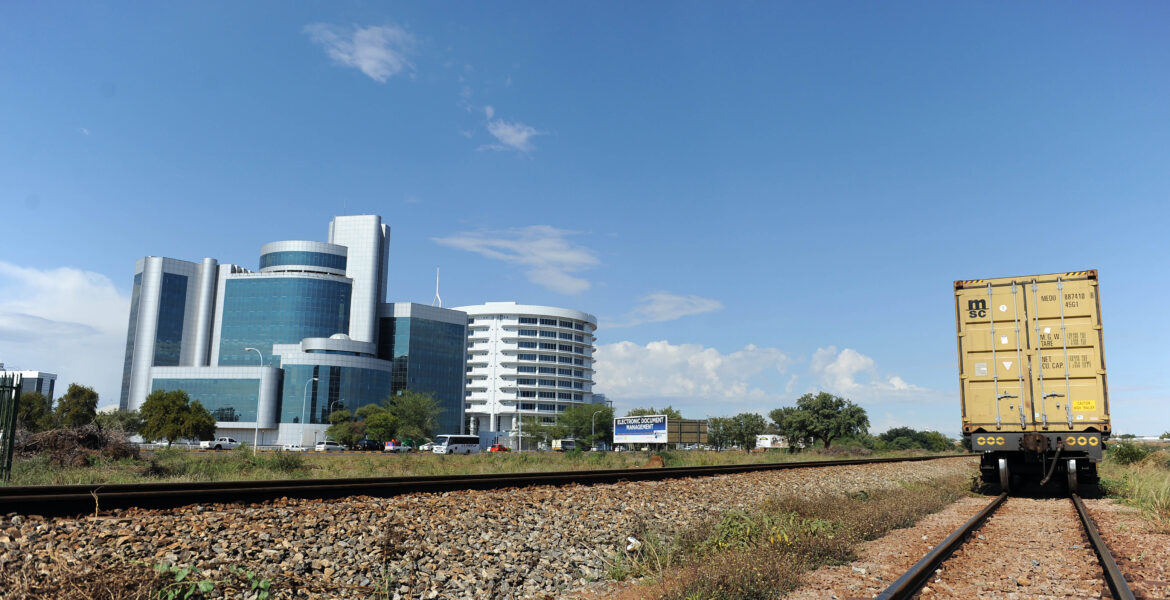
A proposed P60 billion restoration programme asks whether Botswana should repair the public assets built with diamond wealth before commissioning more.
DR DOUGLAS RASBASH
Botswana’s diamond wealth was never meant to remain underground or in a government bank account. Its enduring value was supposed to emerge above ground: in schools, hospitals, roads, railways, water systems and electricity networks. These assets would turn a finite mineral inheritance into lasting national prosperity. The investment has been enormous. Statistics Botswana’s annual gross fixed capital formation figures total approximately P744 billion between 2006 and 2024, at prevailing prices. This includes private investment, not government expenditure alone. But constructing an asset is only the beginning. Its contribution depends on whether it continues working.
Every asset depreciates. Maintenance slows avoidable deterioration, preserves useful life and keeps services operating. When maintenance is deferred, an inexpensive intervention can become a major rehabilitation project. Eventually, an asset that should still be serving the public requires premature replacement. The economic failure is allowing useful infrastructure to deteriorate faster than necessary, while households and businesses bear the consequences. A failing railway transfers freight to roads, adding transport costs and road damage. An unusable classroom undermines education. This is how diamond-era wealth is squandered: through the gradual destruction of its capacity to improve people’s lives. Botswana needs a national programme with a clear purpose and an equally clear name: Restoration Botswana.
THE RESTORATION BILL
A first sector-by-sector planning exercise developed for this article suggests a working allowance of approximately P60 billion over five years, equivalent to P12 billion annually. Lower- and higher-cost scenarios span approximately P40 billion to P90 billion.
These figures are provisional budget scenarios, not an audited national backlog. Most sector allowances still require validation against asset inventories, condition surveys and engineering costs. They establish a proposition to investigate, rather than a liability already measured.
The strongest published sector anchor is the approximately P7 billion requirement to bring public schools to minimum acceptable standards. Even that figure needs separating into restoration, modernisation and additional capacity before it becomes a precise outstanding maintenance liability.
SPENDING PRIORITIES
Government has recognised the problem. The 2026/27 Budget proposed P1.85 billion for maintaining and rehabilitating existing public assets, together with protection against transferring maintenance funds to other purposes. The same budget proposed development expenditure of approximately P23.38 billion. Compare the budget 2026/27 with what is really needed and it is over P10 billion short. Clearly Government is consciously risking to squander our diamond era wealth.
National Development Plans are no longer fit for purpose. They are not achieving the outcomes expected. NDPs are not stimulating economic growth, ( this is done by minerals independently of any NDP), nor are they boosting employment ( NDPs have successively failed to generate jobs and unemployment has increased ) nor do they improve wellbeing ( the household as a planning unit is not even mentioned in NDPs). Meanwhile the development to asset management spending ratio of 7:1 is basically sacrificing all that we have built. The NDP planning strategy is fundamentally wrong. Restoration Botswana should make asset management the first claim on 50% of the development spending envelope. At that budget level, this represents approximately P11.69 billion annually—close to the central restoration scenario. This is a proposed allocation rule, not independent proof that the P60 billion estimate is correct. Major rehabilitation and replacement may properly remain capital expenditure. The essential change is to move resources from discretionary new construction towards preserving and recovering the services of existing assets. That requires challenging a deeply embedded hierarchy: development spending is treated as inherently progressive, while recurrent spending is something to restrain. Economically they are not different.
A new clinic without maintenance funding becomes a future liability. Paying technicians to keep an existing clinic functioning can deliver a greater development benefit than another construction ceremony. Mega projects offer announcements, foundation stones and ribbon-cutting ceremonies. Asset management offers a roof that does not leak, a pump that keeps running and a bridge that remains safe. Its greatest successes are often failures that never happen. Yet those quiet achievements are precisely what citizens need.
JOBS AND SKILLS
Restoration also offers an employment strategy rooted in work that Botswana will always require. Buildings and networks need plumbers, electricians, welders and maintenance engineers. Roads need drainage crews and competent contractors. A five-year recovery programme can establish businesses and train workers. Continuing maintenance contracts can sustain them afterwards. Procurement should therefore connect paid apprenticeships, supervised practical work, recognised qualifications and progression into skilled employment. The objective should be lifelong competence: a young person entering as an assistant and emerging with a trade, experience and the ability to earn independently.
The potential employment scale is substantial, although a precise forecast requires a labour and procurement model. Illustratively, if 40% of a P12 billion annual programme paid for direct labour, P4.8 billion would support approximately 80,000 full-year jobs at an assumed average annual employer cost of P60,000. These are gross supported jobs under stated assumptions—not additional jobs guaranteed. Employment displaced from deferred construction must also be counted.
PRESERVING THE INHERITANCE
NDP12 should be revised around this obligation. Necessary new infrastructure will still have a place, but proposals should demonstrate why they deserve priority over restoring existing services—and how their own lifetime upkeep will be financed. Pouring money into new development while existing assets deteriorate is like trying to fill a leaking JoJo tank. More water does not solve the leak. Botswana converted diamonds into infrastructure. Its next task is to preserve that inheritance, recover its usefulness and build the skills to maintain it for generations. Restoration Botswana would make stewardship a national development priority—and productive employment one of its lasting returns.