
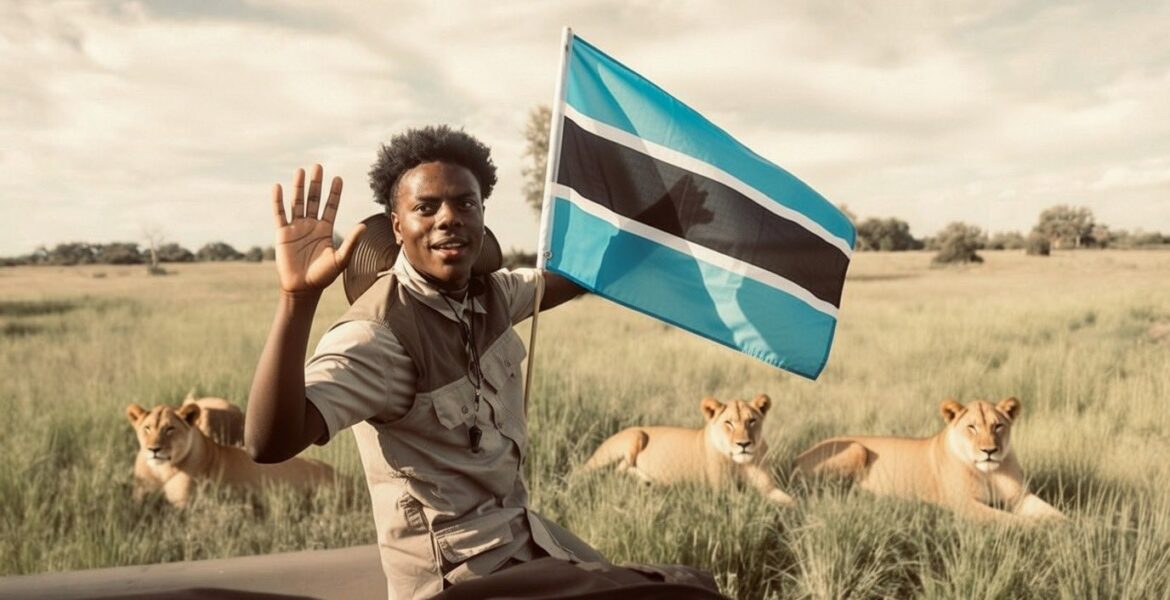
IShowSpeed didn’t just visit Botswana, he cracked open a conversation the creative industry has been whispering about for years. The world is watching. The content is hitting. The money, however, is still not landing locally
GOSEGO MOTSUMI
Botswana didn’t need a script, a drone shot or a glossy campaign. All it needed was a livestream.
In a matter of hours, IShowSpeed turned streets, museums, malls and the Delta into global content — watched, clipped, memed and debated by millions. The world didn’t just see Botswana. It felt it loud, chaotic, funny and real.
And in doing so, the American streaming sensation proved something local creatives have known for years: Botswana is content-rich but cash-poor by design.
WHEN VIRAL BECAME VALIDATION
Speed’s visit didn’t sell Botswana as a postcard but a place where people live, joke, dance and dream.
According to Business Botswana Creative & Media Sector Vice Chair Kabelo Rapinyana, that shift mattered deeply.
“It humanised the country and presented Botswana through the eyes of everyday people, especially young people,” he said. “Seeing neighbourhoods like Old Naledi appear on a global platform created a sense of pride, validation and inclusion.”
THE MONEY QUESTION
Speed didn’t just show up — he streamed, monetised and moved on. That’s the part that hit hardest.
While Botswana trended, local creators watched a painful truth play out in real time: the system that pays Speed doesn’t pay them and If we don’t monetise our stories, we’re just providing free stages for someone else’s success.
The Minister of Sport and Arts Jacob Kelebeng told Time Out: “We are currently in talks with social media giants. We will update in due course.”
CONTENT IS AN ECONOMY
Speed’s content reached audiences Botswana’s tourism and diamond campaigns rarely touch — young, mobile, digitally fluent viewers who don’t read brochures.
Rapinyana explained the ripple effect: “This kind of organic exposure stimulates interest in city tourism, supports local vendors and creates opportunities for digital content creators to monetise Botswana-based stories.”
But here’s the catch: virality without systems doesn’t last. Without monetisation, creators burn out. Stories get exported for free. Attention becomes charity work.
CULTURE DID WHAT MARKETING COULDN’T
From street culture moments to Speed’s interaction with the Mafitlhakgosi traditional group, Botswana’s identity showed up layered — modern and ancestral, playful and disciplined.
Mafitlhakgosi founder Joseph Ikopeng says the impact is already visible. “The interaction sparked interest especially from locals living in Botswana and abroad,” he said in an interview. “We are hopeful that more opportunities will come out of it as he has placed us on the global stage.”
THE INTERNET
Not everything landed cleanly. Wildlife stunts drew criticism online. Some called it reckless. Others argued the authenticity outweighed the chaos. And the debate itself kept Botswana trending.
THE MISSED LINK
One major critique dominated creative spaces online: Speed wasn’t paired with local streamers.
No creator exchange. No co-streams. No intentional passing of the mic.
“IShowSpeed gave hope to a lot of streamers in BW, this is priceless,” Rapinyana said. “But I’m disappointed he didn’t directly engage with local creators.”
That absence exposed the gap Botswana must urgently fill — integration.
WHAT SPEED REALLY TAUGHT US
Speed didn’t bring anything Botswana doesn’t already have. He brought proof that unpolished content works, cities matter, that youth culture is export-ready and that streaming is not a hobby but an industry.
Now the responsibility shifts. If Botswana doesn’t fast-track monetisation, creator support and platform access, this moment becomes another viral memory not an economic turning point.