
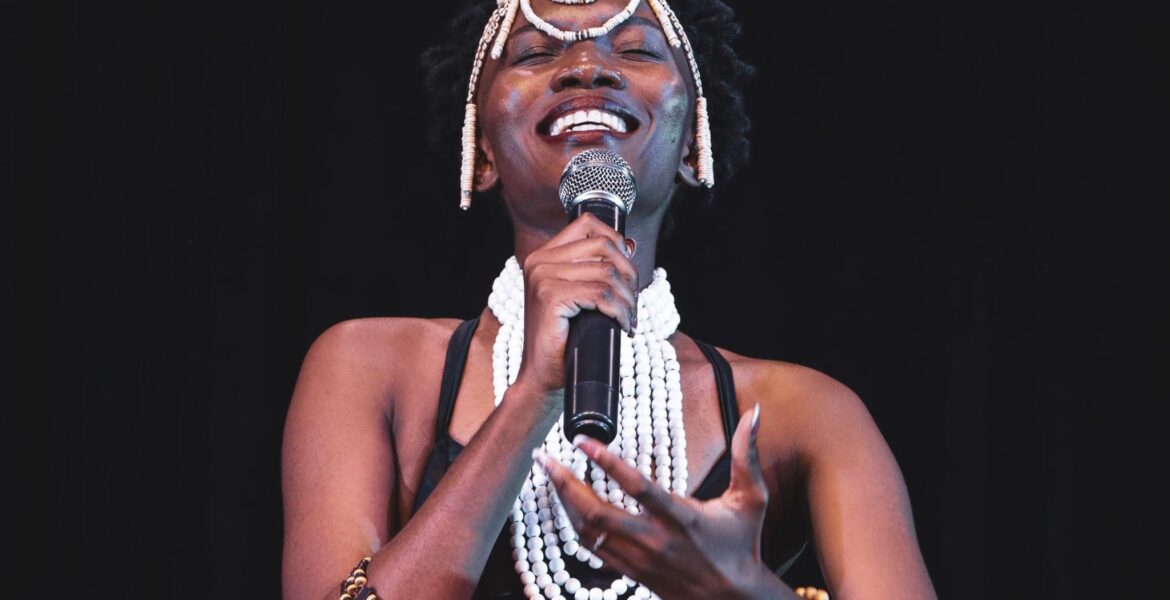
For 13 years, Dr Lame Pusetso has been lending her voice to other people’s stages. Now, with Setinkane, the poet known as Poeticblood is building her own emotional universe one poem and one truth at a time
GOSEGO MOTSUMI
There is a difference between attending a poetry show and surviving one emotionally.
Dr Lame Pusetso, widely known as Poeticblood, seems determined to blur that line completely with Setinkane, her first fully self-hosted live poetry experience happening on June 6 and 7 at TreeHaus, The Meeting Place in Block 5, Gaborone.
And no, this is not another spoken-word night where audiences clap at metaphors they barely understand before rushing home to tweet quotes out of context.
Setinkane sounds far more dangerous than that.
“Setinkane is not just a show for me, it is a becoming,” Pusetso told Time Out.
After 13 years of performing poetry, shaping her voice and carrying Setswana storytelling traditions into modern spaces, the poet is finally stepping into full creative control. Not just as performer, but as architect of the room itself.
“I am not just the voice… I am the space,” she said.
WHERE POETRY MEETS THERAPY
What makes Setinkane fascinating is its obsession with emotional intentionality. Every pause, transition and performance moment has reportedly been curated to make audiences feel something deeper than entertainment.
“This is not a show where people will sit back comfortably,” Pusetso explained. “It is a space where vulnerability will be invited.”
That alone feels revolutionary in a culture where people often consume art passively while hiding actively.
The intimacy of the show matters too. Limited tickets mean fewer distractions and more emotional exposure. Pusetso wants the audience to feel less like spectators and more like participants trapped beautifully inside one shared story.
MAKING SETSWANA POETRY FEEL ALIVE
At a time when younger audiences are rediscovering spoken word, Poeticblood is refusing to treat Setswana poetry like fragile heritage locked behind glass.
“I do not dilute culture, I translate it emotionally,” she says.
And maybe that is the secret.
Setinkane appears determined to prove that Setswana storytelling, proverbs and emotional rhythms are not outdated, they simply need new rooms, new lighting and brave voices willing to carry them forward.
“Where truth will sit in the room without apology.”
The line may end up defining the night itself.
Because beneath the poetry, the aesthetics and the intimacy, Setinkane sounds like an invitation for people to finally confront the things they usually bury quietly beneath daily survival.
And that kind of honesty rarely leaves audiences unchanged.
“If even one person walks away lighter, understood, or brave enough to face themselves, then Setinkane has done its work,” she said.