
Botswana and Denmark launch a creative pilot using micro-dramas and mobile filmmaking to build skills and test a new knowledge-driven partnership.
The University of Botswana has launched a Botswana–Denmark creative pilot project aimed at strengthening skills development and collaboration in the film sector.
The initiative, known as Film Konnections, forms part of a broader partnership aligned with Vision 2036 and Denmark’s Africa strategy, which prioritises trade and co-creation over aid.
Professor Doreen Ramogola-Masire, Deputy Vice-Chancellor for Research and Innovation at the University of Botswana, says the project reflects Botswana’s transition towards a knowledge-based economy.
“As a country we are looking towards Vision 2036. We are moving from a mineral-driven economy to a knowledge-based economy. And for that to happen, we need partnerships that are really strategic,” she says.
She explains that the Denmark partnership emerged after examining Denmark’s Africa strategy, which emphasises people-to-people collaboration.
“This is the genesis of this small pilot that we are doing, to show that the two peoples can actually work together,” she says.
PILOT PROJECT
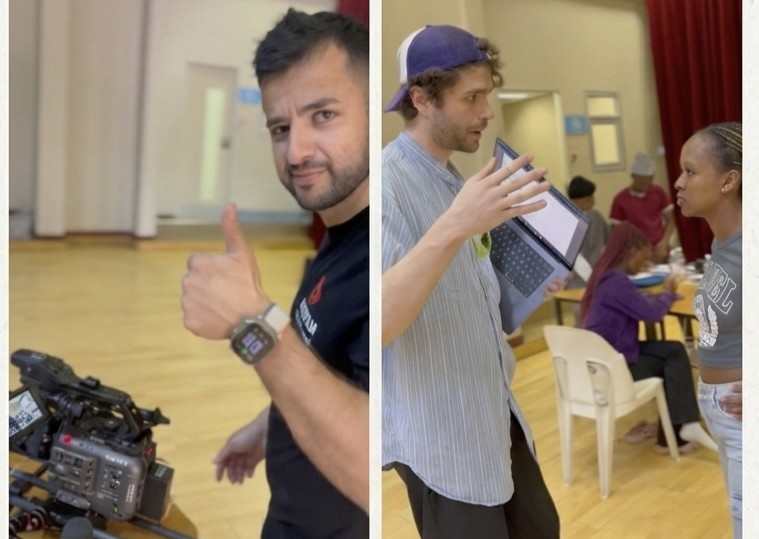
Film Konnections brings together university students, local industry practitioners and Danish collaborators, including actor and filmmaker Roland Møller.
The University is acting as convener, working with stakeholders including the Ministry of Sport and Arts and tourism bodies.
“What is it that universities do? We teach, we do research, we engage,” Ramogola-Masire says. “So we want to use this engagement, using our students but reaching out to the community.”
The pilot aims to produce eight micro-dramas. The films are shot primarily on mobile phones and supported by AI-assisted workflows to reduce production costs.
“If you’re going to take a cell phone that almost every Botswana has, that is already a tool that is accessible,” she says. “We then bring expertise. We bring AI. We bring innovation.”
Participants are writing, acting, directing and producing the films. The objective is to transfer skills while producing finished content that can be distributed digitally.
“We want to have a finished product that can be uploaded and start to monetise the content,” she says.
Ramogola-Masire says the creative sector offers opportunities for youth entrepreneurship.
“They’re getting entrepreneurial skills so they can employ themselves rather than look to government for employment,” she says.
KNOWLEDGE AND STORYTELLING
Møller says the collaboration is based on similarities between Denmark and Botswana as small nations seeking to build knowledge economies.
“Denmark is built on knowledge. And this is what Botswana wants to do now. You can’t sell diamonds forever. You want to build knowledge,” he says.
He says his focus during the workshops has been on disciplined storytelling rather than high-budget production.
“You don’t need a big budget to make good movies. You need a good story, a good storyteller and good acting,” he says.
The project uses micro-dramas, short-form films designed primarily for mobile audiences.
“A micro drama is kind of like a movie compressed. It’s designed for people who are on their phones,” Møller says.
He says the format allows filmmakers to demonstrate storytelling ability without large budgets.
“It’s like a pilot for making a real movie. We want to show them that we are good storytellers,” he says.
Møller says he was surprised by the level of talent he encountered.
“There are some really good storytellers here,” he says.
Ramogola-Masire says the project also creates space for local narratives.
“At a national level, we are now telling our story. Often African stories are told by somebody else,” she says.