
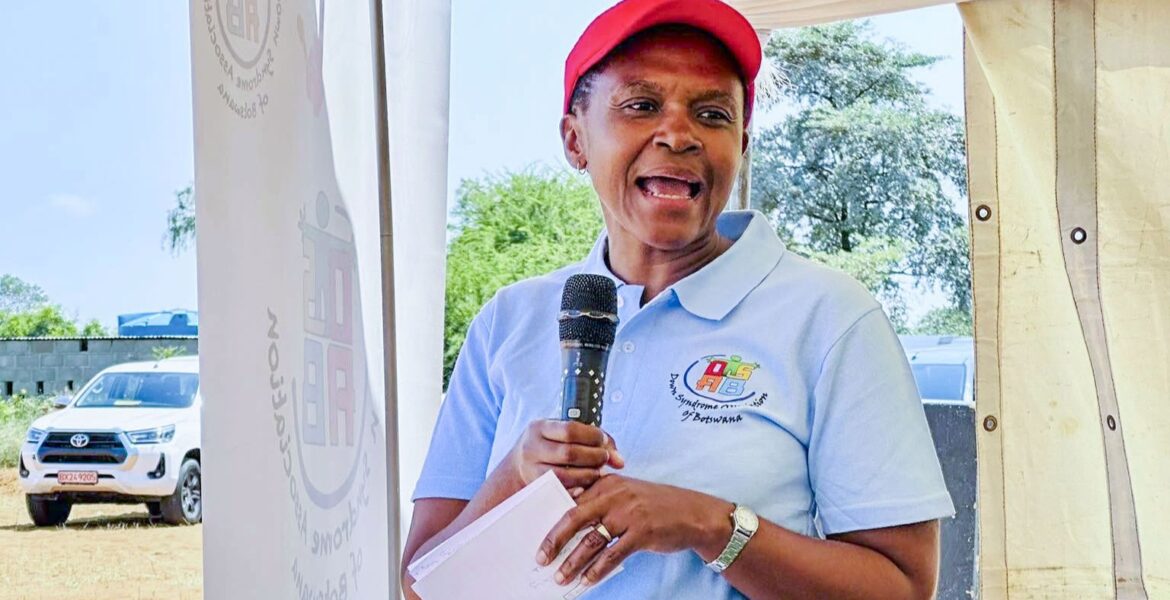
Most people celebrate turning 50 with cake and candles. Neo Roberta Nkele chose swollen feet, long roads and 500 kilometres of conversation, all to make Botswana look differently at Down syndrome
GOSEGO MOTSUMI
There are birthdays, and then there are statements.
When Neo Roberta Nkele turned 50, she did not throw a lavish party or disappear on holiday. Instead, she laced up her walking shoes and stepped onto the A1 highway for an 18-day journey from Francistown to Gaborone, one kilometre at a time, carrying a message larger than the distance itself.
The campaign, Strides of 50: Walking for Every Extra Chromosome, was never just about endurance. It was about visibility.
Joined by her husband and co-walker Bokang Nkele, Neo transformed movement into protest, celebration and public education, all aimed at challenging how Botswana sees and supports people living with Down syndrome.
EVERY STEP HAD A FACE
Along the road, something unexpected happened.
Families emerged.
“Having families come out in the open to say ‘I am here and have a child with a disability, please help me’ is what made me feel every step and every sacrifice was worth it. Beyond that having other community members raising their hands to say ‘how do we help’?”
Those roadside conversations became proof that silence still surrounds disability, but also that people are willing to learn.
Neo says one myth keeps appearing.
“The most common misconception is that Down Syndrome is an illness. It is not an illness but a disability.”
THE WALK THAT ASKED BIGGER QUESTIONS
The journey itself started much earlier.
In 2024, Neo’s daughter Bone Storom-Nkele launched The Gurlll Empowerment in honour of her friend Tigele Nhlatho who lives with DS, creating youth-led advocacy around inclusion and destigmatising Down syndrome.
For Neo, turning 50 became an opportunity to continue that work.
“For my 50th birthday I wanted to impact and inspire change hence the decison to continue the work of The Gurlll in partnership with the Down Syndrome Association of Botswana and the name Strides of 50,” Neo told Time Out.
But awareness alone is not enough.
She wants policymakers to rethink education pathways and create vocational spaces that prepare young people with Down syndrome for independent futures and meaningful work.
She said: “My wish is that after the swollen feet return to normal we don’t stop, but keep the conversations going.”
“Raising a child with a disability is not easy as it is but made harder by us in society because we ostracize them. You are not alone and we will keep preaching and fighting for inclusion until it is part of our DNA.”
The walk ended in Gaborone. The conversation, she hopes, has only just begun.