
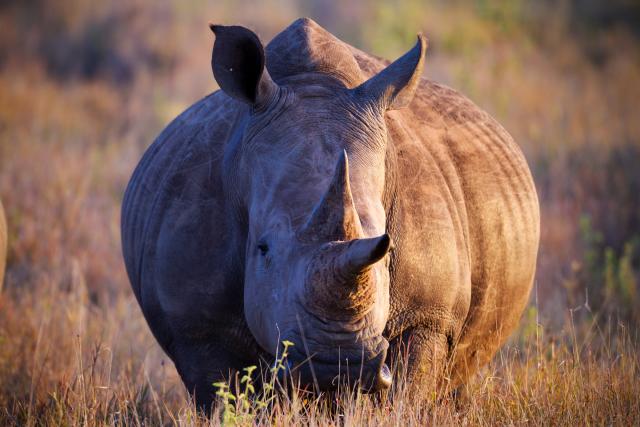
At Westwood, a walk became a warning shot. Walk for Giants 2026 brought conservation out of the bush and into Gaborone, putting families and young people face-to-face with one uncomfortable question: what happens when the animals we take for granted are gone?
GOSEGO MOTSUMI
A conservation event does not always need a safari vehicle, binoculars or a dusty game-drive track. Sometimes, it just needs a pair of walking shoes.
At Westwood International School in Gaborone, Walk for Giants 2026 turned an ordinary walk into a moving reminder that Botswana’s wildlife future cannot be left entirely to the people working in the bush. Families, students and young people showed up to walk, learn, play and, importantly, think about what is at stake.
FROM THE BUSH TO THE BLOCK
The event continues the momentum of Race for Rhinos, taking the conservation conversation from the Makgadikgadi into communities.
For Race for Rhinos patron Kgosikgolo Seretse Khama Ian Khama, that conversation is rooted in a sobering piece of Botswana’s conservation history.
In the early 1990s, following a rhino poaching incident, investigations revealed just how badly the species had been hit. Only six rhinos were found in Botswana.
“Only six,” Khama recalled.
That crisis contributed to the establishment of the Khama Rhino Sanctuary and subsequent efforts to rebuild and reintroduce rhinos into the wild. Rhino numbers later recovered enough for reintroductions, but Khama said many of those animals were subsequently poached.
The mission now is to rebuild populations while making their protection stronger.
WHY A WALK MATTERS
That is where events such as Walk for Giants find their purpose. Conservation cannot survive as a conversation confined to wildlife departments, sanctuaries and safari camps. It needs communities to understand why these animals matter and what their disappearance would mean.
Student Omogolo Dibe put the stakes in language no conservation campaign could make more straightforward.
“So when we protect a rhino, we aren’t just protecting them alone. We’re protecting a whole community of life around it.”
And the stakes stretch beyond the animal itself. Rhinos are part of Botswana’s tourism appeal, supporting an industry that generates revenue and employment, while their survival contributes to the health of wider ecosystems.
“Conservation isn’t only about saving animals,” Khama said.
It is also about tourism, livelihoods, ecosystems and Botswana’s identity and, perhaps most importantly, whether future generations inherit living wildlife or stories about what once existed.
THE NEXT GENERATION IS WATCHING
Walk for Giants brings that responsibility closer to home through family activities, conservation engagement, entertainment and prize-giving, while forming part of the wider Race for Rhinos programme, which includes aircraft racing, walking and planned motorsport activities to raise awareness and funds for rhino protection.
Dibe left the audience with a question that lands harder than any finish-line celebration: what happens when a child 50 years from now asks, “What was a rhino?”
The answer should not come from a textbook.
“I want them to see one for themselves.”
That is why the walk matters. Because protecting Botswana’s giants is ultimately about protecting the possibility of seeing them alive, wild and where they belong.