
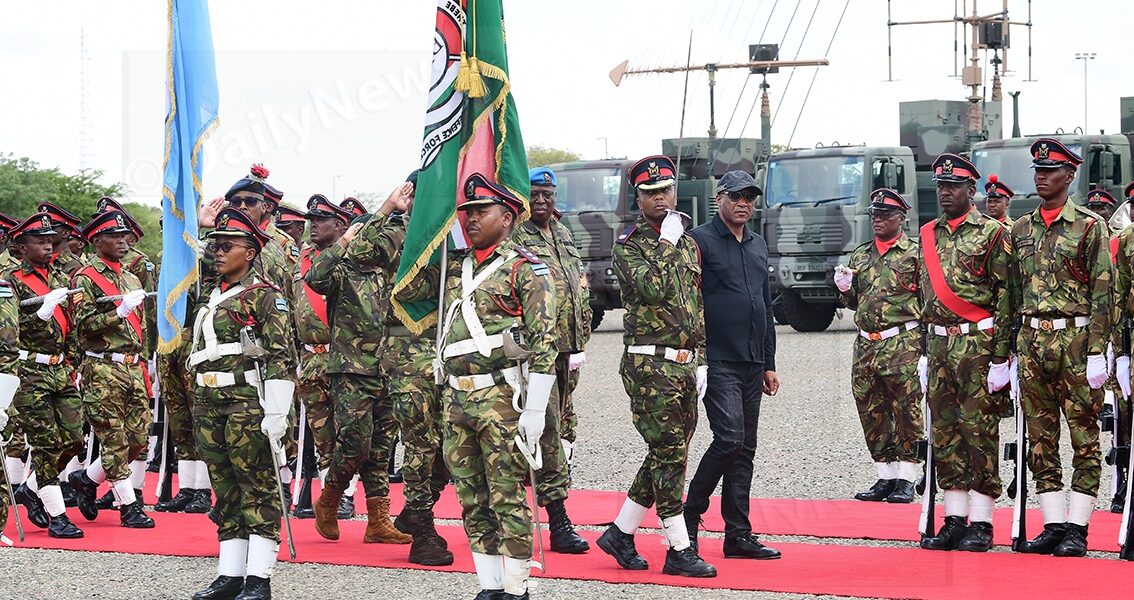
Rising violence and suicide cases within the BDF prompt Boko to demand restraint, discipline and accountability
BONGANI MALUNGA
President Duma Boko has issued a stern warning to members of the Botswana Defence Force (BDF) against Gender Based Violence (GBV) and femicide, cautioning that acts of violence continue to stain the army’s image and undermine its disciplinary standing.
The warning comes as the BDF has increasingly found itself in the spotlight over violent incidents involving officers, with the institution recording an average of four to five murder or suicide cases annually over the past five years. Earlier this year, the BDF revealed that the highest number of GBV-related incidents recorded in a single year stood at 76 cases, ranging from common assault and emotional abuse to murder and suicide.
ACCEPTING REALITIES
Addressing the 21st BDF Senior Officers Strategic Conference in Gaborone on Monday, Boko said many of the violent incidents stem from an inability to accept difficult realities in relationships, including infidelity and separation.
He stressed that emotional pain or betrayal should never become justification for violence, urging officers to seek counselling, walk away from toxic situations or pursue divorce instead of resorting to deadly retaliation.
MENTAL HEALTH SUPPORT
“You, women and men of discipline, are trained to protect lives, not to take away,” he said.
Boko’s remarks come amid calls mounting for stronger mental health support and disciplinary interventions within the armed forces. In March this year, the BDF launched a mental health and GBV roadshow, facilitated by mental health experts, psychologists and legal experts, to confront the realities of the problem.
Speaking to this publication, the founder of Valor Mental Health, Charlotte Ruwona underlined that mental health education is vital in combating GBV especially within institutions such as the military as it helps soldiers develop emotional awareness, healthy coping skills, stress management techniques, conflict resolution skills and help-seeking behaviour.
DEMANDING ENVIRONMENTS
“Soldiers operate in highly demanding environments that often expose them to chronic stress, trauma, emotional suppression, hyper-vigilance and aggressive conditioning as part of survival and combat readiness. While discipline and strength are essential in military structures, unresolved psychological distress can negatively affect emotional regulation, relationships, communication and coping mechanisms if not properly addressed,” Ruwona stated.
“Many individuals within the armed forces may also enter service already carrying unresolved childhood trauma, exposure to violence, neglect, abuse or adverse family experiences. Without adequate support systems, these experiences can compound workplace trauma experienced during training, deployments, operational pressure or institutional culture,” the mental health expert explained.
“I would advise government to approach GBV within security institutions through a holistic and preventative lens rather than only punitive measures. While accountability remains important, there is also a need for sustained investment in trauma-informed mental health services, routine psychological assessments, confidential counselling spaces, peer support programmes, family wellness programmes and ongoing emotional wellbeing education within the BDF,” she added.