
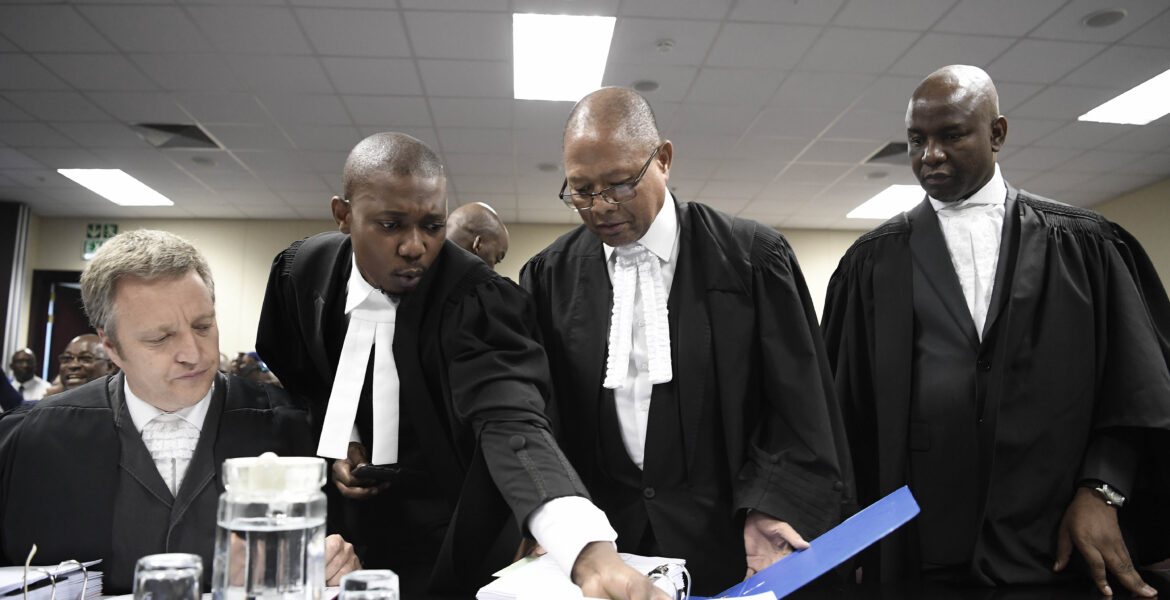
A new study by Baboloki Dambe and Olebile Daphney Muzila warns that Botswana’s courts are undermining electoral justice by dismissing petitions on technicalities, denying candidates a fair hearing on the merits
GAZETTE REPORTER
Botswana’s courts have been accused of systematically undermining electoral justice by prioritising procedural technicalities over the substance of election disputes, a hard-hitting new legal study has revealed.
The study, titled “The absence of judicial discretion to condone non-compliance in election petitions in Botswana: procedural formalism over substantive justice?”, by Baboloki Dambe and Olebile Daphney Muzila, paints a troubling picture of a system where election petitions rarely progress to full hearings.
‘DEAD END’ FOR PETITIONERS
According to the researchers, Botswana’s strict insistence on procedural compliance has created what amounts to a legal “dead end” for aggrieved candidates and voters.
“The position becomes untenable when procedural compliance is elevated above all else, with the effect that all election petitions are dismissed on preliminary objections,” the study states.
The authors argue that courts “invariably never get to deal with the merits of the petitions, irrespective of the gravity of the electoral irregularities complained of.”
MERITS OF CASES NEVER HEARD
Dambe and Muzila further found that this approach undermines the very essence of electoral justice.
“This undoubtedly undermines electoral justice… petitioners are deprived of the opportunity to have the merits of their complaints assessed by the courts,” they note.
The study cites the 2019 election petitions by the Umbrella for Democratic Change (UDC)—now the ruling party—as a clear example, where cases were reportedly dismissed on procedural grounds.
LACK OF JUDICIAL DISCRETION BLAMED
At the heart of the problem, the researchers say, is the absence of judicial discretion—the ability of courts to overlook minor procedural errors in the interest of fairness.
Without such discretion, even minor technical lapses such as formatting issues or filing irregularities can doom a petition before it is heard.
“The current framework results in petitions being nullified on seemingly pedantic objections,” the study notes.
CALLS FOR URGENT LEGAL REFORM
The authors argue that Botswana’s legal framework is outdated and in urgent need of reform, singling out the lack of comprehensive election regulations as a critical gap.
They point out that Botswana lacks even basic procedural clarity, including defined timelines for respondents to answer petitions.
CONCERNS OVER LACK OF APPEALS
The researchers also criticise the absence of appellate oversight, noting that Botswana’s High Court acts as both the first and final arbiter in election petitions.
They recommend constitutional amendments to allow the Court of Appeal to hear such disputes, arguing this would introduce necessary checks and balances.
“The current position where the High Court is a court of first and last instance… is far from ideal,” the study states.
DEMOCRACY AT RISK
The study warns that without urgent reforms, Botswana risks weakening the foundations of its democracy.