
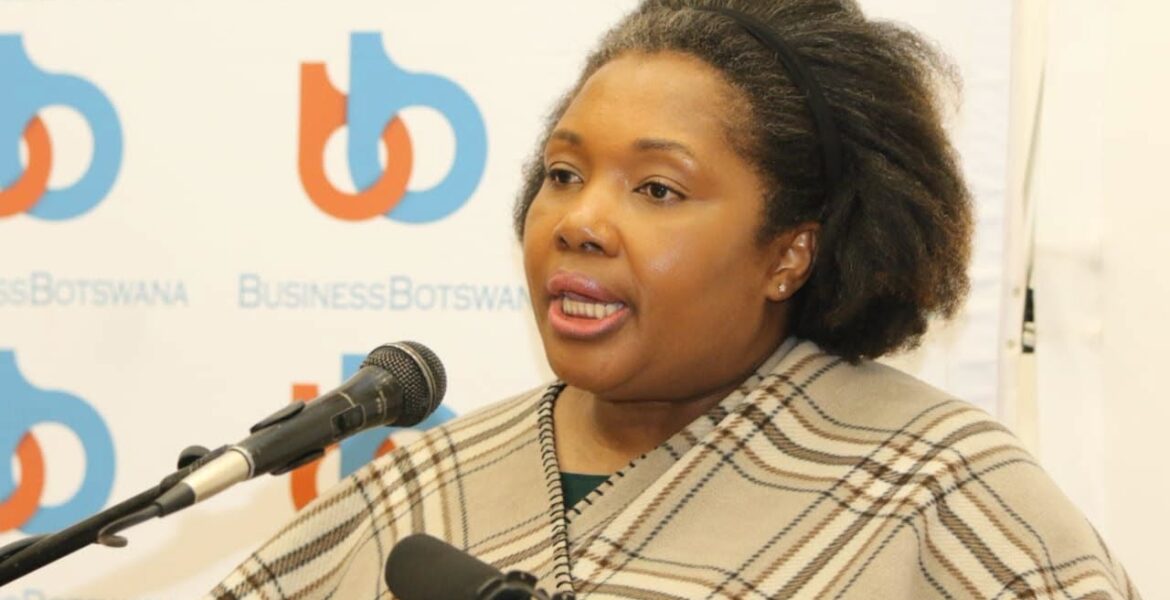
The business community has warned that the simultaneous implementation of tax and labour reforms could lead to job losses and business closures unless government adopts a carefully phased approach
BONGANI MALUNGA
Business Botswana has cautioned that while government tax reforms are necessary to strengthen Botswana’s strained fiscal position, introducing multiple regulatory changes simultaneously could force companies to retrench workers or shut down altogether.
The country’s leading private sector lobby group says businesses are already operating under significant economic pressure and has urged government to carefully phase in planned reforms to avoid placing an unsustainable burden on employers.
The warning was delivered by Business Botswana Chief Executive Officer Tumi Mbaakanyi during the Business Botswana and Botswana Unified Revenue Service (BURS) Tax Reform Workshop held on Monday, where government and the private sector discussed proposed tax changes aimed at broadening revenue collection.
INCREASINGLY CONCERNED
Mbaakanyi said the private sector is increasingly concerned about the cumulative impact of several policy changes, including proposed tax reforms, an increase in corporate tax and the pending Employment and Labour Relations Act, arguing that the combined effect could undermine business sustainability.
“It would be remiss of me not to share our concern as the private sector with all the regulatory reforms that are coming up that the private sector has to carry. As we speak now there’s an emerging and pending Employment and Labour Relations Act, there’s also an increase in corporate tax. We appeal to the government that while we understand that the economy is where it is, the timing (is not ideal),” Mbaakanyi remarked.
She acknowledged government’s need to introduce measures aimed at improving public finances but stressed that implementation should take into account the fragile state of the private sector and the broader economy.
COSTLY REFORMS
According to Mbaakanyi, introducing several costly reforms at once could have unintended consequences, particularly for businesses already battling slowing economic activity, rising operating costs and subdued consumer demand.
“What we appeal for is phasing out some of these implementations because we might end up with businesses that are closed up or retrenching. Where we are now, we cannot afford to lose even a single job. Our appeal is that as these are rolled out, they should not negatively impact the private sector but we do agree that this is also another avenue to improve our fiscal position as a country,” she added.
Meanwhile the government has maintained that it is pursuing a series of fiscal reforms intended to boost domestic revenue and reduce pressure on public finances amid declining mineral revenues and widening budget constraints.