
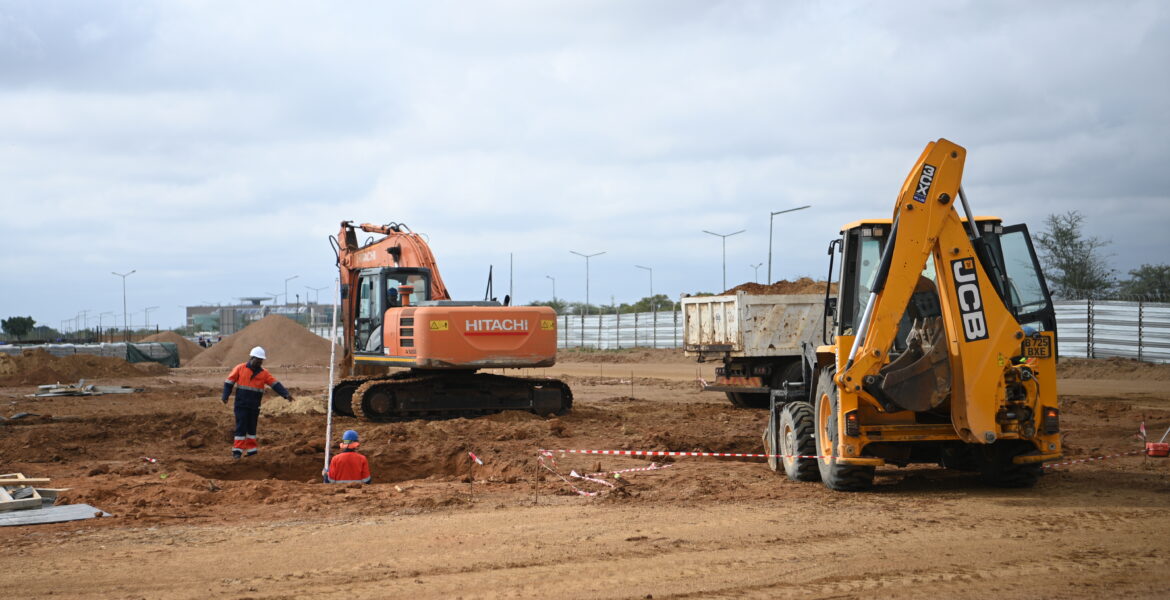
The DCEC warns that individuals are exploiting youth and women empowerment programmes to secure public contracts while diverting benefits from intended recipients.
GAZETTE REPORTER
Individuals are exploiting Botswana’s youth and women empowerment programmes by using unsuspecting beneficiaries as fronts to secure government tenders while retaining the financial benefits.
In its 2025 Annual Report, the Directorate on Corruption and Economic Crime (DCEC) identifies fronting as an emerging trend in public procurement and infrastructure projects, with individuals falsely presented as company owners to meet empowerment requirements and sidelined once tenders are awarded.
The Directorate says Presidential initiatives such as the Economic Diversification Drive (EDD), which were designed to promote youth and women empowerment, have inadvertently created opportunities for unscrupulous individuals to manipulate the system for personal gain.
“The implementation of Presidential Directives such as the Economic Diversification Drive (EDD) aimed at youth and women empowerment, though well intentioned, has inadvertently led to a problem wherein undeserving individuals exploit the system by associating themselves with qualified beneficiaries to gain benefits,” the report states.
Ownership Manipulation
According to the DCEC, these individuals manipulate company directorships and shareholding arrangements to create the appearance of compliance with empowerment requirements, while ensuring that the actual financial benefits accrue to those behind the schemes.
The Directorate identifies the ease with which company ownership records can be altered at the Companies and Intellectual Property Authority (CIPA) as one of the factors compounding the problem.
It also warns that the manipulation of business addresses to unlawfully secure constituency projects remains prevalent, raising further concerns about the integrity of public procurement processes.
Rising Allegations
The revelations come against the backdrop of a growing number of corruption allegations reported to the Directorate.
The DCEC received 957 allegations in 2025, representing a significant increase from 687 in 2024 and 652 in 2023.
Of the 957 reports received during the year, 274 were classified for investigation, while 54 were incorporated into existing cases. A further 359 were referred to other institutions because they fell outside the Directorate’s mandate.
The Directorate also provided advice in 131 reports, while 96 lacked sufficient information and were recorded for reference. Another 43 reports were deferred pending additional information.
Investigation Caseload
Corruption-related offences continued to dominate the Directorate’s caseload, accounting for 260 cases investigated in 2025. Four cases involved economic crime, while 10 related to money laundering.
The DCEC attributes the relatively low number of money laundering cases partly to the fact that money laundering is largely a consequence of corruption, which constitutes the predicate offence.
Reports from identified sources also increased considerably, rising from 492 in 2023 to 580 in 2024 and 772 in 2025.
The Directorate says the increase reflects growing public confidence and willingness to disclose identities when reporting corruption, enabling investigators to obtain additional information and provide feedback to complainants.