
Despite years of public campaigns, tougher laws and repeated calls for action, the growing presence of rape and defilement cases in court dockets has prompted warnings that Botswana is facing a pandemic of sexual violence
BONGANI MALUNGA
Recent court audits in Francistown and Maun have exposed a disturbing pattern, with sexual offences forming a significant portion of unresolved cases, raising fresh concerns about the safety and protection of women and the girl child.
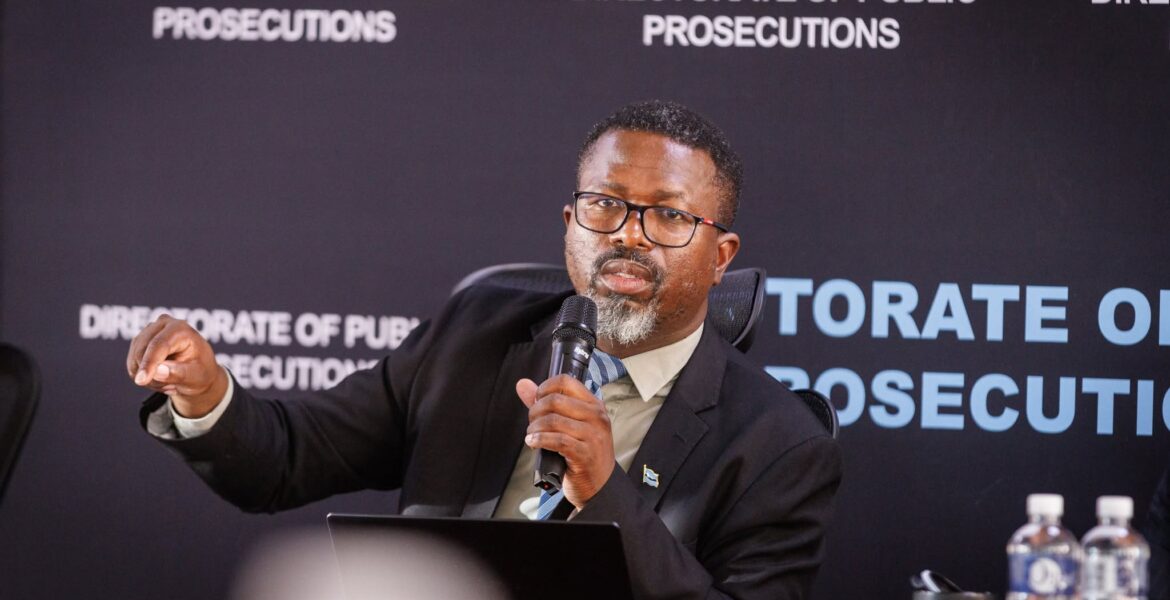
Reflecting on recent audits of case backlogs in Francistown and Maun, the Director of the Directorate of Public Prosecutions Kgosietsile Ngakaagae said the pattern was impossible to ignore.
“Every third or fourth docket was a rape or defilement case. The conclusion is inescapable. The nation is going through a pandemic of sexual violence. Womenfolk and the girl child are living under perpetual deprivation of the right to dignity guaranteed by our Constitution,” he said.
His observations depict a justice system grappling with an overwhelming number of sexual offences, particularly against children.
REFLECTED IN THE NUMBERS
According to the Botswana Police Service, more than 5000 defilement cases were registered between 2020 and 2022, highlighting the scale of child sexual abuse confronting the country.
At local government level, district reports continue to reveal alarming figures. Kgatleng District Council recorded 146 defilement cases between April 2025 and March 2026, while Kweneng District Council registered 58 cases in just three months between November 2025 and January 2026.
The figures mirror findings from UNICEF, which estimates that approximately one in every 10 girls in Botswana experiences sexual violence before reaching adulthood.
A MUCH BIGGER CRISIS
Mental health experts warn that while criminal prosecutions are essential, they address only one part of a much bigger crisis. Speaking to The Botswana Gazette, Valor Mental Health Foundation Founder and Chief Executive Officer Keleutlwile Charlotte Ruwona said child sexual abuse leaves profound psychological wounds that often remain long after court proceedings have ended.
“It is important that our response focuses not only on prosecution but also on prevention, protection and healing,” she told this publication.
According to Ruwona, many victims never disclose abuse because fear becomes another prison. “Many children do not report because they are afraid. They may fear not being believed, being blamed, retaliation from the perpetrator or breaking up their family if the offender is someone they know,” Ruwona stated.
She explained that shame, guilt and manipulation frequently silence survivors, while some children are simply too young to understand they have been abused. Others lack trusted adults with whom they can safely disclose their experiences.
“We have supported children who were sexually abused and one of the most striking things we see is the anger they carry. Many of these children struggle with trust, emotional regulation, relationships and self-worth,” she shared.
HIDDEN BEHIND FAMILIAR FACES
One of the greatest misconceptions surrounding defilement, Ruwona said, is that offenders fit a predictable profile.
“There is no single profile of a sexual offender. However, many offenders exploit positions of trust, authority or familiarity to gain access to children. Grooming behaviours are common, they gradually build trust with the child and family, manipulate boundaries and create secrecy before abuse occurs. The focus should remain on recognising risky behaviours rather than assuming offenders fit a particular stereotype,” the mental health expert explained.
Her observations challenge the common perception that child sexual predators are strangers lurking outside communities. More often, experts say, offenders are relatives, neighbours, family friends or respected members of society who exploit close relationships to commit abuse while avoiding suspicion.
This reality also helps explain why many cases remain hidden. According to Ruwona, families frequently hesitate to report abuse because they fear public shame, financial hardship where the perpetrator is a breadwinner or prolonged legal battles.
She added that in some cases, children are actively discouraged from speaking out in order to protect the family’s reputation, leaving survivors isolated while offenders escape accountability.
STRENGTHENING PROTECTION
As the debate continues around proposals to lower Botswana’s age of consent, Ruwona urged policymakers to prioritise stronger safeguards rather than reducing existing legal protections.
“From a child development and mental health perspective, children and young adolescents are still developing emotionally, cognitively and psychologically. Lowering the age of consent risks weakening protections for children at a time when we should be strengthening safeguarding measures,” Ruwona opined.
She argued that Botswana should instead invest more heavily in trauma-informed mental health services, specialised counselling, forensic support, coordinated case management and prevention programmes that educate both parents and children.
BLOCKING WITHDRAWAL OF CHILD ABUSE CASES
During his introductory press conference in April this year, Ngakaagae announced that the DPP would no longer permit the withdrawal of defilement cases and other crimes committed against children.
The policy is intended to prevent intimidation of victims, interference with investigations and out-of-court settlements that pressure families into abandoning prosecutions. Ngakaagae warned that attempts to influence child victims or suppress criminal proceedings amount to obstruction of justice and are punishable under the law.
He argued that when such offences are concealed instead of prosecuted, children remain vulnerable to further abuse while perpetrators continue offending with impunity.