
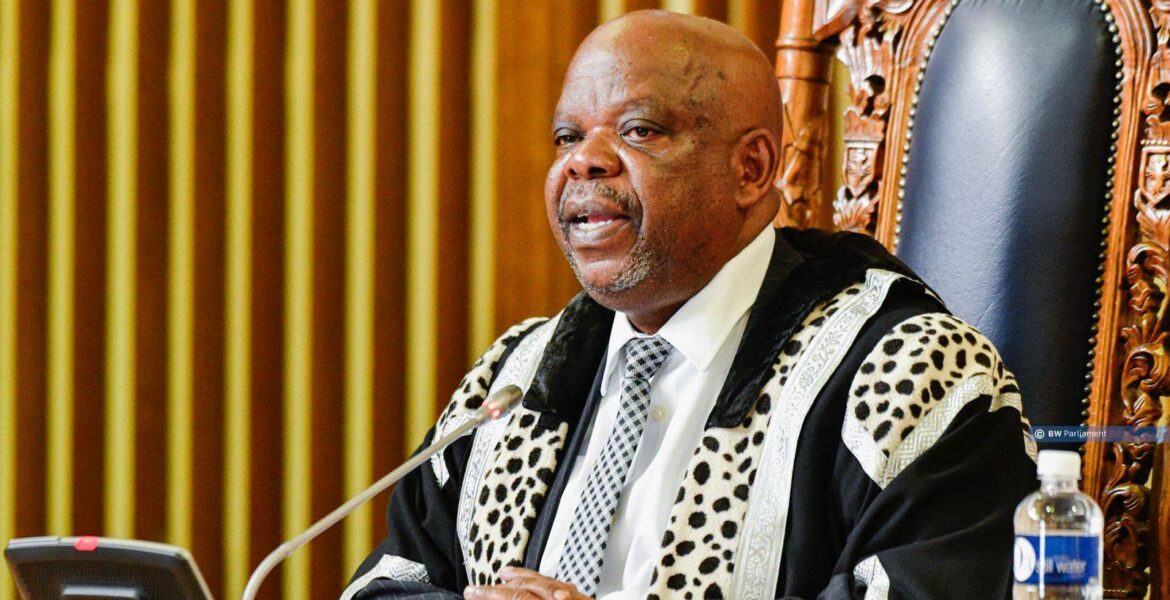
Kgosi Malope II wants traditional leaders involved before policy and legislative decisions are made, warning against reducing Ntlo ya Dikgosi to a ceremonial institution.
SESUPO RANTSIMAKO
Ntlo ya Dikgosi chairperson Kgosi Malope II has challenged Government and Parliament to give traditional leaders a meaningful role in shaping laws and national policies, warning against reducing the House to a ceremonial institution consulted only after key decisions have been made.
Early Consultation
Malope made the call this week when officially opening a meeting of Ntlo ya Dikgosi, where he urged the country’s governance institutions to recognise the House as an active contributor to national development and decision-making.
“Ntlo ya Dikgosi can no longer be content to be remembered only as the dignified voice of custom; in this new decade of our independence, it must become the active conscience of our governance and consulted early, listened to carefully, and trusted completely,” he said.
Shaping Laws
“We seek not merely to advise once decisions are already made, but to help shape them before the ink is dry,” he added.
Malope said involving traditional leaders at the beginning of policy and legislative processes would help ensure that laws and government programmes reflect the realities of communities and benefit from the knowledge and experience of dikgosi.
Governance Partners
He stressed that a stronger role for Ntlo ya Dikgosi should complement, rather than compete with, Parliament and the Executive.
Malope also called for culture to be recognised as a driver of economic growth, arguing that Botswana’s traditions and heritage could support tourism, create jobs, strengthen social cohesion and foster national pride.
Culture and Growth
“Culture and development are not rivals; they are partners,” he said.
“Development without identity is merely construction; development rooted in culture is nation building.”
Defending Bogosi
Malope urged Batswana to support Ntlo ya Dikgosi and preserve the institution of bogosi, saying traditional leadership and the kgotla remain valuable parts of Botswana’s governance system.
He called for greater recognition of the role traditional leaders can play in shaping national priorities and ensuring that community concerns inform decisions made at the highest levels of government.