
Another day, another food promise from the President. But in an address that counted the year’s wins down to the last school repaired, there was nothing on the plate for primary education, not even the P654 million curriculum contract government pushed through over the regulator’s objections.
BONGANI MALUNGA
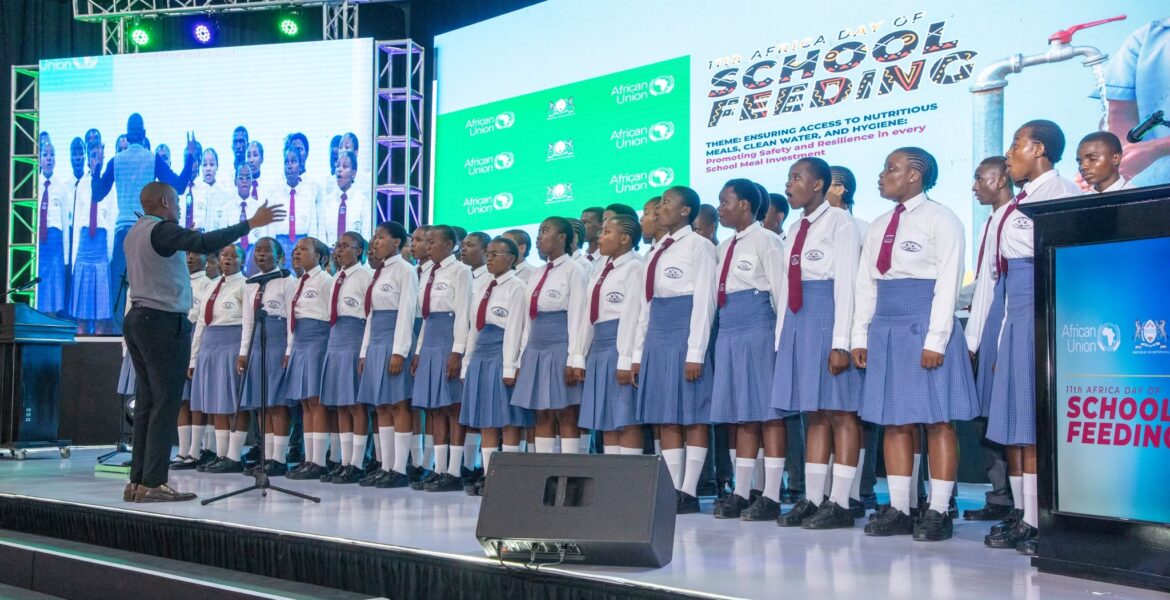
On Monday, President Duma Boko read Parliament the menu. Eggs, cheese and milk, he promised, would be served in public school meals by 2029. Botswana’s primary pupils have heard the specials before. Last November, at a rally in Maun, the President promised them breakfast and lunch “next financial year.” Last month, at a workshop in Tlokweng, it was “eggs and yoghurt and whatever else.” The dishes change. The kitchen, so far, has not.
For the rest of the education course, the President served a school with a swimming pool. The Duma Boko School in Block 7, Gaborone, opened in September with technology-enabled classrooms and room for more than 380 pupils, the first of 100 schools and clinics to be built under a new model of private investment. He added Bula Buka, a programme for young people pushed out of school by “limited school spaces and unsatisfactory academic performance.”
Then he moved on. In the prepared text of an address of nearly 7,000 words, the word “primary” does not appear. Neither does “curriculum.” The omission is not one of space. The address counts the year’s achievements closely, down to maintenance at 11 senior and 11 junior secondary schools. Yet it is silent on the largest education commitment of the year, a P654.4 million contract that the minister responsible says has “overhauled the curriculum completely,” and on almost every promise the President made to primary schools a year ago.
“The speech treats basic education as a series of procurement triumphs rather than a human-centered public service,” said Caterpillar Hikuama, the Botswana Congress Party MP for Maun West who is also the party’s Shadow Minister of Child Welfare, Basic and Higher Education. “Education cannot be modernised by decree while basic infrastructure, teacher welfare, and daily classroom resources remain severely underfunded.”
OFF THE MENU
Read beside last year’s address, this one leaves a trail of orders that never reached the table. In November 2025, the President told Parliament that 12 new primary schools were under construction. He announced a programme to clear the backlog of classrooms, teachers’ houses and toilets. He said a STEAM-driven curriculum, spanning early childhood to senior secondary, would be in place “for the January 2026 academic year,” and that teachers would be “up-skilled and re-trained” to teach it.
Monday’s address returned to none of it. It gave no count of primary schools built or toilets installed, no date for a new curriculum, and no word on whether the promised breakfast and lunch had ever been served. Mr Hikuama described progress on the schools and the backlog as “sluggish and uneven.” In rural constituencies like his, he said, “pit latrines, inadequate toilet ratios, and severe classroom shortages remain a daily reality for primary pupils.” Not every order has stalled. One went through the kitchen at speed, over the objections of the state’s own procurement watchdog.
THE BILL
In August 2025, the Public Procurement Regulatory Authority completed an investigation into a P662.6 million direct appointment of Emeritus Training Academy to deliver a national STEAM programme. The procurement was “unplanned, not budgeted for, and poorly conceptualized,” the regulator found, and the ministry had not justified bypassing competitive bidding. It ordered the procurement cancelled. In December, the Court of Appeal set aside a related High Court order on procedural grounds, leaving those findings untouched.
Government went ahead. In July, the Ministry of Child Welfare and Basic Education awarded Emeritus a revised five-year contract, again without competition, worth P654,444,869.46. Days before the 60th Independence celebrations, Minister Nono Kgafela-Mokoka launched the National STEAM Project at Marulamantsi Primary School. “We have overhauled the curriculum completely,” she said.
Her contractor described something less finished. Emeritus’s managing director in Botswana, Peter Nkaiseng, said a review of the curriculum for Standards One to Seven was “about to commence.” On 5 October, the regulator told the Gazette the matters “remain under consideration and have not been finally disposed of.”
A contract worth more than half a billion pula, which survived a regulator’s cancellation order and, by the minister’s own account, overhauled the curriculum, did not make the President’s address.
Parliament has not seen the bill either. It “has not had sight of the contract terms,” Mr Hikuama said, nor of its milestones or value-for-money measures. “It is difficult to justify how the ministry can fast-track a P654.4 million direct-award IT contract while basic brick-and-mortar infrastructure—essential for a safe learning environment—drags on for years under backlog programmes,” he said. “A curriculum cannot be successfully overhauled merely by signing a tech contract.”
“What we see in most primary classrooms,” he said, “is not a transformed digital learning environment, but dedicated teachers improvising under strained conditions, overcrowded rooms, and missing foundational tools.”
WHAT’S IN THE KITCHEN
Being in school is not the same as learning. Of the 52,766 pupils who sat the Primary School Leaving Examination in 2025, roughly one in four failed to reach a grade C, according to the Botswana Examinations Council.
The Gazette reported last month on the conditions behind those numbers: a school in Kanye without new textbooks in over a decade, learners elsewhere sharing one book among ten, and teachers untrained in, and uninformed about, the new curriculum. In February, Ms Kgafela-Mokoka told Parliament the ministry had run short of money for textbooks and school maintenance, and could pay temporary teachers for only five months.
The teachers’ unions have taken the complaint abroad. In a country report presented to an Education International workshop on its Go Public! Fund Education campaign, BOSETU, the Botswana Teachers’ Union and TAWU warned that government’s spending commitments had not reached classrooms. They cited inadequate sanitation, overcrowding and deteriorating buildings, and cautioned that an excessive focus on digital transformation and curriculum reform risked overlooking the daily realities of learners and teachers. “Quality public education begins with quality funding,” the report states.
Even voices sympathetic to the new curriculum counsel a balanced diet. Kagiso Pearl Kgosiemang, an early childhood researcher who has written to the President on reform, called a STEM-aligned early childhood curriculum “a welcome development,” and credited the address with its attention to education infrastructure. But the real test, she said, is in the classroom. “Technology is important and also changes, but children’s brains do not change,” she said. “It should not be at the expense of foundational child development.” Reading, vocabulary and storytelling, she said, “should not be left out.”
LAST ORDERS
In January, a new cohort of children will begin Standard One. One publisher told the Gazette last month that no new primary textbooks had been ordered for them. By 2029, if the President is to be believed, they will have eggs, cheese and milk. He has not said what they will learn, from what books, or from teachers trained in what. In Ntlo ya Dikgosi last month, Kgosi Malope II proposed diverting a year’s money for new schools to repairing old ones. Otherwise, he warned, “the same problems will persist.”