
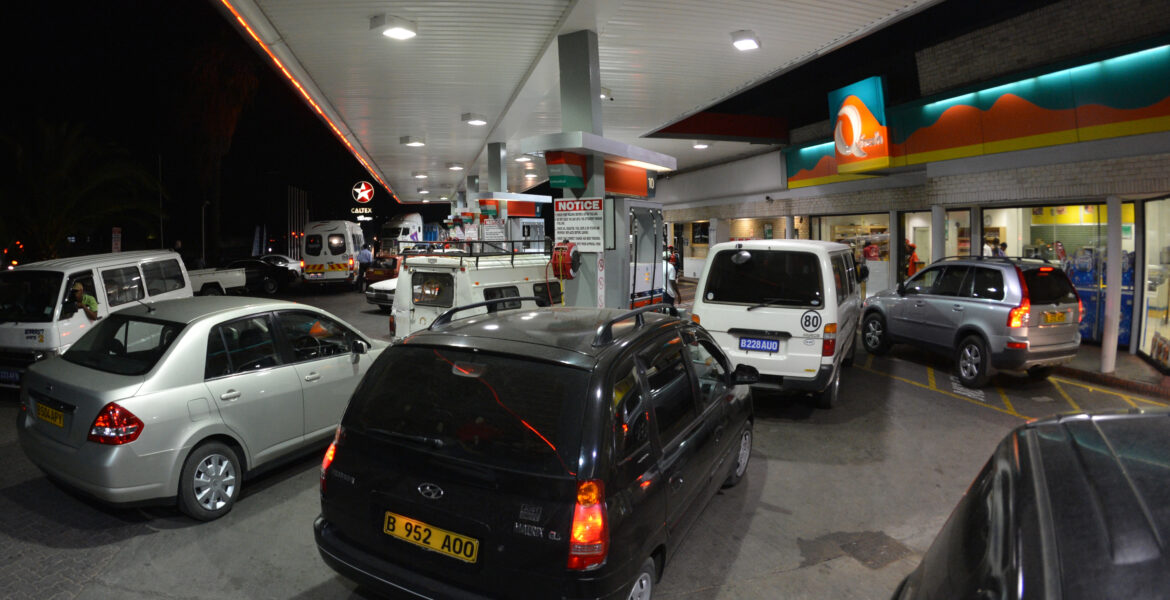
Botswana faces possible fuel price hikes as global oil prices surge, with Business Monitor International warning that energy-dependent sectors could be hit hard despite stable short-term supplies
GAZETTE REPORTER
Fear is mounting that Botswana could soon face rising fuel prices as the escalating US–Iran conflict drives global oil prices higher. A new assessment by Business Monitor International (BMI) warns that the ripple effects of the geopolitical standoff are likely to be felt across Sub-Saharan Africa, particularly in economies heavily dependent on energy-intensive sectors.
According to BMI, countries such as Botswana—where manufacturing, mining and construction play a central role—are especially vulnerable. The report notes that such economies “will face headwinds, especially if also exposed to US tariffs.” Botswana is among the countries affected, having been subjected to a 15% tariff by the United States, compounding the pressure from rising energy costs.
BMI researchers emphasised that net energy importers will bear the brunt of the crisis. “We expect net energy importers to be the most exposed, with the combined impact of higher energy prices and currency weakness likely to push up import prices,” the report states.
MINING SECTOR PARTICULARLY EXPOSED
The report highlights Botswana as one of the hardest-hit nations due to its reliance on fuel-intensive industries. Higher fuel and electricity costs are expected to reduce productivity, particularly in mining, which depends heavily on diesel-powered machinery and fuel-sensitive transport systems.
“In our view, higher fuel and electricity costs will reduce productivity in energy-intensive industries, with major mining markets such as South Africa, Zambia, the DRC, Guinea, and Botswana particularly exposed,” BMI warned.
OIL SUPPLY DISRUPTIONS DRIVE PRICE SURGE
BMI attributes the recent spike in oil prices to severe disruptions in global supply chains. These include a near-complete halt of transit through the Strait of Hormuz, upstream production shut-ins due to limited storage capacity, and escalating attacks on oil infrastructure in the Gulf region.
The organisation further notes that fading hopes for a swift de-escalation have intensified market uncertainty. “Price action now reflects expectations of a more widely spread and durable impact on global oil trade,” BMI said.
RISING COSTS THREATEN ECONOMIC STABILITY
The anticipated increase in fuel prices is expected to raise operating costs for businesses in Botswana and across the region. BMI cautions that this will “erode working capital and weaken capital outlays,” potentially slowing economic growth and investment.
AUTHORITIES MONITOR SUPPLY SITUATION
Meanwhile, Botswana Energy Regulatory Authority (BERA) has assured the public that it is closely monitoring the supply of petroleum products. The authority said it is working with the Ministry and industry players to track global developments and ensure supply stability through proactive planning.
FUEL STOCKS OFFER SHORT-TERM RELIEF
BERA revealed that Botswana Oil Limited (BOL) has secured approximately 68 million litres of fuel for March 2026, equivalent to about 22 days of national consumption based on daily demand of 3.1 million litres. Government strategic reserves currently stand at around nine days, against a maximum capacity of 15 days, while Citizen Oil Companies hold between five and 10 days of stock. Despite the relatively stable short-term supply outlook, BERA warned that the situation remains fluid.