
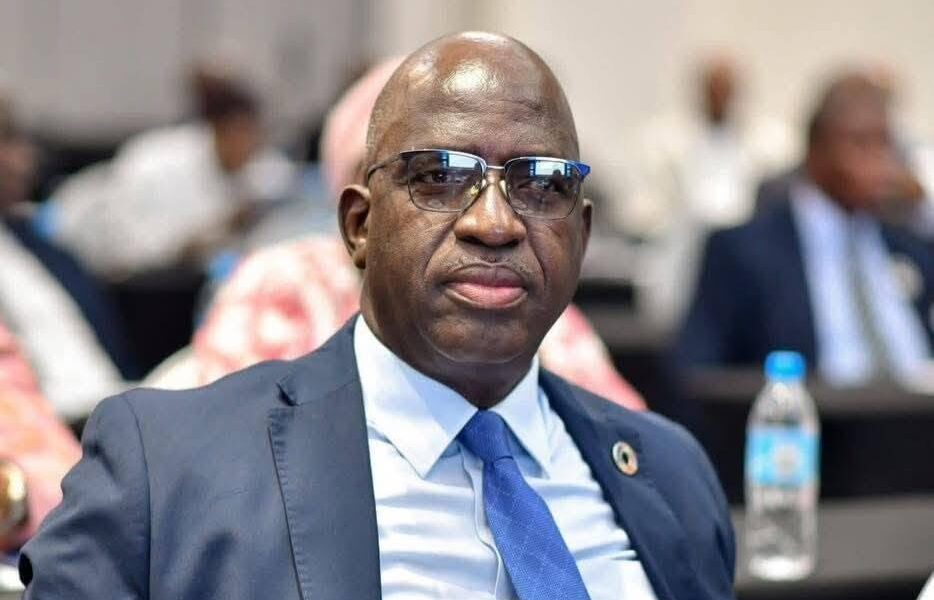
A member of Parliament’s Intelligence and Security Oversight Committee Kenny Kapinga has warned the DIS that national security and classified information are not blank cheques, saying there are clear limits to what can be shielded from scrutiny
GAZETTE REPORTER
Former deputy police commissioner and newly elected member of Parliament’s Intelligence and Security Oversight Committee, Kenny Kapinga, has criticised the Directorate of Intelligence and Security (DIS) for what he describes as the excessive use of national security and classification arguments to avoid accountability.
Kapinga, speaking to this publication following DIS Director General Peter Magosi’s controversial appearance before the Public Accounts Committee (PAC), said he watched the proceedings with disappointment, though he was not surprised by what he described as the agency’s now familiar approach.
Magosi repeatedly invoked classified information and national security considerations when responding to questions from legislators, a move that triggered public criticism and renewed debate over the extent of secrecy surrounding the agency.
‘YOU CANNOT CLASSIFY ANYTHING’
Kapinga said the DIS must understand that while national security considerations are legitimate, they have boundaries that cannot be stretched to shield institutions from scrutiny.
“I watched the proceedings with disappointment, although I cannot say I was surprised. This has become a familiar pattern with the DIS whenever it is faced with legitimate questions of accountability,” he said.
He argued that there is a growing misunderstanding around what qualifies as classified information and matters of national security, warning that these concepts should not be used as a blanket defence.
“There is a misconception on what constitutes national security and classified information. There are limits to these concepts, and the time has come for those providing oversight, like legislators, and those accounting to know of these parameters,” Kapinga said.
“Classification cannot become a blanket tool for shielding information from scrutiny, especially under a new political administration that has promised to correct past wrongs and strengthen accountability,” he said.
NEW COMMITTEE TARGETS INTELLIGENCE OVERSIGHT
Kapinga said strengthening parliamentary oversight of the DIS would be among the priorities of the newly elected Intelligence and Security Committee.
He said Parliament must be able to effectively scrutinise the intelligence agency while working with relevant stakeholders to ensure reforms that improve accountability and public confidence.
“We really pray that the new administration is genuine and want support in this regard; otherwise, it will be very unfortunate,” he said, referring to the government’s commitment to reforming state institutions.
Kapinga said the committee’s mandate presents an opportunity to address longstanding concerns around transparency and oversight within the intelligence sector.
The former police boss questioned some of the issues presented by Magosi during his PAC appearance.
“How do we even begin to explain to our children and other nations that even sheep procurement can be a national security threat as advanced by the DIS director?” he questioned.
MAGOSI APPEARANCE SPARKS BACKLASH
Magosi’s PAC appearance has reignited scrutiny of the DIS, an institution that has remained controversial since its establishment.
Kapinga said the new parliamentary committee has an important role in ensuring that intelligence operations are conducted within the boundaries of democratic accountability.
He stressed that national security remains essential, but warned that it should not become a mechanism for avoiding legitimate questions from oversight bodies.