
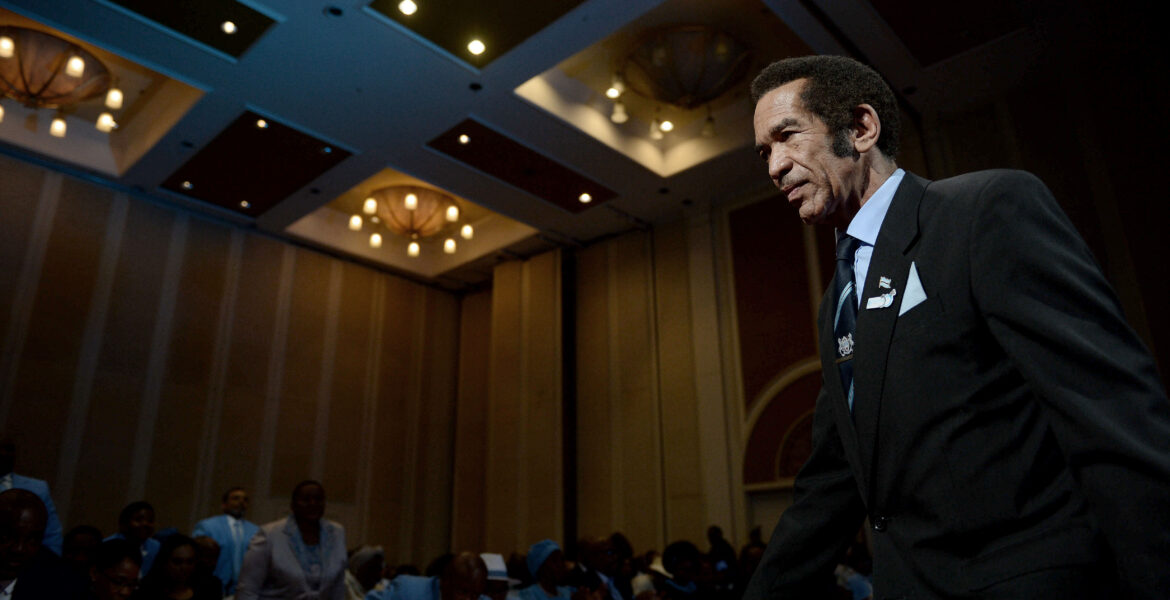
Former president Ian Khama says Botswana has neither objected to nor asked him to stop his criticism of African leaders, including Zambian President Hakainde Hichilema.
GAZETTE REPORTER
Former president Ian Khama says his increasingly vocal criticism of African leaders he accuses of undermining democracy does not conflict with Botswana’s foreign policy, insisting that government has neither challenged his interventions nor asked him to tone them down.
Khama, who has recently turned his attention to Zambian President Hakainde Hichilema, says he will continue what he describes as a policy of publicly “naming and shaming” African leaders whenever conventional diplomacy and regional institutions fail to protect democratic norms and human rights.
His position raises a diplomatic dimension for Botswana, which has been strengthening relations with neighbours including Zambia under President Duma Boko.
Botswana and Zambia have deepened bilateral cooperation, including through their inaugural Bi-National Commission in 2025 and the establishment of the Kazungula Bridge Authority this year. In February, Boko and Hichilema jointly launched the Authority, describing the initiative as part of a broader partnership between the two neighbouring countries.
Boko was also among the African leaders who attended Hichilema’s inauguration for a second term in Lusaka on 1 September.
No intervention
Against that backdrop, Khama maintains that his criticism of Hichilema should not be interpreted as an attempt to establish a competing Botswana foreign policy.
He told The Gazette that he had received no communication from the Minister of International Relations expressing concern about his statements or asking him to stop.
“My calls are not in any way running parallel to Botswana’s diplomatic or foreign policy,” Khama said.
“In any case, I have not received any calls from the Minister raising concerns about my decision or urging me to tone down or to stop and desist.”
Botswana’s Ministry of International Relations is officially responsible for managing and coordinating the country’s foreign policy. Its stated foreign-policy principles include democracy, good neighbourliness, peaceful coexistence and the peaceful resolution of conflicts.
Khama went further, saying he was unaware of any public intervention by Botswana against the alleged abuses he has accused Hichilema’s administration of committing.
“Additionally, I have not heard anything that we as Botswana were doing anything to counter Hichilema’s human rights abuses,” he said. “Had I known, perhaps I could have joined such efforts.”
Diplomatic route
Khama said he had not immediately resorted to public criticism but had first attempted to raise his concerns through Zambia’s diplomatic representation in Botswana.
“I tried on my own to pursue the diplomatic route when I reached out to the Zambian High Commissioner, but he was outside the country and I was told he would revert, but they never did,” he said, adding that “we can’t be diplomatic about violent human rights abuses.”
Zambia criticism
Khama said he was particularly disappointed with Hichilema because the Zambian leader had himself experienced repression during his years in opposition under former president Edgar Lungu.
“During Hichilema’s ordeal, I reached out through a letter to Lungu urging him to stop what he was doing to the opposition,” Khama said.
“This is why I am shocked that someone we fought so much for, like Hichilema, could betray us like this.”
Hichilema began his second term this month following an election whose aftermath has been marked by disputes and the arrests of opposition figures. Election observers raised concerns about aspects of the process, while Hichilema’s government has rejected allegations of electoral wrongdoing.
Wider frustration
Khama said his criticism extended beyond Zambia and reflected his broader frustration with African regional institutions and the way leaders respond to alleged democratic violations on the continent.
He said he had lost confidence in conventional diplomatic engagement because, in his view, African leaders often return to cordial relations with one another once disputed elections have passed, regardless of what happened to ordinary citizens.
He therefore vowed to continue publicly calling out leaders whom he believes violate constitutional and democratic principles to prolong their stay in power.
“Elections come and go, and these leaders, once elections are gone, go back to wining and dining with each other while citizens are in hospitals, prisons and cemeteries,” Khama said.