
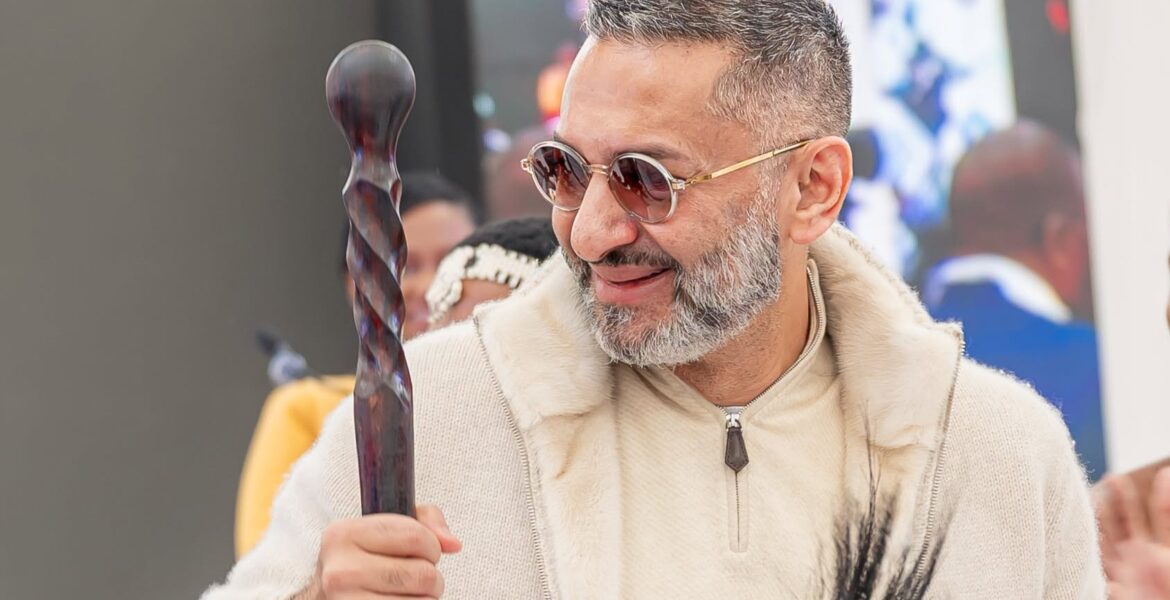
The businessman’s citizenship, proposed Gaborone Dam hotel, mining interests and African Hero partnership are drawing mounting resistance from opposition parties, organised labour and public institutions.
GAZETTE REPORTER
Businessman Zunaid Moti’s expanding business interests in Botswana are facing mounting scrutiny, with opposition politicians, trade unions and other institutions increasingly questioning the transparency of his dealings and the extent of his relationship with the Government of President Duma Boko.
The latest developments have renewed attention on Moti’s growing footprint in the country, following confirmation that he has acquired Botswana citizenship, the emergence of investment proposals spanning tourism, manufacturing and mining, and controversy surrounding the African Hero schools and clinics initiative.
Moti, whose association with Boko predates the UDC’s ascension to power, is increasingly at the centre of a debate about the intersection of private investment, political relationships and public accountability.
CITIZENSHIP ROW
The citizenship issue has added a new dimension to the controversy after Minister of Higher Education Prince Maele confirmed in Parliament that Moti had been granted Botswana citizenship under Section 10 of the Citizenship Act.
Responding to questions from Tswapong South MP Dr Ksetigile Gobotswang, Maele said the decision was based on Moti meeting the necessary requirements and his proposed investments in Botswana.
Among the projects cited were a proposed five-star hotel near Gaborone Dam, a manufacturing facility in Gabane expected to create more than 1,000 jobs, and interests in chrome exploration and mining.
The investment proposals also include the wider African Hero initiative, which envisages the construction of 100 schools and 50 clinics across Botswana.
Maele defended the citizenship decision, maintaining that Moti had undergone security vetting by relevant local and international authorities, including Interpol. He also dismissed suggestions that the African Hero arrangement amounted to state capture or corruption, arguing that Botswana needed investors willing to contribute to national development.
The minister’s explanation has not put the matter to rest. Questions persist about the exercise of presidential discretion, the timing of the citizenship decision and the relationship between the proposed investments and the administration.
BOKO’S SCHOOL
Much of the scrutiny stems from the African Hero project, whose first flagship development, the Duma Boko School and Clinic, was unveiled in Block 7, Gaborone, in September.
The project has proved particularly controversial because of the President’s personal association with the initiative and the history of Moti’s support for the UDC during its 2019 election campaign.
Boko is the founding chairman of African Hero, while Moti is associated with the business interests behind the initiative.
The project has also revived questions about an earlier proposal that was returned by the Ministry of Finance after concerns were raised about its financial implications.
Appearing before the Public Accounts Committee in 2025, Permanent Secretary in the Ministry of Finance Tshokologo Kganetsano said the original proposal had been considered too costly.
The BCP subsequently alleged that the proposed arrangement could expose Botswana to obligations exceeding P20 billion over 20 years for infrastructure it estimates would cost approximately P3.6 billion to construct. It demanded publication of the relevant agreements, guarantees, payment schedules and other contractual arrangements.
Boko has rejected suggestions that his Government could be captured by private business interests, insisting at the project launch that he was “uncapturable”. Moti, for his part, has maintained that the project is privately funded and that he has never received a pula from the Botswana Government since arriving in the country.
UNIONS PUSH BACK
The controversy has also drawn an unusual degree of intervention from organised labour.
The Botswana Teachers Union (BTU) welcomed the prospect of additional schools but raised concerns about the absence of public information regarding the selection of investors, financing arrangements and the obligations Government might have assumed. The union called for disclosure of the contractual terms, warning that public education must remain under public ownership and control.
The Botswana Public Employees Union (BOPEU) similarly demanded transparency, seeking clarity on the financing structure, project duration, ownership, staffing arrangements and any guarantees or concessions extended to investors.
It also questioned whether the initiative would create secure employment for Batswana or introduce outsourcing and temporary employment arrangements into public services.
The Manual Workers Union also entered the fray, with its chief executive, Robert Rabasimane, defending the union’s right to comment on matters of national interest. His remarks followed criticism by Boko of union leaders who had questioned the project.
Rabasimane maintained that trade unions had a broader responsibility to provide checks and balances on governance and would not be silenced when matters affecting the country arose.
The Botswana Federation of Public Sector Unions (BOFEPUSU) has also warned about the potential for state capture, calling for transparency, parliamentary oversight and public accountability in major infrastructure projects.
BCP ESCALATES
The BCP has been among the most vocal critics of Moti’s growing business interests and the African Hero arrangement.
The party has questioned how a proposal previously returned by Treasury on financial grounds subsequently progressed into a flagship project under the UDC administration.
It has also challenged the circumstances surrounding the President’s association with African Hero and the potential implications of the relationship for public accountability.
In its latest intervention, the party says it has taken the matter to the Office of the Ombudsman, escalating its challenge beyond political statements and parliamentary questions.