
A new study warns that despite the increase in Botswana’s Old Age Pension, elderly care remains a challenge
GAZETTE REPORTER
The decision by the Umbrella for Democratic Change (UDC)-led government to increase the Old Age Pension has offered some financial relief to thousands of elderly citizens, but new research suggests the policy has done little to address the deeper crisis of who actually cares for Botswana’s ageing population.
A report titled Family Caregiving Programme: Older Persons and Community Care in Botswana, produced by academics from the University of Botswana and the University of Cape Town, reveals that while the pension remains a critical lifeline, elderly care in Botswana continues to depend almost entirely on families—many of whom are already struggling with poverty, unemployment and rising living costs.
PENSION STRETCHED BEYOND ITS PURPOSE
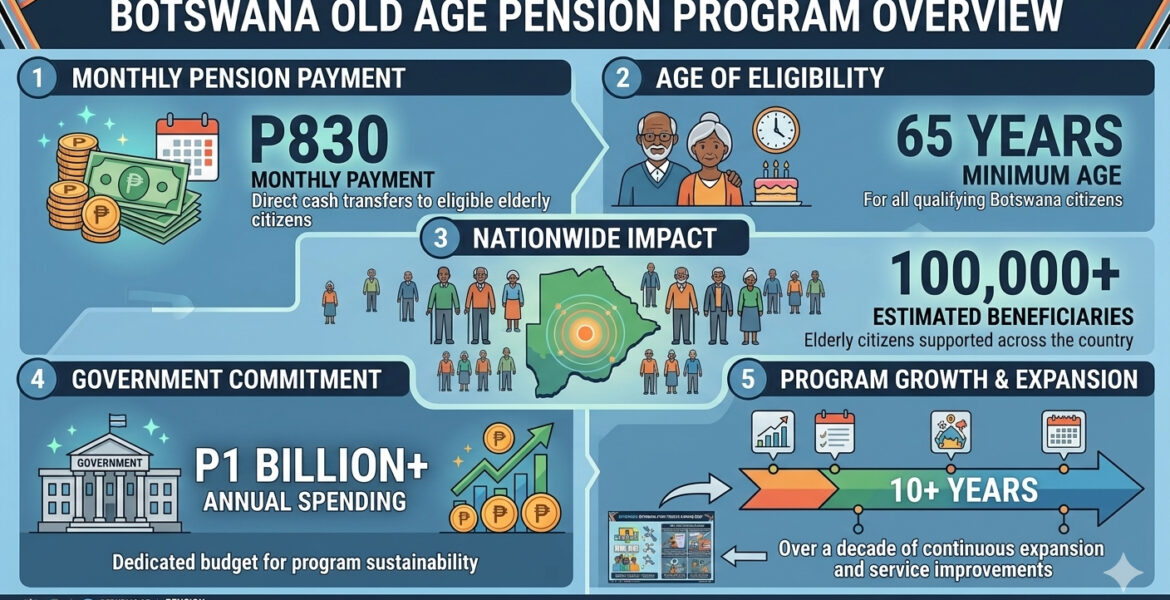
The Old Age Pension (OAP), currently paid to citizens aged 65 and above, reaches more than 121,000 beneficiaries across the country. In 2025, the UDC government increased the monthly payment from P830 to P1,400.
However, researchers say the allowance often stretches far beyond its intended purpose.
“The pension is meant for the older adult, but often it becomes the income that supports entire families,” the report notes.
In many households, elderly people use the allowance to feed grandchildren or unemployed relatives, effectively transforming the pension into a financial safety net for entire families rather than a benefit reserved for the elderly themselves.
AGEING POPULATION STEADILY RISING
Botswana’s ageing population is also steadily growing. According to the report, there are now more than 189,000 people aged 60 and above, representing roughly eight percent of the national population.
Women account for about 60 percent of this group, a trend researchers describe as the “feminisation of ageing.”
The study warns that the growing number of older citizens will place increasing pressure on already strained families unless stronger social support systems are introduced.
HIDDEN BURDEN OF FAMILY CAREGIVERS
The report identifies unpaid family caregiving as the backbone of elderly care in Botswana, but says the burden placed on relatives is often overlooked.
“Caregiving is stressful and requires patience,” said one female caregiver from Molepolole who participated in community consultations conducted for the research.
“You have to work, put food on the table and still look after the elderly. Sometimes there is no one to help you,” she said.
The caregiver explained that the responsibility frequently forces family members—especially women—to abandon employment opportunities in order to care for elderly relatives full time.
CALLS FOR CAREGIVER SUPPORT
Researchers found strong community support for the introduction of a caregiver allowance to recognise the time and labour required to support ageing relatives.
“There was unequivocal support for family caregivers to receive an allowance,” the report states.
The study notes that many caregivers cannot participate in meaningful economic activities because caregiving responsibilities occupy most of their time.
HEALTH AND FOOD INSECURITY CHALLENGES
The challenge is compounded by health conditions common among older citizens.
The study found that 44 percent of older-person households reported eating fewer meals due to food shortages, while 22 percent said they had gone an entire day without eating at least once in the previous month.
NEED FOR NATIONAL STRATEGY
Researchers say the findings highlight the urgent need for a comprehensive national strategy on ageing that goes beyond pension payments.