
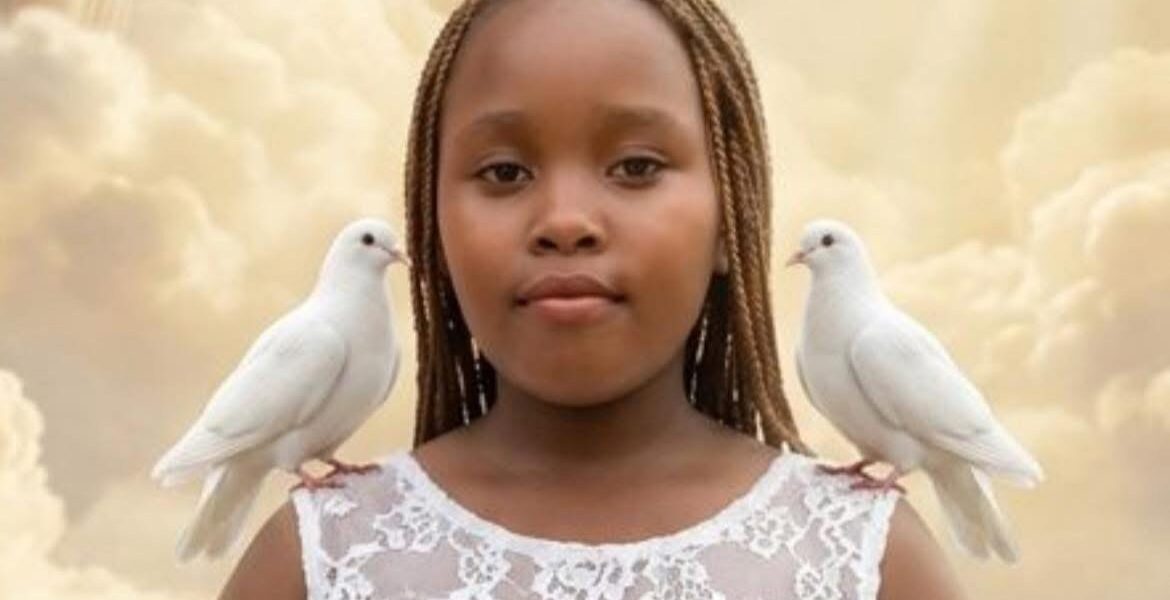
Child violence crisis deepening as the Tshedu case becomes a national flashpoint, with over 50,000 citizens demanding action. The petition has now reached the Office of the President, intensifying calls for accountability.
The Tshedu case has become more than a single tragedy, it has become a rallying point for demands that Botswana strengthen forensic capacity, improve investigative protocols and prioritise child protection within the broader GBV framework.
BONGANI MALUNGA
A growing outcry over violence against children has intensified in Botswana, with fresh attention now centred on the tragic case of Retshepile Tshedu, whose death in Sehithwa was initially reported as suicide but has since been reclassified following post-mortem findings indicating evidence of sexual abuse.
The development has triggered national outrage and renewed calls for accountability, with a petition demanding the reopening of her case surpassing 50 000 signatures. The petition, spearheaded by the Rea Bua Foundation, has now been formally escalated to the Office of the President, placing the matter directly before President Duma Boko for urgent consideration.
DEEPER CRISIS
What began as a single case in a remote village has rapidly evolved into a national symbol of a deeper crisis: the escalating prevalence of violence against children as a disturbing and often under-acknowledged component of Gender Based Violence (GBV) in Botswana.
The Rea Bua Foundation, which has been leading public mobilisation around the petition, argues that the case cannot be viewed in isolation. Instead, it reflects a pattern in which children, particularly girls, are increasingly exposed to violence that is either misclassified, under-reported, or insufficiently investigated.
RAPID GROWTH
The urgency surrounding the petition has been amplified by its rapid growth, with tens of thousands of citizens demanding decisive government intervention. For many signatories, the demand is clear: reopen the investigation, ensure forensic accountability and restore public confidence in the handling of sensitive child protection cases.
Last year, the National Gender Commission convened more than 100 stakeholders, including government representatives, civil society organisations and United Nations agencies, to examine the state of GBV in Botswana. Among the key recommendations was a call for President Boko to declare GBV a national emergency.
VIOLENCE CONCEALED
Increasingly, child victims are being recognised as a central and growing subset of GBV cases. Social workers and activists warn that violence against children is not only rising but also becoming more concealed, making detection and prosecution even more difficult.
NATIONAL CONCERN
“This is national concern that’s why we are taking this to the president,” said a representative of the Rea Bua Foundation.
GLOBAL CONTEXT
Botswana has been ranked as having the highest incidence of rape in the world, approximately 92.93 cases per 100 000 people.
STATISTICS SURGE
Violence against children in Botswana is reaching alarming levels. In 2024 alone, the Botswana Police Service recorded 14 020 GBV cases, of which 4468 involved children under the age of 18. Defilement remains particularly widespread, with over 5000 cases reported between 2020 and 2025.