
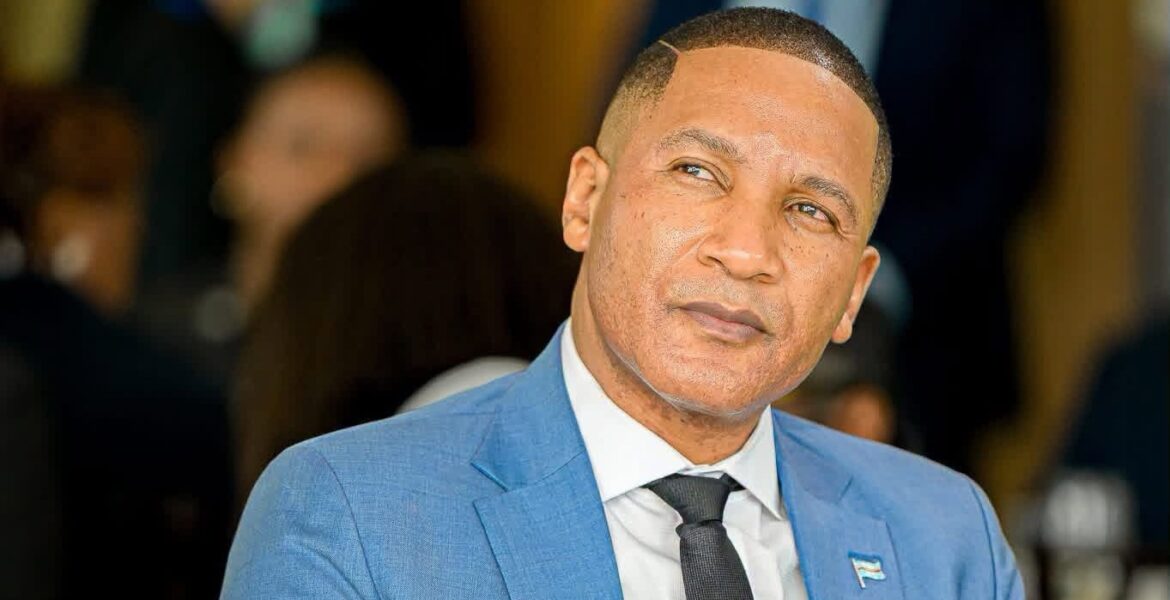
With the 2029 elections looming and public frustration over unfulfilled promises mounting, UDC MPs appear increasingly unwilling to bear the political cost of their coalition’s declining popularity, as President Boko reportedly moves to enforce party discipline to contain dissent
GAZETTE REPORTER
A growing revolt within the Umbrella for Democratic Change (UDC) parliamentary backbench is exposing cracks in the ruling coalition, with some legislators increasingly taking positions that put them at odds with their own government.
Impeccable sources say party President Duma Boko who is under pressure to walk the talk is growing intolerable and losing patience with public criticism from within the ruling coalition and is reportedly preparing to invoke party discipline to rein in dissenting officeholders. “We have already received threats and suggestions that we may be acting against the party’s interests,” said a legislator who preferred anonymity in an interview with this publication.
The emerging resistance is widely seen as a political survival strategy by legislators who are becoming increasingly conscious of the electoral consequences of defending an unpopular government.
The experience of the Botswana Democratic Party (BDP) in the 2024 general election remains a particularly sobering lesson. Several of its legislators who stood firmly behind former president Mokgweetsi Masisi, even in the face of mounting public discontent, fell by the wayside while Masisi proceeded into retirement with his presidential benefits.
“For some UDC legislators, the lesson appears to be that loyalty to the presidency does not necessarily guarantee political survival.
Political Survival
With the UDC facing growing public scrutiny over its unfulfilled electoral promises, its legislators are confronted with the difficult task of reconciling party loyalty with the expectations of their constituents.
Insiders say frustration has been building within the parliamentary caucus over what some legislators perceive as Cabinet’s disregard for their proposals, concerns and requests for government intervention in their constituencies.
There are also indications that legislators are becoming increasingly unsettled by growing public displeasure, particularly as they are often the first point of contact between disgruntled citizens and the government.
Unlike ministers, whose positions afford them greater influence over government decisions, ordinary legislators must frequently account for policy decisions over which they have limited control.
In recent times reports were that tensions between Cabinet and the backbench had escalated, with legislators complaining of being sidelined in decision-making processes despite being expected to defend government policies. Among the contentious issues is the growing public resentment over successive tax measures, which are eroding the party’s popularity.
The Masisi Lesson
The disastrous electoral performance of the BDP in 2024, which ended its 58-year grip on power and reduced it to four elected parliamentary seats, remains a cautionary tale for the current crop of legislators.
Already, some political observers are predicting a high parliamentary casualty rate in 2029, particularly among first-time legislators who rode into Parliament on the wave of public demand for regime change.
Unlike in 2024, when the UDC largely capitalised on public dissatisfaction with the BDP, its candidates will in 2029 have to defend their own government’s record.
The emerging assertiveness of the backbench could therefore be an early attempt by some legislators to establish political identities independent of the executive.
A Familiar Pattern
The bigger question, however, is whether the backbench can sustain its newfound assertiveness.
Historically, rebellions within ruling party parliamentary caucuses in Botswana have often been short-lived, with dissenting legislators eventually falling into line following interventions by party leadership.
Whether President Duma Boko will tolerate an increasingly independent backbench or invoke party discipline to contain dissent as some hint remains to be seen.
There is also a distinction between legislators publicly criticising their government and demonstrating the willingness to vote against it when circumstances demand.
Beyond Parliament
The discontent is not confined to Parliament. The coalition’s constituent parties and their youth structures are increasingly questioning aspects of the government’s performance and direction.
The Botswana National Front Youth League (BNFYL) has raised concerns over persistent youth unemployment, limited economic opportunities, and have openly criticized the coalition’s tax strategies.
Some observers attribute the growing internal discord to the absence of a UDC congress where ideological differences, policy disagreements and competing interests could be ventilated and reconciled.
In the absence of such a platform, Parliament and the media increasingly risk becoming arenas for settling internal coalition differences.
Testing the Revolt
Meanwhile, there is speculation that the opposition could exploit the growing divisions by tabling a motion of no confidence in the government, effectively putting the backbench’s dissatisfaction to the test.
Under Section 92 of the Constitution, a successful vote of no confidence could trigger the dissolution of Parliament unless the President resigns or dissolves Parliament earlier.
Such a motion would force disgruntled legislators to choose between their publicly expressed reservations and loyalty to their government, potentially putting their own parliamentary seats at risk.
Ultimately, the real test of the UDC backbench’s independence will not be the intensity of its criticism but whether it is prepared to translate that criticism into parliamentary action.