
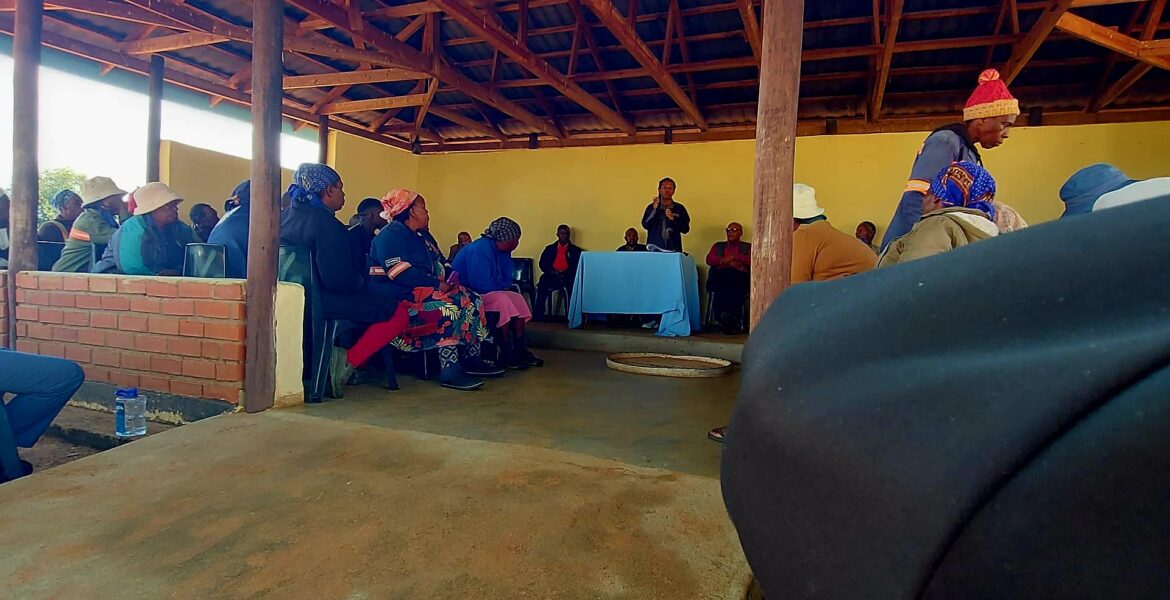
The first warning did not come from a government report or a cybersecurity company. It came from a pensioner in a Botswana village.
“I don’t understand how they knew my pension had been paid.”
Her question was followed by silence before others began sharing similar experiences. Some had lost money through mobile money scams. Others had received convincing calls from people pretending to represent trusted organisations. Many admitted they had become afraid to answer unfamiliar calls or even open messages on their phones, worried that a single mistake could cost them their savings.
These conversations have become increasingly common during the Village Digital Safety Botswana Initiative, a voluntary community outreach programme from village to village across Botswana to educate communities about digital safety. The initiative is the brainchild of Itumeleng Garebatshabe, Founder of Intellegere Holdings, who established the programme after recognising that while Botswana was embracing digital transformation, many rural communities were being left behind in understanding how to protect themselves online.
What began as a series of community workshops has grown into something far more significant. Rather than delivering technical presentations, the programme encourages open discussions where people share real experiences and learn practical ways to recognise and avoid cybercrime. Every village tells a different story, yet the challenges remain remarkably similar. Participants describe mobile money fraud, hacked social media accounts, fake competitions, online investment scams and identity theft. Many are surprised to learn that using the same password across multiple accounts or sharing personal information over the phone can expose them to criminals.
The experiences emerging from Botswana’s villages closely mirror findings contained in the INTERPOL African Cyberthreat Assessment Report 2026, which warns that cybercrime across Africa is becoming increasingly sophisticated, organised and driven by rapidly evolving technologies, including artificial intelligence. While the report highlights online fraud, phishing and identity abuse as major threats across the continent, communities participating in the Village Digital Safety Botswana Initiative are already experiencing these risks firsthand.
Perhaps the greatest concern has been the vulnerability of older citizens. Pensioners have openly shared stories of financial loss and questioned how fraudsters appear to know when pension payments are made or when someone has retired. Whether through social engineering or other criminal methods, these experiences have left many older people uncertain about the very digital services designed to make their lives easier.
Despite these challenges, one message has remained remarkably consistent. At the end of almost every workshop, someone asks, “When are you coming back?” It is a simple question that reflects a growing demand for practical digital safety education. Communities are not rejecting technology; they are asking for the knowledge to use it safely and confidently.
For Garebatshabe, the initiative is about building digitally resilient communities where awareness becomes the first line of defence against cybercrime. He believes protecting Botswana’s digital future will require collaboration between government, financial institutions, telecommunications providers, technology companies and development partners.
The Village Digital Safety Botswana Initiative has shown that one conversation can change how a person uses technology, one workshop can protect an entire family from fraud, and one informed community can make it significantly harder for cybercriminals to succeed. Botswana’s villages have already sounded the alarm. The opportunity now is for partners across the public and private sectors to answer that call and help build a safer, more digitally resilient nation.