
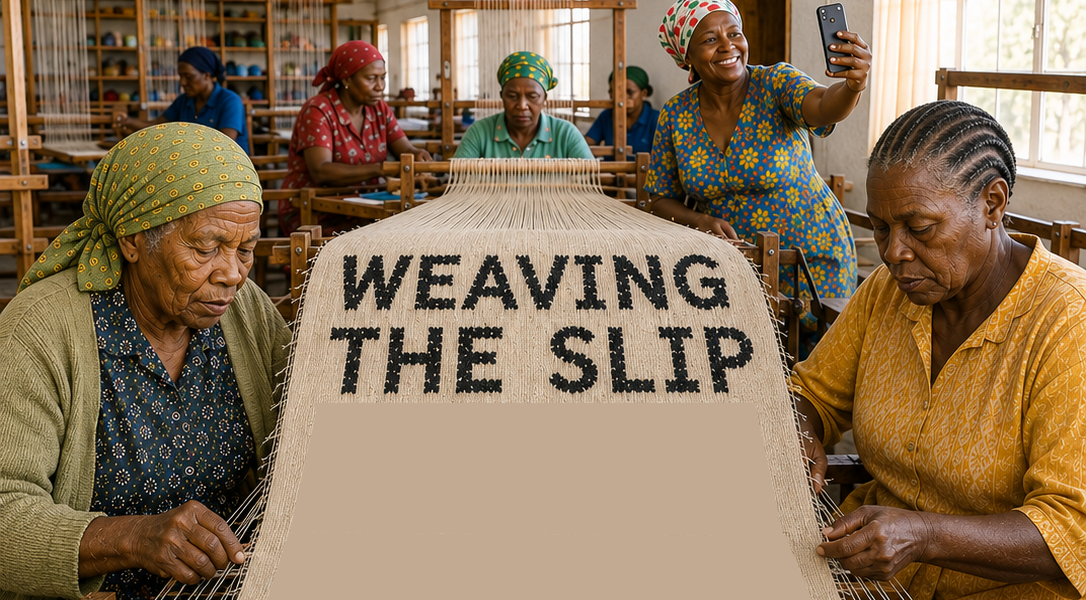
A Setswana turn of phrase has quietly become the vocabulary of a household crisis. In villages across Botswana, parents say betting influencers are pulling children and out-of-school young people into wagering funded from family mobile wallets. Yet as the state moves to lower the legal betting age, the intermediaries driving the boom are unregistered, uncounted and largely unwatched — and nobody in the industry wants to be the first to call it a red flag.
BONGANI MALUNGA and TLOTLO KEBINAKGABO
The meeting at the kgotla in Mathethe was supposed to be about passwords.
It was one of a series of community sessions run by the Village Digital Safety Initiative, a project set up to take practical cybersecurity education out of boardrooms and into villages — how to secure a WhatsApp account, how to spot a phishing message. Then a parent stood up and said something that was not on the agenda. Junior school children in the village, she said, were already betting online, and it was showing in their schoolwork.
In Digawana, another parent described unemployed and out-of-school young people who had become heavily involved in online betting. After one session, a mother was visibly emotional and wanted to know one thing: how do you control a child who is drifting further into it?
What the parents kept returning to was not the wager. It was the money — how fast it moves now, and how quietly. They described young people taking funds from digital wallets, mobile-money accounts and bank accounts to bet. In everyday conversation it has a name. Go loga slip. Weaving the slip.
“Behind that familiar phrase can be a much more serious problem when money intended for food and other household necessities is diverted,” the initiative notes. A transaction clears in seconds; a parent not entirely comfortable with mobile banking may only understand what has happened days later.
None of this appears in Botswana’s gambling statistics, because Botswana does not really have gambling statistics. Legal online betting arrived recently enough that there is almost no independent research into who is betting, at what age, and with whose money. The fear among those working in the villages is that the country will establish the scale of the problem only after it has arrived.
THE NEW MIDDLEMEN
Between the bookmaker and the punter, a new figure has appeared, and it is employed by neither.
Some of Botswana’s highest-rated betting influencers can attract between 4,000 and 15,000 responses to a single betting slip, according to information gathered by The Botswana Gazette. Their reach runs well past sharing a prediction. Followers are directed to bookmakers through referral and booking codes circulated on Facebook and in WhatsApp groups built for exactly that purpose.
An influencer pulling 15,000 responses to one slip has access to a customer base larger than most local advertising campaigns can buy. Repeated daily, and around events such as the recently ended 2026 FIFA World Cup, the commercial value becomes considerable. And that value is not incidental. It is contractual.
The Gambling Authority has confirmed to this publication that licensed operators may enter commission-based arrangements with influencers, including arrangements in which an influencer earns a percentage of the revenue generated by bets placed through their code. The same Authority confirms that influencers and affiliates need not be registered or licensed, and that it keeps no database of who they are or how many are operating.
Then there is the line that defines the grey area.
“The sharing of a betting code does not, in itself, constitute advertising or promotion of gambling under Section 106, as it does not amount to a communication intended to advertise or promote a gambling activity. Accordingly, the sharing of such a code alone does not require the legally prescribed gambling addiction warning,” the Chief Operating Officer of the Gambling Authority, Mopati Rammekwa, told this publication.
Regulation 102(1) requires advertisements for gambling activities to carry a warning about addictive and compulsive gambling. A billboard is unmistakably an advertisement. A post captioned “today’s slip,” from someone a follower has watched for months, is not — even when a commission is attached to the code inside it. The warning Parliament wrote into the law is therefore absent from the channel now doing the most persuading.
THE MAN WHO POSTS THE SLIPS
One betting influencer with more than 100,000 followers on Facebook, speaking on condition of anonymity, does not dispute how the machinery works.
“For someone to be recognised as a betting influencer, there has to be some level of following and credibility. People generally choose to enter slips from individuals they follow, trust or believe have a good chance of winning,” he said. “In my own case, I have gone for a long time without winning, and as a result, people do not necessarily enter my slips. The reality is that people are more likely to follow and enter slips from someone who is winning or who gives them the impression that they have a good chance of winning.”
That last clause is the economy in a sentence. What is rewarded is not accuracy. It is the impression of winning — and losses are not posted.
He is equally blunt about who is allowed in. “Anyone can become a betting influencer simply by creating a betting slip, sharing it and having people enter it. This means there are people presenting themselves as influencers without necessarily having a proven track record, knowledge or experience in sports betting.”
His conclusion is the industry’s standard defence, offered plainly. “I do not force anyone to enter my betting slips. I simply post my slips on my wall or channel, and people make their own decisions. I believe every individual has to take responsibility for their own betting decisions.”
Individual responsibility is a reasonable principle among adults who understand the odds. In Mathethe and Digawana, the people being described are junior school children.
The Village Digital Safety Initiative found the same pattern when it examined the platforms after the village sessions. “For an experienced internet user, some of these claims may immediately raise questions. For a young or inexperienced user, however, repeated exposure to apparently successful betting slips can create a very different impression.”
The problem, it argues, is not that everyone sharing betting content is dishonest. It is that most users have never been taught to interrogate what they are shown.
EVERYBODY KNOWS, NOBODY COUNTS
Approached for comment, betting companies acknowledged that influencer partnerships exist — and declined to say anything about their scale or terms.
Bet267’s Marketing and Public Relations Manager, Tshepiso Goitsemang, said the company’s arrangements with partners are governed by confidential written agreements. “For that reason we do not ordinarily disclose the identities, numbers, remuneration structures or contractual particulars of our commercial partners to the media.”
Every partner, she said, operates under an agreement requiring compliance with Botswana’s advertising laws, “including mandatory responsible gambling messaging and the strict prohibition on targeting persons under the age of 21.” On intermediaries handling money she was unambiguous: no influencer, ambassador, affiliate or tipster is authorised to collect deposits or stakes, or place bets on customers’ behalf, outside the licensed platform.
PST Bet said influencers and tipsters do not form part of its marketing strategy, and that its partnerships are “not designed to incentivise associates on the basis of individual customer losses.”
The Gambling Authority says it has met some influencers and affiliates to explore how they might be regulated — an acknowledgement that the category exists and is not yet governed. It also says it has never investigated an influencer case specifically involving “sure odds” or fabricated win claims.
So the position is this. The regulator concedes influencers are unregistered and unmapped. The operators concede the relationships exist but will not describe them. The influencers concede the space is open to anyone and that credibility is manufactured by selective posting. Each admission is defensible alone. Assembled, they describe a customer-acquisition system aimed at a young, digitally fluent population, running without registration, without disclosure requirements and without the addiction warning the law prescribes for advertising.
THE TIMING
All of this is unfolding while Parliament debates lowering the legal gambling age from 21 to 18 under the Gambling (Amendment) Bill, 2026.
Opposition legislators have resisted the clause. During Committee Stage debate, Botswana Congress Party MP Kenny Kapinga urged Parliament to keep the minimum at 21, arguing that 18-year-olds remain vulnerable to early exposure. Their argument draws force from the regulator’s own warnings that unlicensed platforms are already bypassing age restrictions and reaching teenagers. If enforcement cannot hold the line at 21, moving it to 18 does not extend protection. It concedes ground.
Botswana’s framework also lacks the influencer-specific safeguards found elsewhere. Britain requires prominent disclosure of commercial relationships and bars presenting betting as a route out of financial difficulty; United States endorsement rules require conspicuous disclosure of material connections; South Africa expects promotional material to carry responsible-gambling messaging. In each case the relationship between influencer and brand is a regulatory fact. In Botswana it is a private commercial matter.
The Village Digital Safety Initiative went to the villages to teach people how to protect their accounts. It found parents trying to work out how to protect their households from their own children’s phones.
“You cannot fully understand Botswana’s digital-safety challenges from behind a computer,” it concluded. “Sometimes you have to sit under the village tree, enter the kgotla, listen to a parent and hear what is really happening.”
The slips are being woven. The question is who is counting.
Additional reporting drawn from community engagements conducted by the Village Digital Safety Initiative in Mathethe and Digawana.