
Why recognition beats differentiation
Brands chase difference. But in reality, customers choose what they recognise first.
In marketing, differentiation has long been treated as the foundation of success. Every brand is told it must stand apart, offering a unique selling proposition that competitors cannot match. Strategy sessions often revolve around one question: how are we different?
But there is a problem with this thinking. Most of the differences brands obsess over are not noticed by customers. In many categories, products are fundamentally similar, and the subtle distinctions that marketers highlight rarely influence real-world decisions. Instead of standing out, brands risk becoming invisible by focusing on differences that no one sees.
THE DIFFERENTIATION PARADOX
This is the differentiation paradox. The harder brands try to be meaningfully different, the less likely that difference is to matter. What customers respond to is not uniqueness, but familiarity.
Research from the Ehrenberg-Bass Institute shows that most buyers are not loyal to a single brand. They move between a small group of acceptable options, choosing what comes to mind easily and what is convenient to access. In these moments, decisions are made quickly, often with minimal thought.
The brand that is remembered first, and recognised instantly, has a clear advantage.
MENTAL SHORTCUTS
This is where distinctiveness becomes important. Distinctiveness is not about what a brand claims to offer. It is about how a brand is recognised.
Colours, logos, packaging, fonts and even sounds act as mental shortcuts. They allow customers to identify a brand instantly, without needing to process detailed information. In busy environments, these shortcuts reduce effort and speed up decisions.
A brand does not need to be different to win. It needs to be easy to spot and easy to recall.
BOTSWANA IN PRACTICE
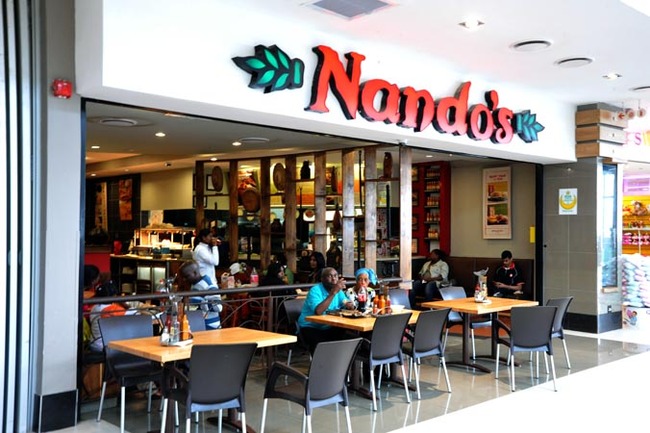
This principle is already visible in Botswana. In the fast food market, KFC and Nando’s compete on similar products, yet both dominate through strong visual identity. The red and white of KFC, and the bold typography and cockerel of Nando’s, make each brand instantly recognisable.
In mobile money, Orange has effectively turned its colour into an asset. Its consistent use of orange across kiosks, advertising and digital platforms creates a powerful association. When customers think of sending money, the colour itself can trigger the brand.
In retail, Choppies demonstrates the power of consistency. Its red and yellow branding is not refined, but it is unmistakable. Across towns and villages, the brand looks the same, reinforcing familiarity over time.
These brands are not winning because they are dramatically different. They are winning because they are easy to recognise.
WHY FAMILIARITY WINS
For customers, familiarity simplifies choice. The brain looks for shortcuts, especially in everyday decisions. Rather than evaluating multiple options, people often choose the brand they recognise most quickly.
This is not about deep loyalty. It is about convenience and ease. A familiar brand feels safer, requires less effort, and is easier to trust in the moment of purchase.
In crowded markets, recognition often matters more than innovation.
A SHIFT IN THINKING
For marketers and business owners, this requires a shift in focus. The goal is not to create endless points of difference that customers will not notice. It is to build strong, consistent brand assets that make the brand unmistakable.
Consistency becomes more important than novelty. Changing logos, colours or identity too often can weaken recognition. Over time, repetition builds memory, and memory drives choice.
The brands that succeed are not necessarily better. They are easier to notice.
THE REAL QUESTION
The idea of differentiation is appealing. It suggests that brands can win by being unique. But in practice, growth is driven by availability and recognition.
The brands that win are the ones that come to mind first and are easy to find when it matters.
The question is not how to be different.
The better question is how to be unmistakable.