
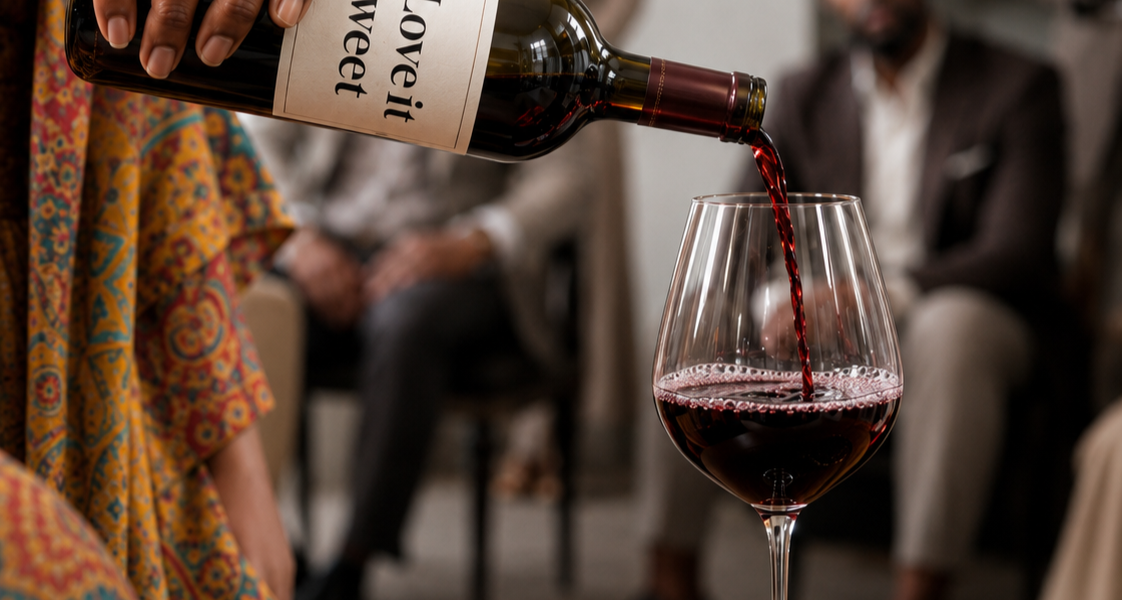
From Tokaji and Sauternes to local Muscadel, celebrated sweet wines show that sweetness is a style to savour, not a taste to outgrow.
PHENYO MOTHAGODI
There are few things in the wine world that are judged more harshly than admitting, usually in a hushed voice over dinner, “I actually like sweet wine.”
The confession is often followed by an apology, as though the speaker has just admitted to putting tomato sauce on a perfectly good steak. Why?
Somewhere along the way, we’ve allowed ourselves to believe that enjoying sweet wine is merely a stepping stone to “real” wine, and that once you’ve graduated to Cabernet Sauvignon, Shiraz or a nervy Sauvignon Blanc, you’re expected to leave sweetness behind like an embarrassing fashion phase from your teenage years. Rubbish.
It’s time we stopped treating sweet wine like the guilty pleasure of the wine world. Here’s the delicious irony: some of the most celebrated, sought-after and expensive wines on the planet are sweet.
SWEET PRESTIGE
Take Hungary’s legendary Tokaji, once described as “the wine of kings and the king of wines.” Or France’s revered Sauternes, where nature conspires in the most remarkable way. Morning mists encourage a beneficial fungus known as Botrytis cinerea, romantically called “noble rot”, which gently shrivels the grapes, concentrating their sugars, acidity and flavour into something almost magical. Then there’s Canada’s famous Ice Wine, made from grapes harvested while frozen on the vine, producing tiny quantities of intensely flavoured nectar.
These are hardly the sort of wines you’d dismiss as “beginner’s wine.” And yet, somewhere between these world-class dessert wines and the supermarket shelf, sweetness developed an image problem.
Perhaps it’s because many of us were introduced to wine through sweeter styles. Perhaps it’s because sweetness is often confused with simplicity. Or perhaps wine snobbery simply needed a convenient target. Whatever the reason, sweetness deserves a fair hearing.
NOT SIMPLE
Let’s clear something up. Sweet does not mean unsophisticated.
A well-made dessert wine is a balancing act. The sweetness should never dominate. It should dance with fresh acidity, fruit concentration and texture, creating a wine that’s rich without becoming cloying. Think of it like a well-written joke. Timing is everything. Too much of one ingredient and the magic disappears.
The same is true in the kitchen. Nobody complains that crème brûlée is too sweet simply because it’s dessert. Nobody expects baklava or malva pudding to taste like a green salad. So why do we expect every wine to finish bone dry?
MAKING SWEETNESS
One of the easiest ways to understand sweet wine is to know how it’s made. Unlike dry wines, where yeast converts virtually all the grape sugars into alcohol, dessert wines are crafted to retain some of that natural sweetness. Sometimes fermentation is stopped before all the sugar is consumed. Sometimes the grapes are left on the vine longer to naturally concentrate their sugars. In other cases, nature lends a helping hand through freezing temperatures or the miraculous work of noble rot.
The beauty of sweet wine is that it invites you to slow down. It isn’t designed to be rushed through while catching the second half of Sunday soccer. It’s a wine that asks for smaller pours, longer conversations and perhaps a moment to wonder how grapes manage to produce flavours that remind us of honey, apricots, marmalade, dried figs, orange peel or toasted nuts.
WORTH DISCOVERING
Closer to home, we don’t have to search particularly hard to find excellent examples. One bottle that continues to put a smile on my face is the Jakkalsvlei Red Muscadel 2024. This isn’t simply sweet; it’s gloriously indulgent. Expect aromas that immediately transport you to Turkish delight, sun-drenched raisins and dried fruit, with a nostalgic lift that reminds me of old-fashioned sherry. It’s the sort of wine that refuses to be ignored.
Serve it slightly chilled over ice on a warm Botswana afternoon, pour it alongside vanilla ice cream, or simply enjoy a small glass on its own after dinner. It doesn’t need an occasion. It creates one.
Then there is the wine that has completely stolen my attention: Constantia Uitsig Red Muscat d’Alexandrie. It’s one of those rare bottles that seems to keep unfolding in the glass. Every sip reveals another layer: ripe berries, exotic spice, dried fruit, floral perfume and remarkable freshness that keeps the sweetness beautifully in check. It’s rich without being heavy, luxurious without becoming tiring, and manages the difficult trick of being both comforting and elegant at the same time. It’s the sort of wine that reminds you why dessert wines have fascinated wine lovers for centuries.
Of course, not every sweet wine will be extraordinary. Just as not every Cabernet Sauvignon deserves a standing ovation, some dessert wines will delight while others may disappoint. That’s part of the adventure.
GIVE IT CHANCE
But dismissing an entire style because it’s sweet would be like deciding never to read another novel because you once picked up a bad one at the airport.
So here’s my challenge. The next time you’re browsing the shelves, resist reaching automatically for your usual bottle. Pick up a Moscato. Try a Red Muscadel. If you happen to come across a Sauternes, Tokaji or Ice Wine, treat yourself to the experience. Better yet, share it with friends who insist they “don’t do sweet wine” and watch their expressions after the first sip.
Wine is far too diverse, too fascinating and too delicious to be governed by unwritten rules about what we’re supposed to like.
And if your palate genuinely enjoys a sweeter style, don’t apologise for it. Smile, pour another glass and remember: taste is personal, but good wine, whether dry, off-dry or gloriously sweet, never asks for permission to be enjoyed.