
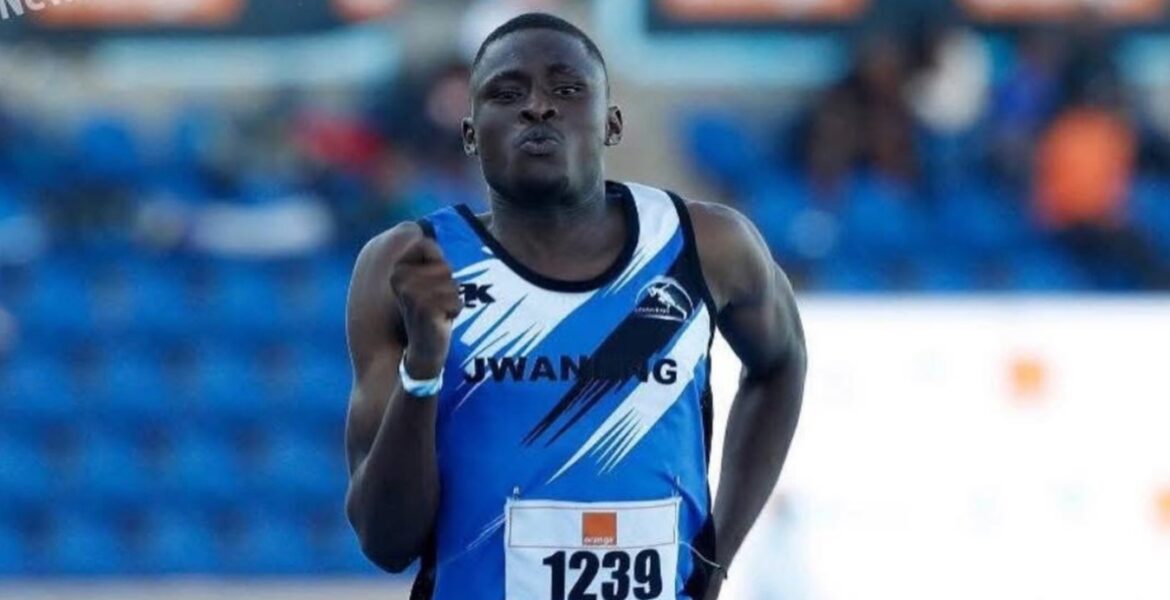
- Young sprinter from Jwaneng Athletics turns limited resources into national success, signaling potential beyond Botswana’s borders
TLOTLO KEBINAKGABO
There’s a name beginning to echo among athletics followers in Botswana: Prince Selepe. The 20-year-old sprinter from Jwaneng Athletics Club emerged as one of the standout performers at the Orange Botswana Athletics National Championships 2026 over the weekend.
Selepe claimed the men’s 200 meters title, crossing the finish line in 20.08 seconds. The time drew audible reactions from spectators, with some expressing surprise at the performance and others suggesting it signaled readiness for competition on the international stage.
The result marked a defining moment in a season that has already seen the athlete register a personal best of 10.16 seconds in the 100 meters, a time recorded earlier this year in Francistown.
Training Constraints
Selepe’s performances come despite limited training infrastructure in Jwaneng, a mining town without a standard rubber athletics track. According to his coach, Steam Thuto, preparations take place under conditions that contrast sharply with those of more resourced training centers.
“We only train in the dust and if you can go there you would be surprised by the times he is running,” Thuto said in a telephone interview on the sidelines of the championships.
He described a routine shaped by necessity rather than design. “Sometimes it’s tough in such ways that we can go into the forest and do our program. Sometimes we struggle with a field as it would be covered by grass and when it’s rainy we do not train at all or do so in a small space,” he added.
Early Discovery
Thuto said he first noticed Selepe early last year under circumstances unrelated to athletics. The coach recalled watching a football match when Selepe’s speed drew his attention.
He later approached the athlete and suggested a transition to track and field, arguing that his future lay in athletics. Within the same year, Selepe qualified for the national finals and secured a place in the Under-20 national team.
The progression from informal observation to national representation unfolded within a single season, underscoring the pace of his development.
Next Target
The coach said the plan for 2026 was for Selepe to break into the senior national team. That objective, he indicated, has been met following the athlete’s performance at the championships.
“And he didn’t disappoint,” Thuto said. “He’s improving daily and can still do better.”
Selepe’s trajectory reflects both individual progression and the constraints of training outside established facilities. His results have drawn attention not only for their speed but also for the environment in which they were achieved.