
The 48-team World Cup was expected to dilute football’s greatest tournament, but it widened opportunity, challenged old hierarchies and gave more nations reason to believe.
DR DOUGLAS RASBASH
A DIFFERENT ANSWER
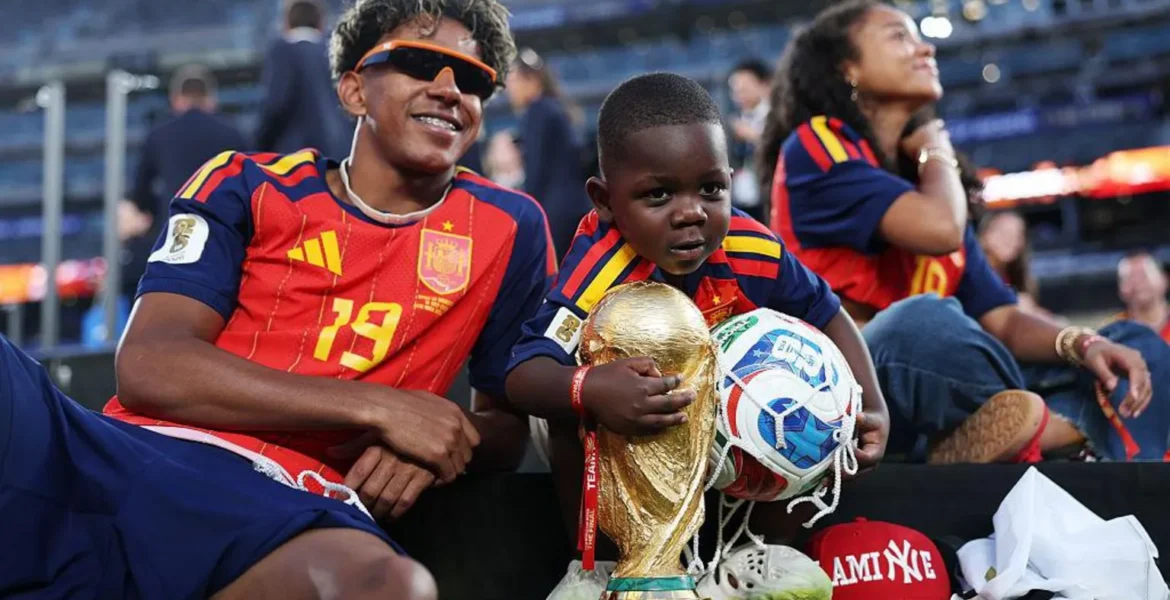
By the time the final whistle blew on the 2026 FIFA World Cup, Spain had become world champions after defeating Argentina in the final. France, one of the leading contenders, finished fourth. Yet there was another winner at this World Cup: the tournament itself.
For years, the expansion of the FIFA World Cup from 32 to 48 teams was criticised as a triumph of politics and money over sporting quality. The argument seemed straightforward. More teams would mean weaker teams. Weaker teams would mean more mismatches. More mismatches would mean a bloated tournament, predictable results and a diminished spectacle.
The 2026 World Cup provided a different answer. Across 104 matches, the expanded field produced new contests, unfamiliar opponents and repeated challenges to football’s established order. That was not what expansion was supposed to produce.
HIERARCHY DISRUPTED
The traditional criticism of an expanded World Cup assumed that international football remained divided into two distinct groups: the established football powers and everyone else. That assumption increasingly looks outdated.
The expansion to 48 teams brought more countries, more football cultures and more tactical approaches onto the world’s biggest sporting stage. Far from simply providing cannon fodder for the traditional giants, many of the new and less fancied participants arrived organised, disciplined and unimpressed by reputation.
The result was not the dilution of competition. It was the disruption of hierarchy.
The great football nations still possessed the deepest squads, the most expensive players and the greatest historical pedigree. But none of those advantages guaranteed victory. Smaller nations defended intelligently, pressed selectively and counter-attacked with speed. Goalkeepers became match-winners. Coaches found ways of reducing the technical advantages of stronger opponents.
Players who may never command the transfer fees or global profiles of their opponents repeatedly demonstrated that, for 90 minutes, reputation counts for remarkably little. The World Cup became a tournament in which almost everyone could trouble almost anyone.
AFRICA ARRIVES
Nowhere was the effect of expansion more significant than in Africa. Nine African countries progressed to the round of 32. That statistic alone deserves attention.
For decades, discussions about African football have been framed around potential. Africa was always the continent that would one day arrive. It possessed the talent, passion and athletes, but its teams were too often eliminated before the latter stages of the tournament.
The expanded World Cup provided more African countries with the opportunity to compete. What happened next mattered even more: they competed successfully. Nine African nations reaching the first knockout round was not charity. It was qualification earned on the football field.
The significance extends beyond a single tournament. More World Cup places mean more countries investing in qualification, coaching, academies, facilities and national teams. More African players gain experience on the world’s largest stage. More supporters see their countries represented. More children grow up believing that the World Cup belongs to them as well.
Expansion does not simply change the number of teams at a tournament. Over time, it can change the geography of football itself.
KNOWLEDGE TRAVELS
The competitive distance between nations is narrowing because football knowledge travels. Tactical systems travel. Coaching expertise travels. Players from supposedly smaller football nations now compete in professional leagues across the world.
Video analysis means opponents can be studied in extraordinary detail. Fitness science has become global. Defensive organisation can be taught. The richest football countries still have enormous advantages, but knowledge is much harder to monopolise than money.
That does not mean every match is equal or every country has the same chance of lifting the trophy. Traditional powers remain powerful. Europe and South America remain central to the game. The difference is that their reputation alone no longer settles the contest.
THE PARADOX
This is the great paradox of the 2026 World Cup. More teams were supposed to create more mismatches. Instead, more teams created more possibilities.
The 48-team format introduced countries and football cultures that the old 32-team structure would have excluded. Some struggled. That is inevitable in any tournament. Others flourished.
Unpredictability is not a weakness in sport. It is its most valuable commodity. If the result is known before the game begins, there is little reason to watch. The magic of the World Cup has always rested on possibility: the possibility that a giant might fall, an unknown player might become a national hero, or a country expected to go home early might suddenly dream of something much bigger.
The expanded format multiplied those possibilities. More countries participated. More supporters had a stake in the tournament. More regions of the world were represented. The established football order was challenged more often.
There will inevitably be arguments about the length of the tournament, player fatigue, scheduling and the logistical complexity of staging 104 matches. Those are legitimate questions. But the central sporting criticism of expansion, that 48 teams would make the World Cup less competitive, has become much harder to sustain.
A WORLD CUP
Perhaps the most important lesson of 2026 is that the World Cup had outgrown the old map of world football. Africa’s performance demonstrated it, as did the ability of less fancied nations to compete with far more celebrated opponents.
The 48-team format did not create the globalisation of football. It revealed it. For decades, FIFA has called its tournament the World Cup. In 2026, perhaps it became a little more worthy of the name.
One team left as world champion, but 48 countries arrived believing they belonged. Nine African nations reached the round of 32. The expanded World Cup was expected simply to give us more football. Instead, it gave us something more valuable: more possibility.
On any given day, almost anyone could compete. The 48-team World Cup reminded us that uncertainty, ambition and belief remain the reasons the world watches.