
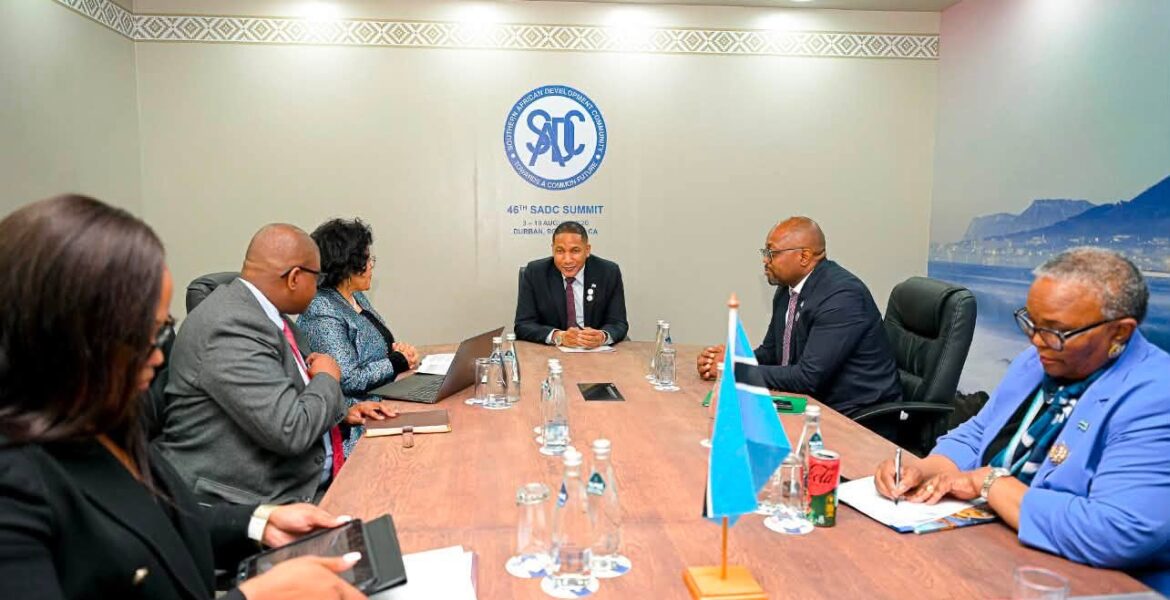
Botswana wants SADC to confront the region’s migration crisis as anti-immigrant protests, xenophobic attacks and mass departures from South Africa intensify.
BONGANI MALUNGA
Botswana has pushed the escalating migrant crisis in South Africa onto the regional agenda, with Minister of International Relations Phenyo Butale calling for a SADC-wide response as anti-immigrant protests, xenophobic attacks and the mass departure of foreign nationals intensify.
Regional Crisis
Butale made the intervention at the SADC Summit in South Africa in an interview with SABC News, where he argued that the region cannot continue treating migration as an individual country’s problem.
His stance comes after months of mounting hostility towards migrants in South Africa, where anti-immigration groups have staged demonstrations demanding that undocumented foreigners leave the country.
Violent Protests
The protests have repeatedly turned violent. Human Rights Watch reported that vigilante groups targeted African and Asian foreign nationals during April and May, with attacks occurring in Johannesburg, Pretoria and Durban. Some of the victims were documented migrants, refugees and asylum seekers, showing how campaigns directed at undocumented migrants can spill into broader xenophobic violence.
Anti-migrant groups, including March and March and Operation Dudula, have demanded the removal of undocumented foreigners, with a 30 June deadline becoming a focal point for protests. By the deadline, thousands had already fled their homes, while nationwide demonstrations were held in major South African cities.
Mass Departures
The consequences have extended beyond street protests. More than 178,000 immigrants have reportedly left or been deported from South Africa in recent months amid the crackdown and sometimes violent anti-immigrant protests.
Shared Prosperity
Against this backdrop, Butale warned that the region needs to address the economic conditions driving migration.
“The migration issue requires us to come up with a way that we can ensure shared prosperity. Shared prosperity comes when we ensure that each one of our countries excels and our people are able to get jobs wherever they want,” Butale told SABC.
“Therefore, migration becomes an option, not an escape. People don’t go from one country to another because they are running away from hunger or starvation,” he added.