
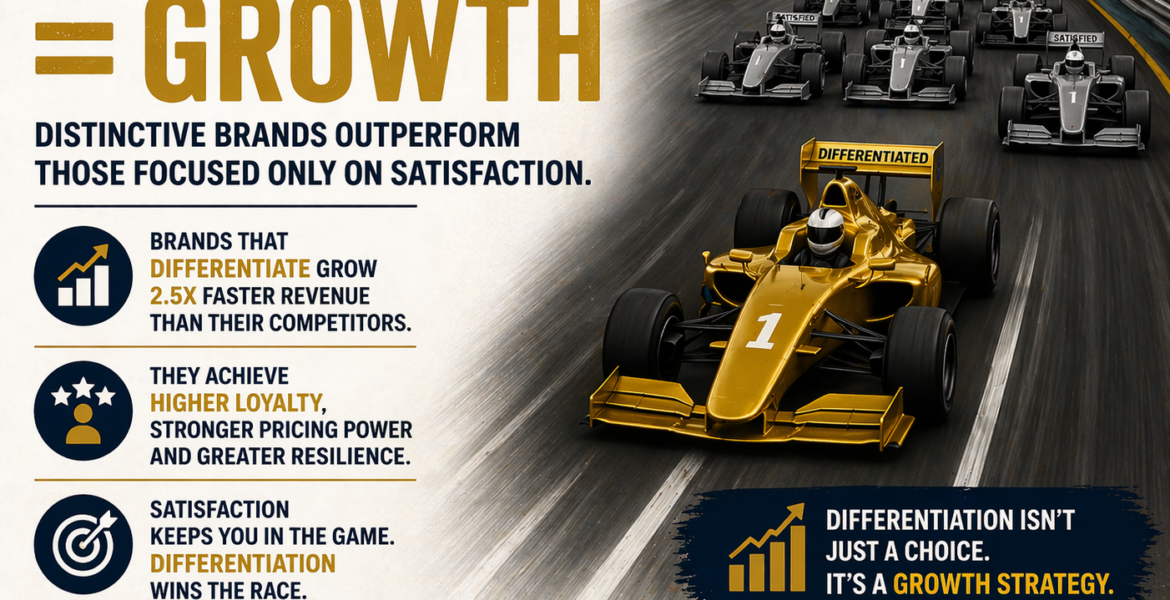
In a market where everyone is trying to please everyone, brands risk becoming invisible. This column unpacks why customer satisfaction alone is no longer enough and why true growth lies in standing out, not fitting in.
By Manuel Veiruapi Ruhapo, Founder, Blacmarc Group
THE EXPERIENCE PARADOX
In a market saturated with choices, the pursuit of universal appeal can lead to obscurity. This is “The Experience Paradox”, where the drive for customer satisfaction, while commendable, can obscure true drivers of sustainable growth. While satisfaction is important, it is no longer sufficient. The market has evolved, redefining valuable customer interaction.
This column explores The Experience Paradox, examining why a singular focus on customer satisfaction can be a strategic misstep. We will discuss how brands, particularly within Botswana, can move beyond generic contentment to cultivate “meaningful differentiation”, the true catalyst for lasting success in today’s experience economy.
SATISFACTION VS DIFFERENCE
The core of The Experience Paradox in branding lies in a fundamental disconnect: customer satisfaction scores may be rising, yet the competitive landscape remains volatile. Experiences account for a significant portion of brand perceptions. However, many customer experience programs remain fixated on satisfaction metrics. While these provide valuable snapshots, they often fail to capture the broader strategic picture. The strongest predictor of growth is not merely how satisfied customers feel, but how “distinctive” they find the overall experience.
Meaningful Difference is the convergence of two critical elements: meeting genuine customer needs and doing so in ways competitors do not. It is not about superficial novelty, but crafting experiences both inherently valuable and uniquely attributable to the brand. This distinction is vital: satisfaction can be replicated, but genuine differentiation creates an inimitable competitive advantage.
BOTSWANA’S COMPETITIVE REALITY
The Experience Paradox is clearly evident within Botswana’s dynamic economic landscape. Businesses face the challenge of distinguishing themselves in a competitive market. The inclination to appeal to everyone, often driven by perceived limitations of a 2.6 million-strong population, can lead to homogenization, where brands become indistinguishable in their pursuit of broad satisfaction.
Consider the traditional banking sector in Botswana. For years, institutions focused on reliable and secure services. Customer satisfaction surveys might show respectable scores. However, these institutions faced increasing pressure from more agile competitors. Digital payment platforms and fintech startups offered distinctive experiences through unparalleled convenience, speed, and user-friendly interfaces. Traditional banks, by focusing on broad, satisfactory experience, risked becoming generic, struggling to articulate a unique value proposition beyond their legacy.
DIFFERENTIATION IN TOURISM
In tourism, certain safari operators in Botswana exemplify meaningful differentiation. While many lodges offer luxury, some have carved distinctive niches by embracing sustainability and empowering local communities. Beyond standard luxury, these operators differentiate themselves through unique staffing models, strong local procurement practices, and deep commitments to environmental conservation. These elements create experiences that are not just satisfactory, but profoundly meaningful and unique, attracting discerning clientele willing to pay a premium for values-driven travel.
RETAIL AND ACCESSIBILITY
In retail, a well-known homegrown grocery chain provides another compelling example. While other retailers compete on product range, this local player has strategically focused on delivering value and accessibility across Botswana. Its experience is built around affordability, convenience, and a deep understanding of local consumer needs. By expanding into underserved communities and offering competitive pricing on essentials, it has created a distinctive experience centered on being the most accessible and affordable option for many Batswana.
DEFINING WHO YOU ARE FOR
These examples illustrate that in Botswana, brands that thrive define who they are not for, sharpening their focus on who they are for, and delivering an experience that is not just good, but genuinely unique and memorable.
WHAT IT MEANS TO YOU
For the Public: As consumers, recognizing The Experience Paradox empowers you to make more informed choices. The brands you connect with most deeply often stand for something clear and offer an experience that feels genuinely distinctive, rather than just generically pleasant. Seek out businesses that not only meet your basic needs but also surprise, delight, or align with your values in unique ways.
A SHIFT FOR MARKETERS
For Marketing Professionals: The era of optimizing solely for satisfaction is over. Your mandate now extends to cultivating meaningful differentiation within every facet of the customer journey. This requires understanding not just what customers want, but how your brand can deliver it in a way no competitor can easily replicate. Embrace competitive benchmarking that assesses distinctiveness, not just satisfaction, to uncover opportunities for true market leadership.
STRATEGIC IMPERATIVE
For Executives: For leaders, The Experience Paradox presents a strategic imperative. Prioritizing meaningful difference is no longer a marketing luxury but a fundamental driver of sustainable growth and market leadership. It demands fostering a culture that champions innovation in experience design over incremental gains in satisfaction scores. This involves allocating resources to initiatives that create unique value, empowering teams to experiment with distinctive customer touchpoints, and integrating metrics that measure differentiation alongside traditional satisfaction.
In the pursuit of customer loyalty, universal satisfaction can be a deceptive siren song. The Experience Paradox teaches that true growth stems not from merely pleasing everyone, but from daring to be different. Brands that flourish courageously define their unique value, craft experiences that resonate deeply, and stand out amidst satisfactory sameness. The future belongs to those who create unforgettable, distinctive experiences, transforming customers from content individuals into passionate advocates. The question for every business is no longer, ‘Are our customers satisfied?’ but rather, ‘Are our experiences meaningfully different?’