
The Controversy Paradox: the more unfair a game appears to be, the more people watch it. And the counter-argument that holds equally true: a perfectly fair game, with no disputed decisions and no injustice, would be a game nobody cared about. Every brand manager in the world should be taking notes.
By Manuel Veiruapi Ruhapo | The Brand Paradox | The Botswana Gazette
On the 26th of June 2026, in Seattle, a country held its breath.
Iran’s substitute Shoja Khalilzadeh had just poked the ball home in the 93rd minute. It would have been Iran’s first-ever World Cup knockout qualification. The stadium erupted. The players ran. The fans wept.
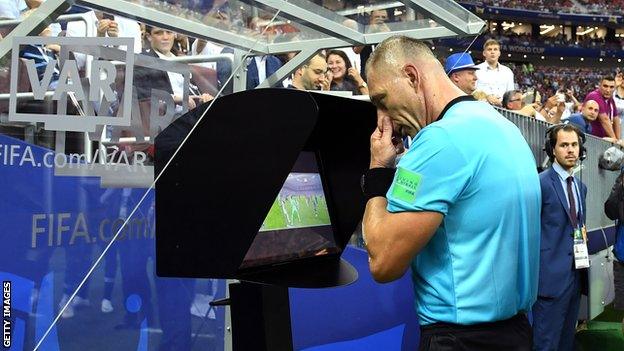
Then VAR intervened. Khalilzadeh was offside. By a millimetre. A single millimetre, measured by a computer, erased a nation’s dream. The footage went viral. Hundreds of millions who had not been watching went looking for the clip.
This is football. And this is one of the most important lessons in brand building that most marketers will never study in a classroom.
The Brand That Was Never Supposed to Work
Football has never been a fair game. The Hand of God in 1986. Zidane’s headbutt in 2006. Suarez’s deliberate handball against Ghana in 2010, denying an African nation a World Cup semifinal. Each was a failure of the game. Each became the reason people who were not watching started watching.
FIFA is one of the most valuable sports brands on the planet, estimated at over $1.5 billion. It generates that value not by delivering a perfect product, but by delivering a product that is impossible to be indifferent about. The controversy is not a threat to the brand. It is the brand’s primary distribution mechanism. Every disputed decision is free media.
What VAR Taught Us About Brand Loyalty
VAR was supposed to fix football. It created new controversies faster than it resolved old ones. In brand terms, FIFA tried to manage its reputation by eliminating the source of complaint. Instead, it gave the complaint a higher resolution.
At the 2026 World Cup, Ghana’s coach Carlo Queiroz said “VAR went for a coffee” after his team was denied a clear penalty against England. In the final minutes of Portugal vs Croatia, Gvardiol’s stoppage-time equaliser was ruled out by a frame-by-frame review. Croatia argued the contact was unintentional. Portugal advanced 2-1. Croatia went home. The internet did not.
Then the tournament produced something no VAR review could have scripted. Folarin Balogun received a red card and was suspended for the USA’s Round of 16 clash against Belgium. President Trump personally called FIFA President Infantino. FIFA reversed the suspension. Belgium’s coach called it an April Fools’ Day joke. Belgian politicians called it a capitulation. Germany, meanwhile, was eliminated amid a separate VAR controversy, and FIFA confirmed a technical malfunction had caused a graphic failure in a group stage match.
In one week, VAR became a political instrument, a technical liability, and a diplomatic incident. FIFA’s brand integrity, not just its refereeing, was openly in question. The energy does not disappear. It finds a new channel.
The psychologist Robert Vallerand identified two types of fan engagement: harmonious passion, driven by love of the game, and obsessive passion, driven by identity and perceived injustice. It is the obsessive passion that makes football impossible to abandon. Brand strategists call this tribal loyalty. You do not stop watching a game that has wronged you. You watch it more.
What Botswana Already Knows
You do not need to follow the World Cup to understand this. You only need to have been in Gaborone on a day when Township Rollers played Gaborone United. The passion in those stands is not proportional to the quality of the football. It is proportional to the history, the rivalry, the disputed decisions.
Brand loyalty is not built by being liked. It is built by being felt.
The Brand That Dares to Be Argued About
Most brands in Botswana are trying to be liked. Universally. By everyone. The result is communication that generates no argument, no passion, and no memory. It is the advertising equivalent of a 0-0 draw. Technically acceptable. Completely forgettable.
Research by Chen and Berger found that moderate controversy increases conversation more than low or high levels. The sweet spot is not safety. It is a position clear enough that some people nod hard and others push back. Think about the brands you actually talk about. Not the ones you merely use. The ones you defend. Those brands took a position. They were willing to be wrong in the eyes of some people in order to be right in the eyes of the people who matter most.
What It Means to You
If you are a business owner or executive: The question is not “will this offend anyone?” It is “does this stand for something?” Intensity from the right people is worth more than mild approval from everyone.
If you are a marketing professional: The brief that says “make everyone happy” is a brief for mediocrity. Ask what the brand believes. Ask what it is willing to be wrong about.
If you are a brand manager: Your most passionate customers are the ones who have an argument to make on your behalf. Give them something to argue about.
Iran lost in Seattle because of a millimetre. The world watched because of the injustice. Nobody remembers the matches that ended without incident. Nobody remembers the brands that never said anything worth arguing about.
About The Brand Paradox
The Brand Paradox is a weekly column by Manuel Veiruapi Ruhapo that explores the counterintuitive truths behind building great brands in Botswana and beyond. Manuel Ruhapo is the founder of Blacmarc Group, a brand strategy consultancy that helps businesses solve their most complex brand challenges.