
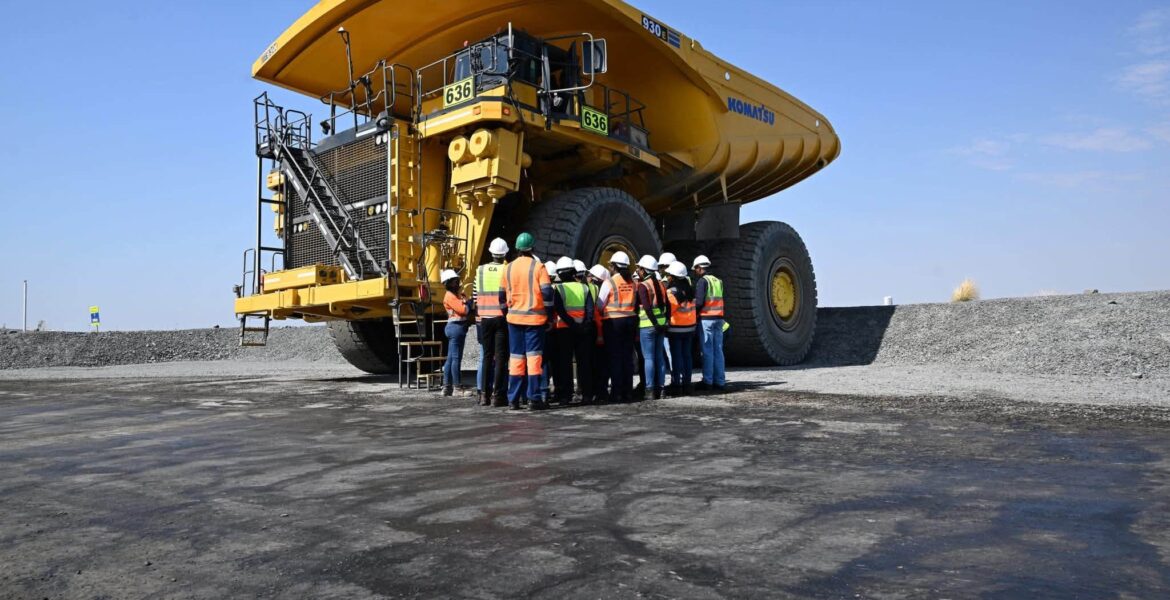
Debswana more than doubled second-quarter production to 5.5 million carats even as rough diamond prices fell and lab-grown stones kept pressure on the global market.
GAZETTE REPORTER
Diamond production at Debswana Diamond Company increased 107 percent in the second quarter of 2026 to 5.5 million carats, up from 2.7 million carats in the same period last year.
The figures are contained in the Bank of Botswana’s Monetary Policy Report for August 2026, published on September 3. The report reviews recent macroeconomic developments and factors likely to influence inflation over the medium term.
Debswana, a joint venture between the Botswana Government and De Beers Group, operates the Jwaneng, Orapa, Letlhakane and Damtshaa mines.
Output Lift
The Bank of Botswana said the stronger performance was driven by improved mining operations after extended maintenance at Orapa and the processing of higher-grade ore at Jwaneng.
Debswana’s 2026 rough diamond production guidance has also been revised upwards from 15 million carats to 18 million carats, with the Bank citing improved global demand for premium natural diamonds.
De Beers’ 2026 production guidance remains unchanged at between 21 million and 26 million carats. The company continues to monitor rough diamond trading conditions and align output with prevailing demand.
Karowe Edges Up
Production at Lucara Diamond Corporation’s Karowe Mine increased 0.7 percent in the second quarter to 83.1 thousand carats from 82.6 thousand carats a year earlier.
“The increase was supported by higher ore processing volumes, including ore from continued open-pit mining and run-of-mine stockpiles,” the Bank of Botswana said.
Karowe’s production guidance remains unchanged at between 340 thousand and 360 thousand carats for 2026.
Prices Slide
The production gains come against a subdued global rough diamond market, where weaker consumer demand has coincided with rising sales of lab-grown diamonds.
Government and Debswana have expressed confidence that the market will rebound. Debswana Managing Director Andrew Motsomi has nevertheless said the company remains cautious and is pursuing diversification beyond its core mining business.
Speaking at the Future of Mining Summit, Motsomi said Debswana’s Ya Masa 2025-2029 strategy is aimed at restoring financial resilience, modernising operations and commercialising the company’s mining expertise through services beyond its core business.
The Bank’s report said rough diamond prices declined in the second quarter. The global rough diamond price index fell 10.4 percent, from 117.5 points in the first quarter to 105.3 points in the second quarter, mainly because of weak global demand, excess inventories and persistent trade uncertainty.
It said the market also faces structural pressure from competing luxury goods, particularly lab-grown diamonds, which are increasingly substituting for natural diamonds in lower-value segments.
According to the report, lab-grown diamonds currently hold 20 to 25 percent of market share and are projected to account for about 30 to 40 percent of the total diamond market by 2030, up from nearly zero in 2015.