
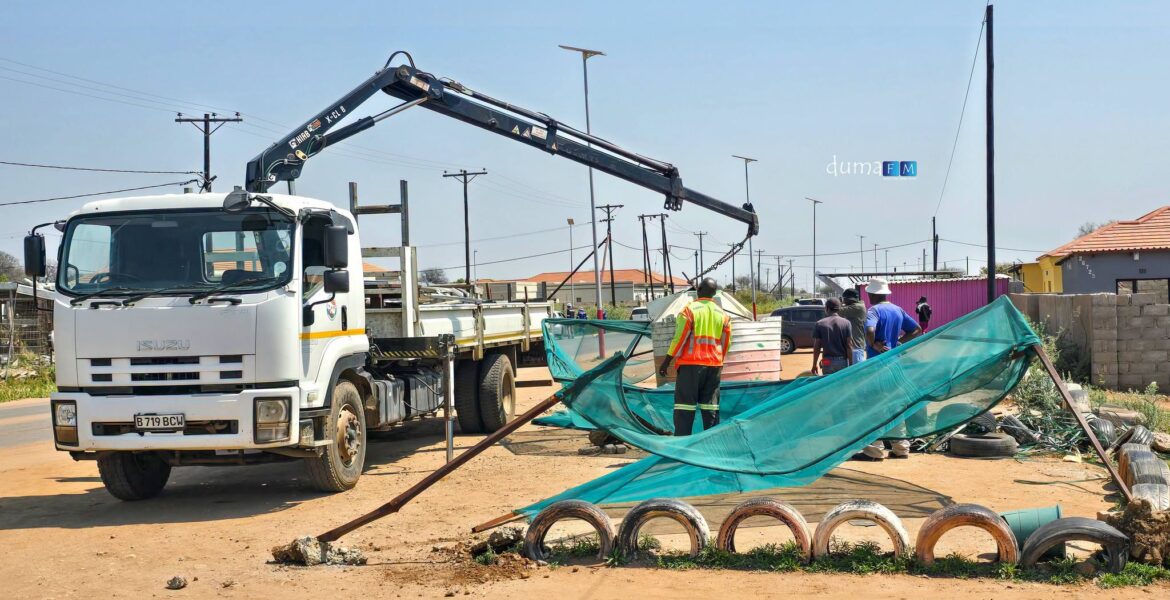
BOPEU says demolishing informal trading spaces without realistic alternatives risks worsening poverty and unemployment among households that depend on small businesses.
BONGANI MALUNGA
The Botswana Public Employees Union (BOPEU) has thrown its weight behind informal traders affected by the demolition of stalls and makeshift business structures in Thamaga and Mogoditshane, warning that enforcement without alternative trading spaces could push vulnerable households deeper into poverty.
BOPEU says that while it does not support lawlessness or disregard for regulations, authorities should not dismantle businesses that sustain families without first providing traders with realistic alternatives.
In a statement released last Friday responding to the removals, the union said Botswana’s informal economy had become a critical survival mechanism for thousands of citizens struggling to secure formal employment.
SURVIVAL
“The informal economy is not a choice but a means of survival in the absence of sufficient formal employment opportunities,” BOPEU said. The union argues that demolishing stalls does not simply remove illegal structures but can immediately wipe out household incomes used to pay rent, school expenses and buy food.
The intervention follows similar disputes between local authorities and informal traders elsewhere in the country, including previous enforcement operations by Gaborone City Council against vendors operating outside designated trading areas.
During an earlier dispute involving traders around the Gaborone Bus Rank, BOPEU 2nd Deputy President for Gender and Human Rights Sethunya Angela Ruda accused authorities of failing to adequately protect informal workers during redevelopment and relocation processes.
PUNISHMENT
“Instead of protecting informal workers during this transition, the Council is punishing them,” Ruda said at the time. BOPEU is now calling for authorities to engage traders before enforcement operations are undertaken and to establish designated, affordable trading spaces for those who are displaced.
The union also wants licensing and compliance requirements simplified to allow small operators to progressively formalise their businesses rather than being pushed out of economic activity altogether.
RELOCATION
Where removals are unavoidable, BOPEU says transitional and relocation arrangements should be put in place before traders lose their operating spaces. The union has further invoked International Labour Organisation Recommendation No. 204 of 2015, which encourages member states to facilitate the gradual transition of workers and businesses from the informal to the formal economy while protecting existing livelihoods.
BOPEU said government, organised labour and representatives of informal traders should establish structured dialogue on how the sector is regulated.
“The answer to informality cannot simply be removal and demolition,” the union said. Its position places renewed pressure on authorities to explain how Botswana intends to enforce planning and trading regulations without worsening unemployment and poverty among citizens who depend on informal businesses for survival.